- Home
- About Doctor
- Cancer Surgery
- Procedures & Techniques
- Minimally Invasive Cancer Surgery
- Robotic Cancer Surgery
- Laparoscopic Cancer Surgery
- Thoracoscopic Cancer Surgery (VATS)
- Open (Conventional) Cancer Surgery
- Sentinel Lymph Node Biopsy (SLNB)
- Cytoreductive Surgery (CRS)
- Hyperthermic Intraperitoneal Chemotherapy (HIPEC)
- Scarless/ Remote Access Thyroidectomy
- Resources
- Contact Us
Thymic Tumor Surgery
Message from Dr. Ajay Simha

A diagnosis of a thymic tumour can create uncertainty for patients and their families. Concerns regarding the nature of the tumour, treatment options, surgery, recovery, and expected outcomes are natural.
When a thymic tumour is suspected or diagnosed, a detailed evaluation is carried out to determine the type, size, location, and extent of the tumour. A personalised treatment plan is then formulated based on the tumour characteristics, involvement of nearby structures, overall health, and individual treatment goals.
I am Dr. Ajay Simha, Consultant Surgical Oncologist (Cancer Surgeon), providing thymic tumour care at Manipal Hospitals Sarjapur Road, Bengaluru. This page provides an overview of thymic tumours, including their symptoms, evaluation, treatment options, and surgical approaches.
What Is Thymic Tumor?
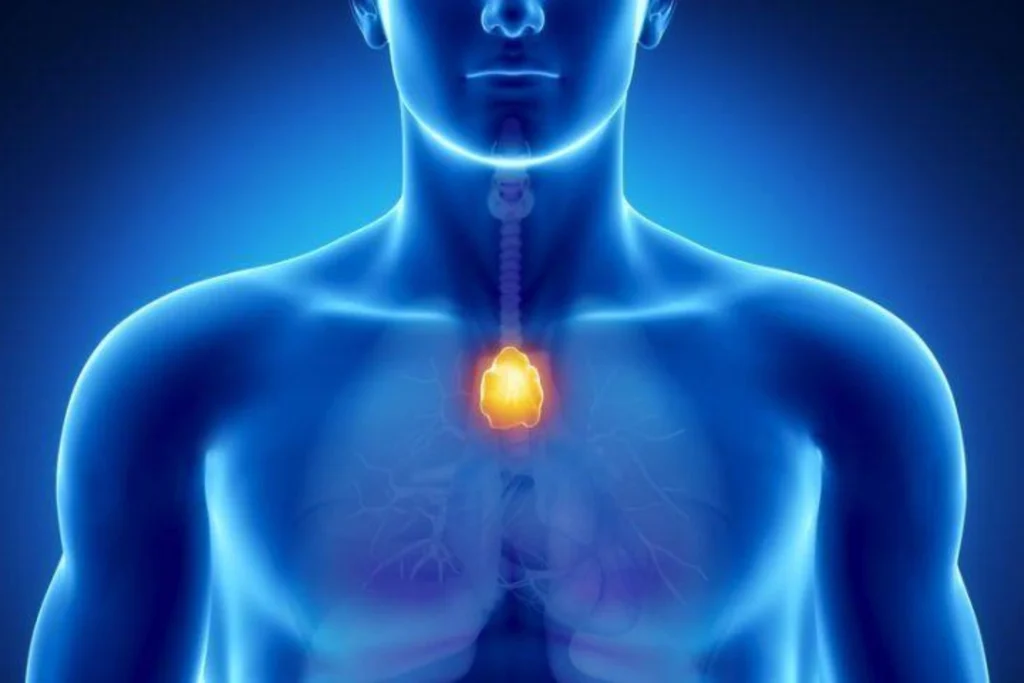
A thymic tumour develops in the thymus gland, a small organ located in the upper part of the chest behind the breastbone (sternum). The thymus plays an important role in the development of the immune system, particularly during childhood and early life.
Symptoms of Thymic Tumors
Many thymic tumours may not cause noticeable symptoms during the early stages and may be detected incidentally during imaging tests performed for other conditions.
When symptoms occur, they may include:
- Chest pain or discomfort
- Persistent cough
- Difficulty breathing
- Shortness of breath
- Difficulty swallowing
- Pressure sensation in the chest
- Swelling of the face, neck, or upper limbs due to blood vessel compression
- Fatigue and weakness
Some thymic tumours may also be associated with autoimmune conditions, particularly myasthenia gravis.
Evaluation of Thymic Tumor
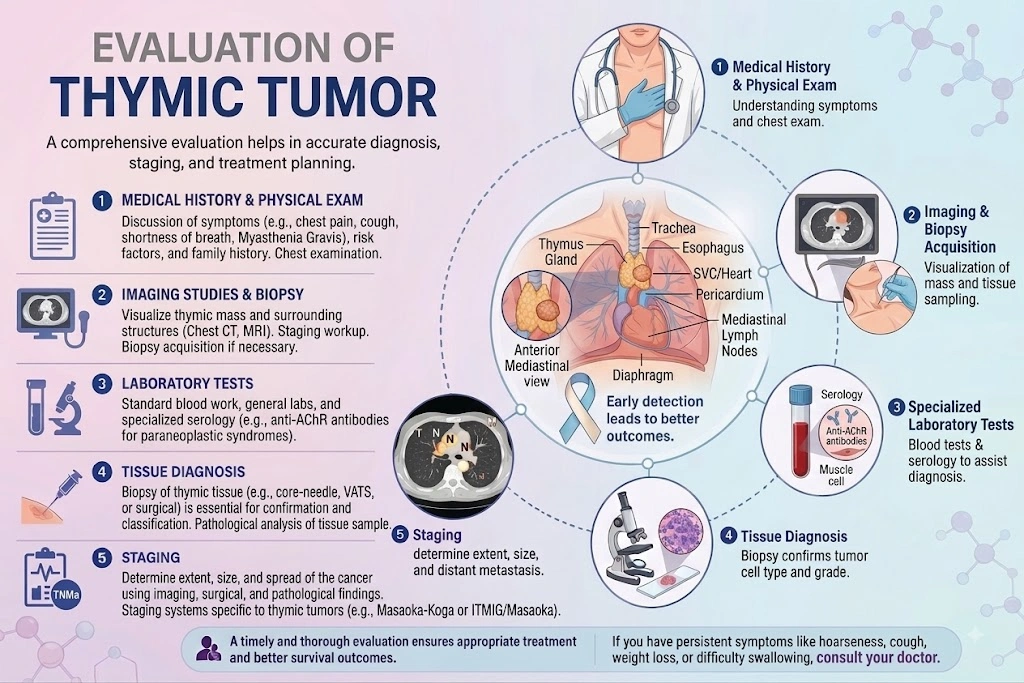
When a thymic tumour is suspected, a detailed evaluation is performed to determine its type, size, location, extent, and relationship with nearby structures.
The evaluation process may include:
Biopsy
A biopsy may be performed in selected cases to determine the tumour type and confirm the diagnosis.
Blood Tests
Blood investigations may be performed to evaluate associated conditions and assess the patient’s overall health status.
Evaluation of Nearby Structures
Assessment of nearby organs and blood vessels helps determine the extent of tumour involvement and the most appropriate surgical approach.
A detailed evaluation helps in developing a personalised treatment plan for each patient.
Treatment Options for Thymic Tumor
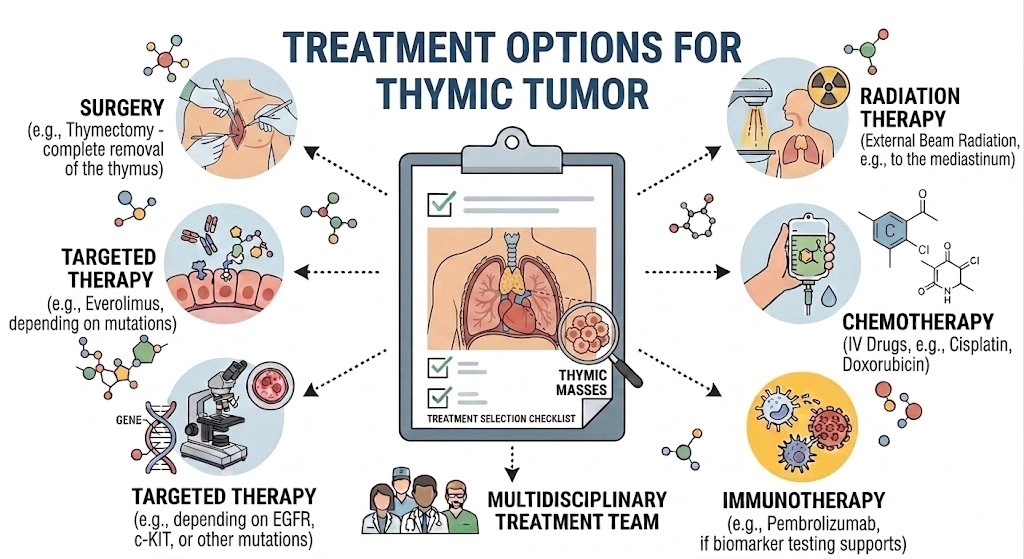
Treatment for thymic tumours depends on several factors, including the type of tumour, size, stage of disease, involvement of nearby structures, symptoms, and the overall health condition of the patient.
Common treatment options include:
Surgery
Surgery is the primary treatment option for many thymic tumours, particularly when the tumour is localized and can be safely removed.
The main goal of surgery is to achieve complete tumour removal while preserving important structures located near the thymus gland.
Thymectomy for Thymic Tumor
Thymectomy is a surgical procedure performed to remove the thymus gland along with the thymic tumour.
It is the main treatment for many thymomas and selected thymic tumours.
Extended Thymectomy
In some cases, surgery may require removal of additional surrounding tissues to achieve complete tumour clearance.
Extended thymectomy may include removal of:
- Thymus gland
- Surrounding fatty tissue
- Nearby affected tissues when required
The decision regarding the extent of surgery depends on tumour characteristics and the surgeon’s assessment.
Chemotherapy
Chemotherapy uses anti-cancer medicines to destroy tumour cells or control their growth.
It may be recommended:
- Before surgery to reduce tumour size
- After surgery in selected cases
- For advanced or recurrent thymic tumours
The type and duration of chemotherapy depend on tumour characteristics and individual treatment response.
Radiation Therapy
Radiation therapy uses high-energy radiation to target and destroy cancer cells.
It may be recommended:
- After surgery when there is a risk of residual disease
- For tumours that cannot be completely removed surgically
- For recurrent thymic tumours
- Along with other treatments in selected cases
Radiation treatment planning is personalised based on tumour location, disease extent, and individual treatment goals.
Supportive Care

Nutritional Support
Nutritional support may be provided according to the patient’s individual needs during cancer treatment and recovery. Maintaining adequate nutrition can help support overall strength, general well-being, and recovery.
Physiotherapy
Physiotherapy may be recommended to support recovery after surgery, improve physical function, and help patients gradually return to their usual daily activities.
Surgical Approaches for Thymic Tumor
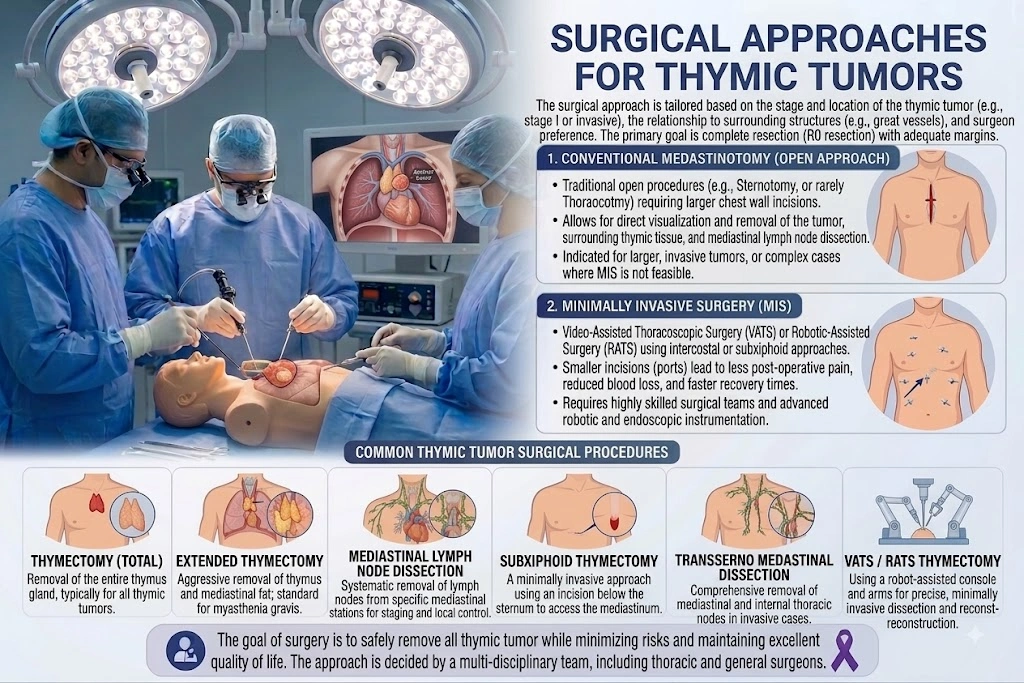
The surgical approach for thymic tumour is selected based on tumour characteristics, disease extent, involvement of surrounding structures, and individual patient requirements.
Median Sternotomy
Median sternotomy involves making an incision through the breastbone (sternum) to access the thymus gland.
Video-Assisted Thoracoscopic Surgery (VATS)
VATS thymectomy is a minimally invasive procedure performed using a camera and specialised instruments through small chest incisions.
Dr. Ajay Simha is experienced in advanced surgical management of thymic tumours, including open and minimally invasive surgical techniques when appropriate for the individual patient. The goal is always to achieve complete tumour removal while ensuring patient safety, surgical precision, protection of surrounding structures, and optimal recovery.
Frequently Asked Questions
A thymic tumour is an abnormal growth that develops in the thymus gland, a small organ located behind the breastbone in the chest.
Symptoms may include chest discomfort, persistent cough, breathing difficulty, difficulty swallowing, and swelling of the face or neck. Some patients may not have symptoms.
Diagnosis may involve CT scans, MRI, PET scans, biopsy when required, and evaluation of associated conditions.
Surgery is the main treatment option for many thymic tumours, especially when the tumour can be completely removed.
A thymectomy is a surgical procedure to remove the thymus gland and thymic tumour.