
- Home
- About Doctor
- Cancer Surgery
- Procedures & Techniques
- Minimally Invasive Cancer Surgery
- Robotic Cancer Surgery
- Laparoscopic Cancer Surgery
- Thoracoscopic Cancer Surgery (VATS)
- Open (Conventional) Cancer Surgery
- Sentinel Lymph Node Biopsy (SLNB)
- Cytoreductive Surgery (CRS)
- Hyperthermic Intraperitoneal Chemotherapy (HIPEC)
- Scarless/ Remote Access Thyroidectomy
- Resources
- Contact Us
Mediastinal Tumor Surgery
Message from Dr. Ajay Simha

A diagnosis of a mediastinal tumour can create concerns for patients and their families. Understanding the condition, treatment options, and the next steps in care can help patients make informed decisions about their healthcare.
I am Dr. Ajay Simha, providing mediastinal tumour care at Manipal Hospitals Sarjapur Road, Bengaluru.
Each patient’s condition is evaluated carefully by considering important factors such as tumour location, size, type, involvement of nearby structures, symptoms, and overall health condition. Based on this evaluation, a personalized treatment plan is developed focusing on safe and effective tumour management. Treatment may involve surgery, chemotherapy, radiation therapy, or a combination of treatments depending on the nature and extent of the tumour.
What Is Mediastinal Tumor?
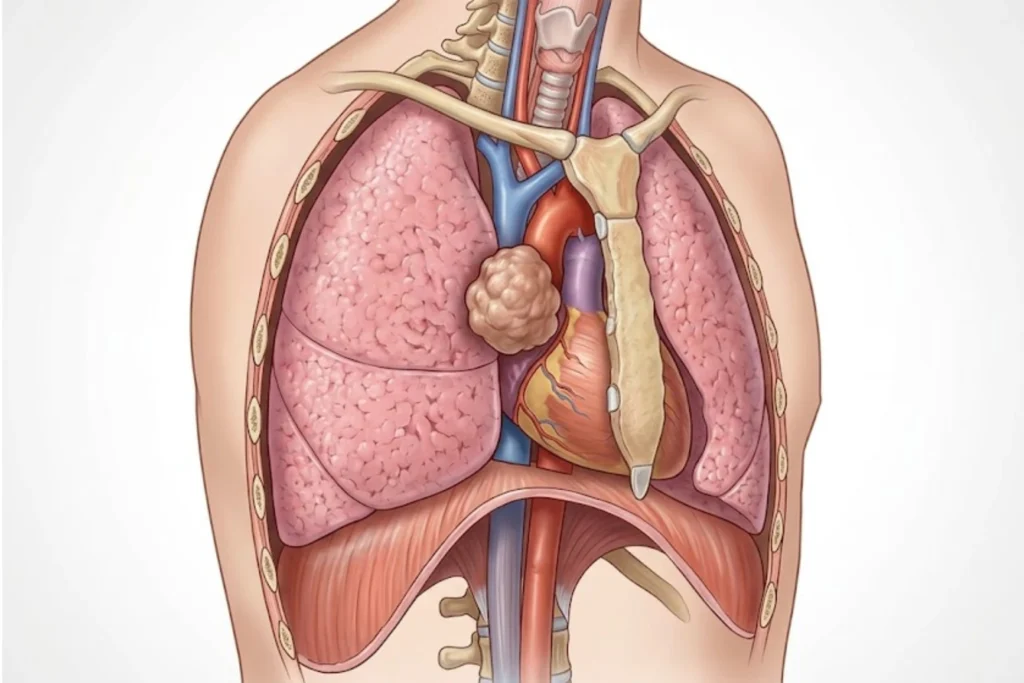
A mediastinal tumour is an abnormal growth that develops in the mediastinum, the central compartment of the chest located between the lungs. This area contains important structures including the heart, major blood vessels, trachea, esophagus, thymus gland, nerves, and lymph nodes.
Symptoms of Mediastinal Tumors
Many mediastinal tumours may not cause symptoms in the early stages and may be detected during imaging tests performed for other reasons.
When symptoms occur, they may include:
- Chest pain or discomfort
- Persistent cough
- Difficulty breathing
- Shortness of breath
- Difficulty swallowing
- Hoarseness of voice
- Feeling of pressure in the chest
- Fever or unexplained weight loss
- Swelling of the face, neck, or upper limbs
- Fatigue and weakness
Symptoms may occur due to pressure from the tumour on nearby structures such as the airway, esophagus, nerves, or blood vessels.
Persistent or worsening symptoms should be evaluated by a specialist for proper diagnosis and treatment planning.
Evaluation of Mediastinal Tumor
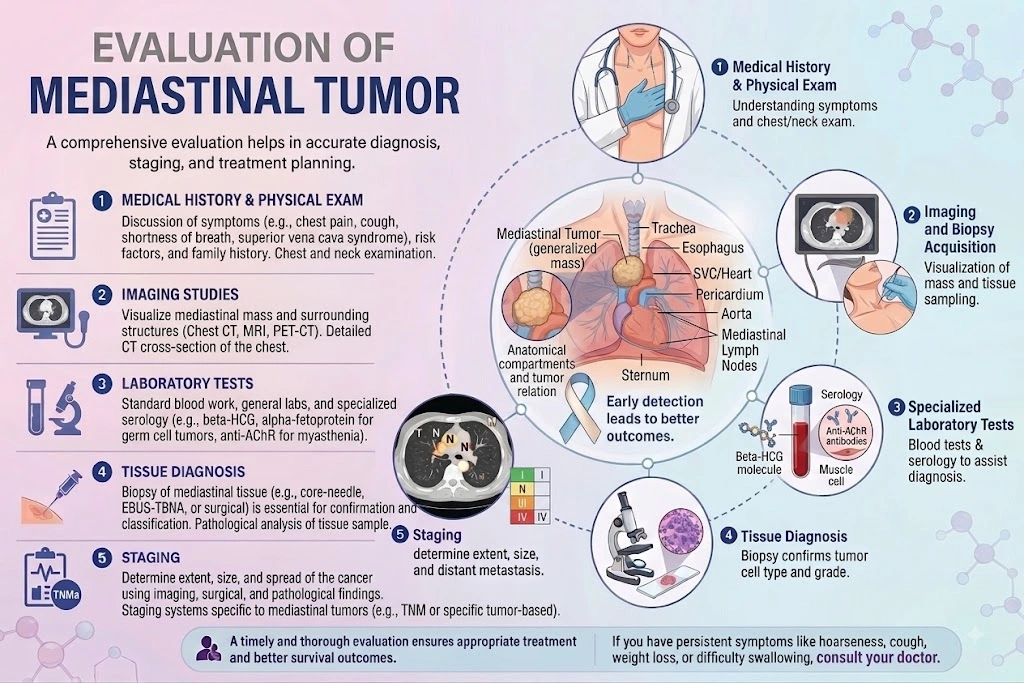
Accurate diagnosis helps determine the type, location, and extent of a mediastinal tumour and guides treatment planning.
The evaluation process may include:
Biopsy
A biopsy may be performed to determine the exact type of tumour and confirm the diagnosis.
Blood Tests
Blood investigations may be performed to evaluate overall health and identify specific markers associated with certain tumours.
Lung and Heart Assessment
Evaluation of lung and heart function may be required before surgery, especially when the tumour is close to important chest structures.
A detailed evaluation allows development of a personalized treatment plan for each patient.
Treatment Options for Mediastinal Tumor
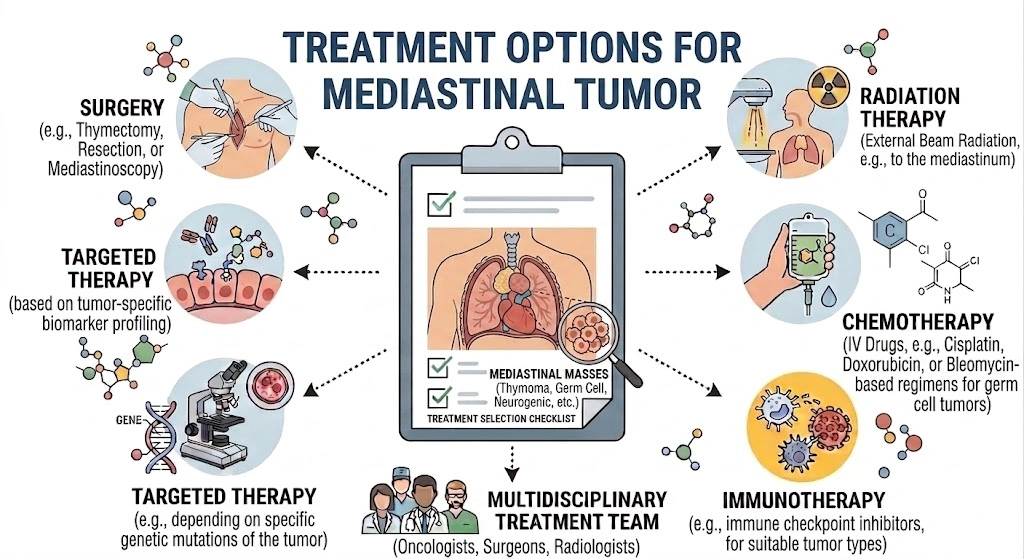
Management of mediastinal tumours depends on the type, location, size, extent of disease, involvement of nearby structures, symptoms, and the patient’s overall health condition. The appropriate combination and sequencing of treatments is determined based on individual tumour characteristics. In selected cases, active monitoring may also be considered.
Surgery
Surgery is an important treatment option for many mediastinal tumours, especially when the tumour is localized and can be safely removed.
Surgery involves removal of the tumour while protecting important structures within the chest, including the major blood vessels, heart, lungs, airway, esophagus, and nerves.
Chemotherapy
Chemotherapy uses anti-cancer medicines to destroy tumour cells or control their growth. It may be recommended for certain mediastinal tumours, especially lymphomas, germ cell tumours, and advanced or aggressive tumours. Chemotherapy may be used before surgery to reduce tumour size, after surgery, or as the primary treatment depending on the tumour type.
Radiotherapy
Radiotherapy uses high-energy radiation to target and destroy tumour cells. It may be recommended when complete surgical removal is not possible, after surgery in selected malignant tumours, or as part of combined treatment approaches to control tumour growth.
Radiation treatment planning is personalized based on tumour characteristics and treatment goals.
Active Monitoring
Some mediastinal tumours may be suitable for active monitoring, particularly when they are small, asymptomatic, or have features that do not immediately require intervention. Regular clinical assessment and imaging may be recommended to monitor tumour size and progression.
Targeted Therapy
Targeted therapy uses medicines that act on specific molecular or biological features of certain tumour cells. It may be considered for selected mediastinal tumours when specific tumour characteristics make this treatment appropriate.
Supportive Care

Nutritional support
Nutritional support may be provided according to the patient’s individual needs during treatment and recovery. Maintaining adequate nutrition can help support overall strength, well-being, and recovery.
Physiotherapy
Physiotherapy may help prepare patients for surgery, support recovery after surgery, improve physical function, and help patients gradually return to their usual daily activities.
Surgical Approaches for Mediastinal Tumor
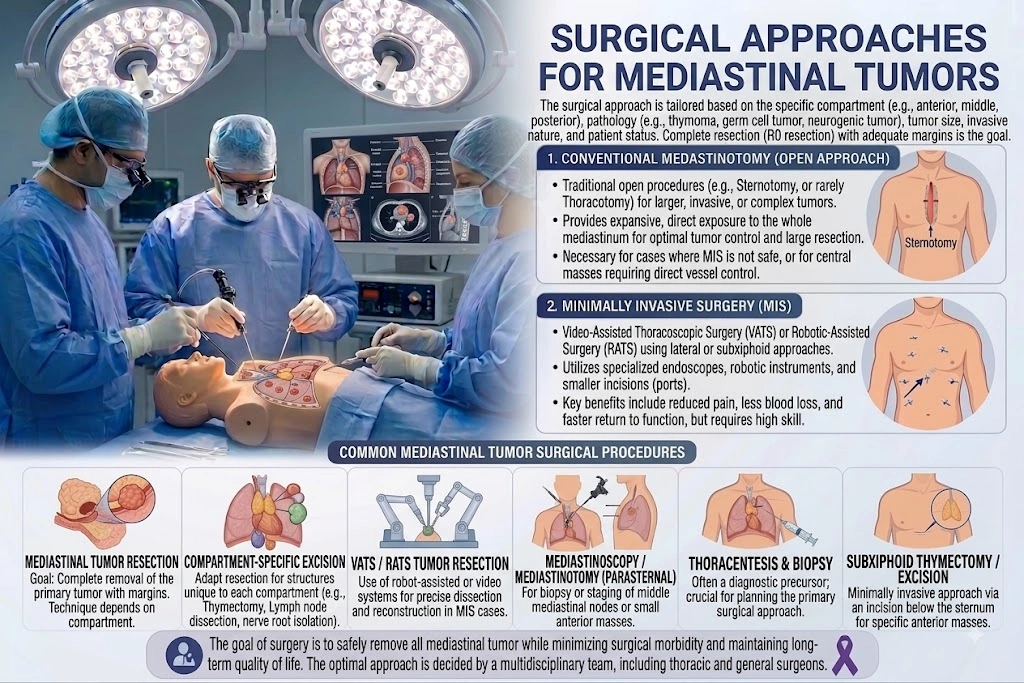
The choice of surgical approach depends on the tumour location, size, complexity, involvement of nearby structures, and the patient’s overall health. Depending on the individual case, median sternotomy or thoracoscopic surgery may be recommended. Each technique offers distinct advantages and is selected based on factors such as:
- The location of the tumour within the mediastinum
- The size and extent of the tumour
- Involvement of nearby structures
- The patient’s overall health and fitness for surgery
Every treatment plan is carefully tailored to ensure the safest and most effective outcome.
Dr. Ajay Simha is experienced in advanced mediastinal tumour surgery using both minimally invasive and open surgical techniques. The goal is always to achieve complete tumour removal while ensuring patient safety, surgical precision, and optimal recovery.
Frequently Asked Questions
A mediastinal tumour is an abnormal growth that develops in the mediastinum, the central area of the chest between the lungs.
No. Mediastinal tumours can be benign or malignant. Proper evaluation helps determine the type and appropriate treatment approach.
Symptoms may include chest discomfort, cough, breathing difficulty, swallowing difficulty, and pressure sensation in the chest. Some tumours may not cause symptoms.
Diagnosis may involve CT scans, MRI, PET scans, biopsy, blood tests, and evaluation of nearby structures.
Surgery depends on factors such as tumour type, size, location, symptoms, and whether complete removal is possible.