- Home
- About Doctor
- Cancer Surgery
- Procedures & Techniques
- Minimally Invasive Cancer Surgery
- Robotic Cancer Surgery
- Laparoscopic Cancer Surgery
- Thoracoscopic Cancer Surgery (VATS)
- Open (Conventional) Cancer Surgery
- Sentinel Lymph Node Biopsy (SLNB)
- Cytoreductive Surgery (CRS)
- Hyperthermic Intraperitoneal Chemotherapy (HIPEC)
- Scarless/ Remote Access Thyroidectomy
- Resources
- Contact Us
Scarless/ Remote Access Thyroidectomy
Message from Dr. Ajay Simha

A thyroid swelling or thyroid nodule can understandably cause concerns about the diagnosis, treatment and the appearance of a scar after surgery. For patients who are suitable candidates for thyroid surgery, remote-access techniques offer an alternative approach that avoids a visible scar in the neck.
Scarless or remote-access thyroidectomy refers to minimally invasive techniques in which the thyroid is approached through areas away from the front of the neck. The transoral vestibular approach, for example, uses small incisions inside the mouth, leaving no visible skin scar on the neck. Other remote-access approaches may use access points around the armpit, breast or behind the ear.
I am Dr. Ajay Simha, Consultant Surgical Oncologist (Cancer Surgeon), and this page provides an overview of scarless and remote-access thyroidectomy, including when it may be considered, evaluation, treatment options, surgical techniques, recovery and commonly asked questions.
What Is Scarless/ Remote Access Thyroidectomy?
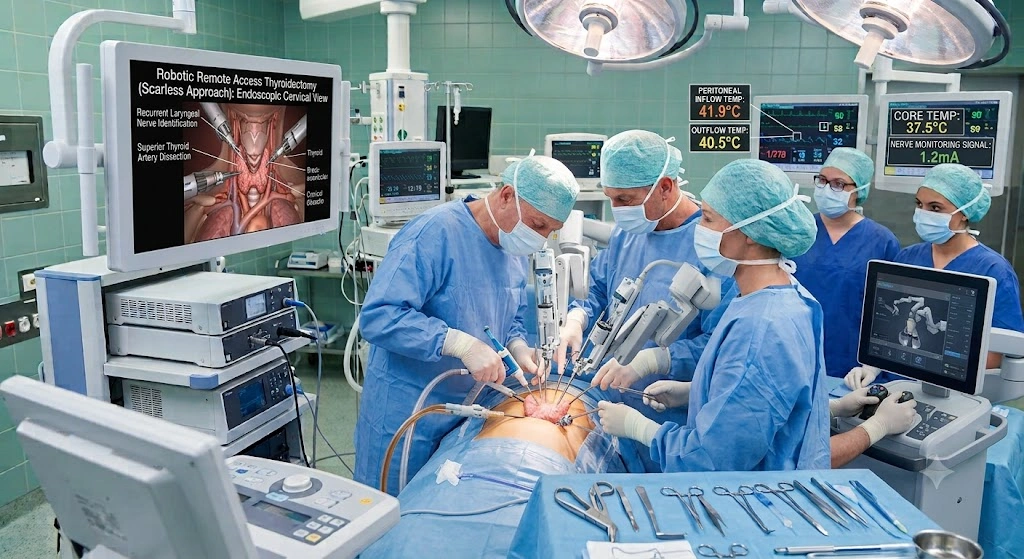
Scarless or remote-access thyroidectomy is a minimally invasive approach to thyroid surgery in which the thyroid gland is accessed through an incision that does not leave a conventional visible scar on the front of the neck. The transoral endoscopic thyroidectomy vestibular approach (TOETVA) is one of the most established scarless techniques.
Thyroid conditions that may require surgery can present with different symptoms depending on the size and nature of the thyroid problem.
Common symptoms and signs may include:
- A lump or swelling in the neck
- A thyroid nodule detected during examination or imaging
- Difficulty swallowing
- Difficulty breathing or pressure in the neck
- Change or discomfort in the voice
- Neck discomfort or pressure
- Enlargement of the thyroid gland
- Symptoms related to an overactive thyroid in selected patients
- A thyroid nodule with suspicious features on ultrasound
Some thyroid nodules may not cause any symptoms and may be discovered incidentally during an examination or imaging study.
The suitability of a remote-access approach depends on the thyroid condition, size and location of the nodule or gland, presence of cancer, lymph node involvement and the patient's overall health.
In selected patients, remote-access thyroidectomy may be considered for:
- Certain benign thyroid nodules
- Selected multinodular goitres
- Indeterminate thyroid nodules
- Selected thyroid cancers
- Selected patients requiring hemithyroidectomy or total thyroidectomy
- Patients who strongly prefer to avoid a visible neck scar
Patient selection is particularly important for transoral surgery. Factors such as large or substernal goitres, previous neck surgery or radiation and extensive disease may make a remote-access approach unsuitable.
Evaluation of Scarless/ Remote Access Thyroidectomy
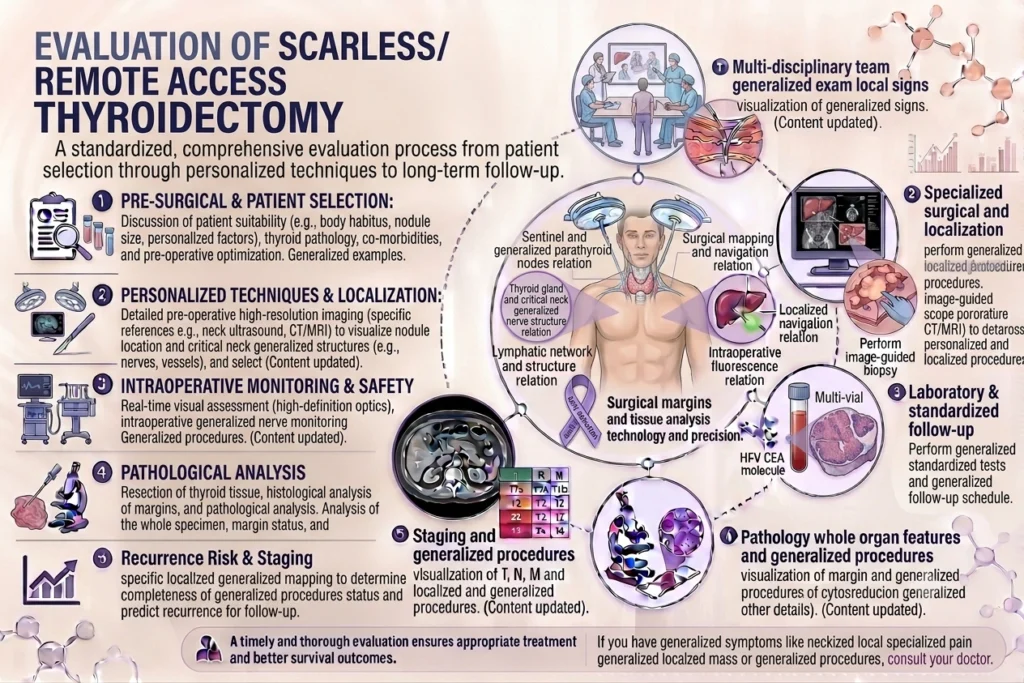
A detailed evaluation is performed before deciding whether thyroid surgery is required and whether a remote-access technique is appropriate.
Clinical Examination
The neck and thyroid gland are examined to assess the size, consistency and mobility of the swelling and to check for enlarged lymph nodes.
Thyroid Ultrasound
Ultrasound is an important investigation for evaluating thyroid nodules and assessing their size, characteristics and relationship with surrounding structures.
It can also help evaluate the cervical lymph nodes when thyroid cancer is suspected.
Thyroid Function Tests
Blood tests such as TSH and other thyroid hormone measurements may be performed to determine whether the thyroid gland is functioning normally, is overactive or is underactive.
Treatment Options for Scarless/ Remote Access Thyroidectomy
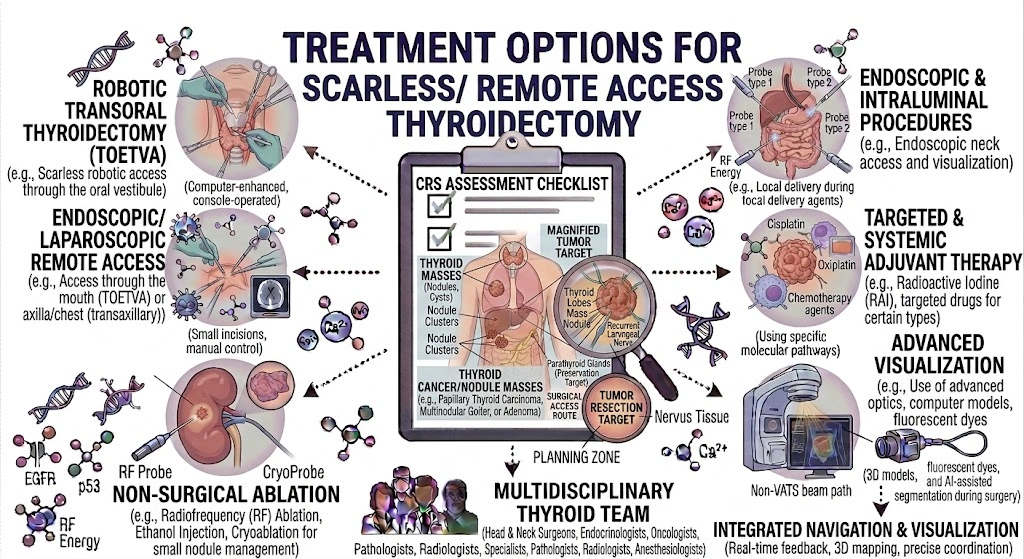
The appropriate treatment depends on the diagnosis, size and characteristics of the thyroid lesion, thyroid function and whether cancer is present.
Surgery may involve removal of one thyroid lobe (hemithyroidectomy) or removal of most or all of the thyroid gland (total thyroidectomy), depending on the condition. For selected patients, the operation can be performed using a remote-access technique such as TOETVA or another appropriate approach.
Conventional chemotherapy has a limited role in the treatment of most thyroid cancers. For selected advanced or aggressive thyroid cancers, systemic anti-cancer treatment may be considered based on the specific type of cancer and its molecular characteristics.
Radioactive iodine therapy may be used in selected differentiated thyroid cancers after surgery. External beam radiation therapy may also be considered in specific situations, such as selected advanced or unresectable disease. The need for additional treatment depends on the type and stage of thyroid cancer.
Immunotherapy may be considered for selected advanced thyroid cancers when the tumour and clinical situation meet the appropriate criteria. It is generally not required for routine benign thyroid conditions or most localized thyroid cancers.
Targeted therapies are used for selected advanced thyroid cancers with specific molecular or biological characteristics. Molecular testing may help identify patients who could benefit from specific targeted medicines.
Supportive Care

Supportive care helps patients recover comfortably after thyroid surgery and return to their usual activities.
Nutritional Support
Most patients can gradually resume normal oral intake after thyroid surgery. Patients undergoing extensive cancer treatment may require additional nutritional assessment and support depending on their overall condition and treatment requirements.
Physiotherapy
Neck and shoulder mobility exercises may be recommended after surgery, particularly when more extensive neck surgery or lymph node dissection has been performed. Appropriate exercises can help reduce stiffness and support a gradual return to normal activity.
Surgical Approaches for Scarless/ Remote Access Thyroidectomy
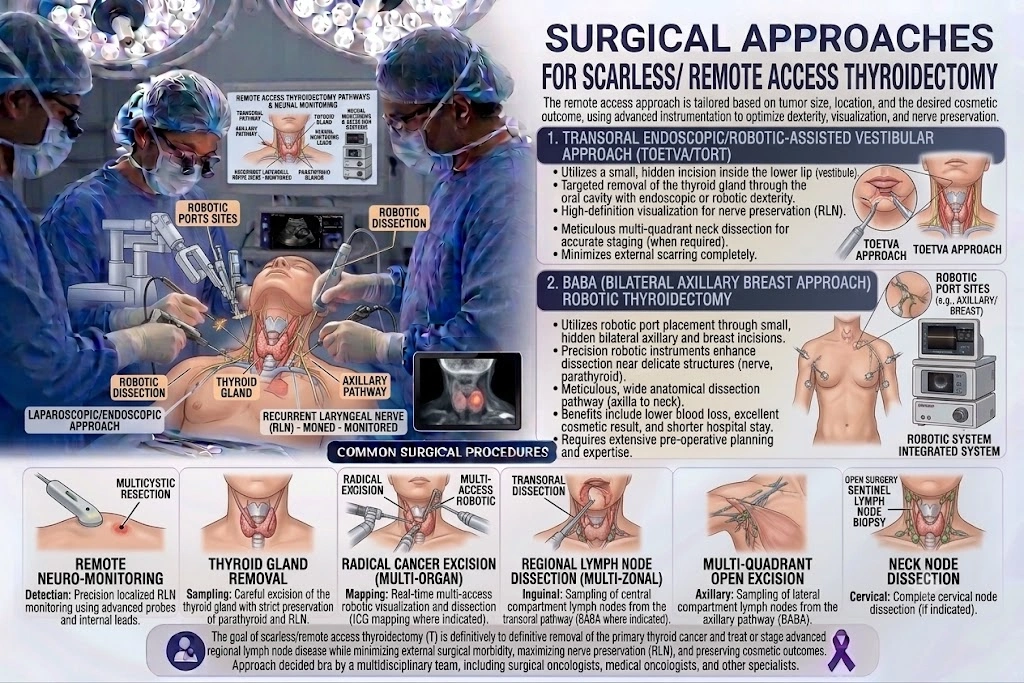
The choice of remote-access thyroidectomy depends on the patient’s anatomy, thyroid condition, tumour characteristics and surgeon’s expertise.
TOETVA is a scarless thyroid surgery technique in which the thyroid gland is accessed through small incisions inside the mouth. A camera provides magnified visualization, while specialized instruments are used to dissect and remove the thyroid tissue.
Because the access points are located within the oral vestibule, there is no visible incision on the neck.
Recovery depends on the type of thyroid surgery performed, the extent of the operation and the patient's overall health.
Patients may experience temporary throat discomfort, swelling, neck tightness or difficulty swallowing after surgery. After transoral surgery, particular attention is also given to oral wound care and infection prevention. Most patients gradually return to their normal activities according to their surgeon's advice.
Dr. Ajay Simha provides individualized evaluation and surgical planning for patients considering scarless or remote-access thyroid surgery. The approach is selected based on the thyroid condition, cancer characteristics when applicable, patient's anatomy and the safest way to achieve the required surgical outcome.
Frequently Asked Questions
Scarless thyroid surgery refers to thyroid surgery performed through an approach that avoids a visible scar on the front of the neck.
With the transoral vestibular approach, there is no visible skin scar on the neck because the incisions are made inside the mouth. However, the procedure is still surgery and involves internal healing.
Suitability depends on thyroid size, type of thyroid disease, tumour characteristics, lymph node involvement, previous surgery or radiation and other anatomical factors. Not every patient is a candidate for the procedure.
CRS, or cytoreductive surgery, involves removing visible tumour deposits from the abdominal cavity. HIPEC is the subsequent delivery of heated chemotherapy directly into the abdomen to treat microscopic residual cancer cells.
Not necessarily. Robotic surgery describes the technology used to perform the operation, while scarless or remote-access surgery describes where the surgeon accesses the thyroid.