
- Home
- About Doctor
- Cancer Surgery
- Procedures & Techniques
- Minimally Invasive Cancer Surgery
- Robotic Cancer Surgery
- Laparoscopic Cancer Surgery
- Thoracoscopic Cancer Surgery (VATS)
- Open (Conventional) Cancer Surgery
- Sentinel Lymph Node Biopsy (SLNB)
- Cytoreductive Surgery (CRS)
- Hyperthermic Intraperitoneal Chemotherapy (HIPEC)
- Scarless/ Remote Access Thyroidectomy
- Resources
- Contact Us
Kidney Cancer Surgery
Message from Dr. Ajay Simha

A diagnosis of kidney cancer can be challenging for patients and their families. Understanding the disease, available treatment options, and the steps involved in care can help patients make informed decisions about their healthcare.
I am Dr. Ajay Simha, providing kidney cancer care at Manipal Hospitals Sarjapur Road, Bengaluru.
Each patient’s condition is evaluated carefully by considering important factors such as tumour size, location, kidney function, stage of cancer, overall health condition, and treatment goals. Based on this evaluation, a personalized treatment plan is developed with a focus on safe tumour removal, preservation of kidney function whenever possible, and effective cancer management.
What Is Kidney Cancer?

Kidney cancer develops when abnormal cells in the kidney begin to grow uncontrollably, forming a tumour. The kidneys are important organs responsible for filtering waste products from the blood, maintaining fluid balance, and producing hormones that support normal body functions.
Symptoms of Kidney Cancer
Kidney cancer may not cause symptoms during the early stages. As the tumour grows, patients may experience symptoms such as:
- Blood in urine (haematuria)
- Persistent pain in the side or lower back
- A lump or swelling in the kidney area
- Unexplained weight loss
- Loss of appetite
- Persistent fatigue
- Fever without an obvious cause
- Anaemia
- High blood pressure
- General weakness
Any persistent urinary changes, blood in urine, or unexplained symptoms should be evaluated by a specialist for proper diagnosis and timely treatment planning.
Evaluation of Kidney Cancer
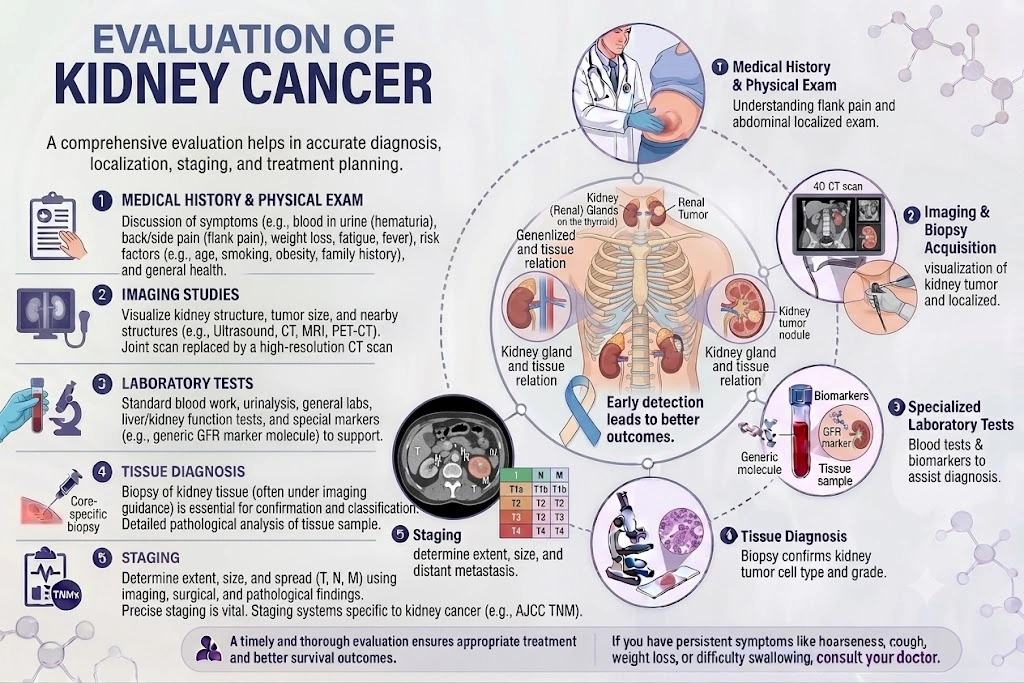
Accurate diagnosis helps determine the size, location, and extent of kidney cancer and guides treatment planning.
The evaluation process may include:
Blood Tests
Blood tests help evaluate kidney function and the overall health condition of the patient.
Urine Tests
Urine examination may help identify blood or other abnormalities.
Biopsy
A biopsy may be performed in selected cases to determine the exact type of kidney tumour.
A detailed evaluation allows the development of a personalized treatment plan for each patient.
Treatment Options for Kidney Cancer
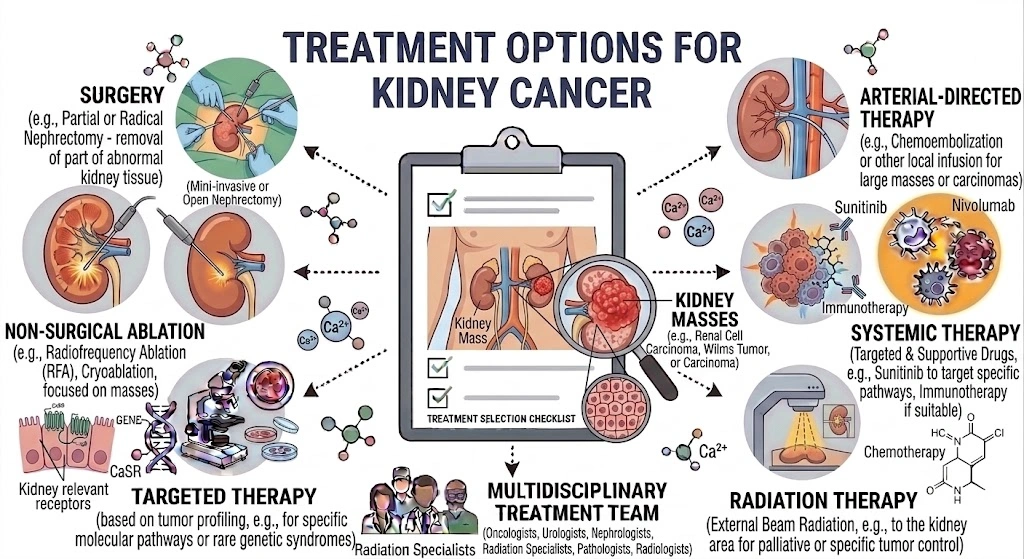
Treatment for kidney cancer depends on several factors, including the type of tumour, size, location, stage of cancer, kidney function, spread of disease, and the overall health condition of the patient.
Surgery
Surgery is the main treatment option for many patients with localized kidney cancer, where the tumour has not spread extensively beyond the kidney. The primary goal of surgery is to remove the cancer while preserving kidney function whenever possible.
Radiotherapy
Radiation therapy is not usually the primary treatment for kidney cancer, but it may be considered in selected situations. The decision to use radiation therapy depends on the extent of disease, treatment goals, and the patient’s individual condition.
Chemotherapy
Chemotherapy uses anti-cancer medicines to destroy or control cancer cells. It is not generally the main treatment approach for most kidney cancers, but may have a role in selected kidney tumour types or specific clinical situations based on the diagnosis and treatment plan.
Targeted Therapy
Targeted therapy focuses on specific changes within cancer cells that help them grow and survive.
It may be recommended for certain patients with advanced kidney cancer.
Targeted treatments aim to:
- Slow tumour growth
- Control disease progression
- Improve treatment outcomes
The suitability of targeted therapy depends on cancer stage, tumour characteristics, and individual treatment needs.
Immunotherapy
Immunotherapy helps the body’s immune system recognise and fight cancer cells.
It may be used for selected patients with advanced kidney cancer.
The treatment approach depends on:
- Cancer stage
- Overall health condition
- Tumour characteristics
- Previous treatments received
Immunotherapy may be used alone or along with other systemic treatments.
Supportive Care

Supportive care is an important part of comprehensive kidney cancer treatment. It focuses on maintaining the patient’s overall health, supporting recovery, and addressing individual needs throughout the treatment process.
Nutritional Support
Nutritional support helps patients maintain adequate nutrition and strength during cancer treatment and recovery. Individual nutritional requirements are assessed based on the patient’s overall health, kidney function, and treatment needs.
Physiotherapy
Physiotherapy can help prepare patients for surgery, support recovery after treatment, and help patients return to their previous activities of daily living.
Surgical Approaches for Kidney Cancer
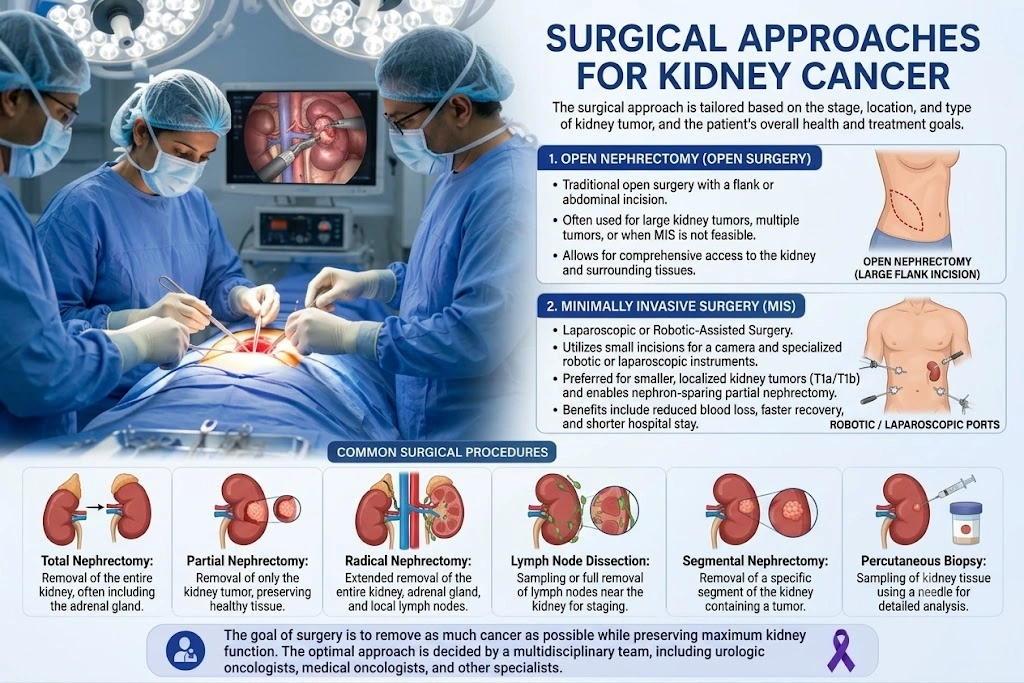
The surgical approach for kidney cancer is selected based on tumour characteristics, complexity, and individual patient requirements. Depending on the tumour and the patient’s condition, open, laparoscopic, or robotic-assisted surgery may be considered.
Open Kidney Cancer Surgery
Open surgery involves making a larger incision to access the kidney and remove the tumour or affected kidney.
It may be recommended for:
- Large kidney tumours
- Complex tumours
- Cases requiring extensive surgical access
This approach allows careful tumour removal and management of surrounding structures.
Multidisciplinary Kidney Cancer Care
Kidney cancer treatment may require collaboration between multiple specialists, including surgical oncologists, urologists, medical oncologists, radiologists, pathologists, radiation oncologists, nephrologists, and supportive care specialists.
A multidisciplinary approach helps create a comprehensive treatment plan based on accurate diagnosis, cancer stage, kidney function, and individual patient requirements.
Dr. Ajay Simha is experienced in the surgical management of kidney cancer using appropriate surgical techniques based on tumour characteristics and individual patient needs. The goal is to achieve complete cancer removal while preserving kidney function whenever possible, ensuring patient safety, and supporting optimal recovery and long-term cancer management.
Frequently Asked Questions
Early kidney cancer may not cause noticeable symptoms. Possible symptoms include blood in urine, side pain, unexplained weight loss, fatigue, and a lump in the kidney area.
Kidney cancer diagnosis may involve ultrasound, CT scan, MRI, blood tests, urine tests, and biopsy in selected cases.
Surgery is the main treatment option for many localized kidney cancers where complete tumour removal is possible.
Partial nephrectomy is a kidney-sparing surgery where only the tumour and a small margin of surrounding tissue are removed while preserving the remaining kidney.
Radical nephrectomy involves removing the entire kidney affected by cancer and may include removal of surrounding tissues when required.