
- Home
- About Doctor
- Cancer Surgery
- Procedures & Techniques
- Minimally Invasive Cancer Surgery
- Robotic Cancer Surgery
- Laparoscopic Cancer Surgery
- Thoracoscopic Cancer Surgery (VATS)
- Open (Conventional) Cancer Surgery
- Sentinel Lymph Node Biopsy (SLNB)
- Cytoreductive Surgery (CRS)
- Hyperthermic Intraperitoneal Chemotherapy (HIPEC)
- Scarless/ Remote Access Thyroidectomy
- Resources
- Contact Us
Breast Cancer Surgery
Message from Dr. Ajay Simha

A breast cancer diagnosis can bring uncertainty and several concerns for patients and their families. Questions about the type of cancer, treatment options, surgery, recovery, and long-term outcomes are common.
When breast cancer is suspected or diagnosed, a comprehensive assessment is performed to understand the tumour characteristics, extent of disease, lymph node involvement, and the patient’s overall health. The findings are used to develop an individualized treatment plan based on the type and stage of cancer and the patient’s treatment goals.
I am Dr. Ajay Simha, Consultant Surgical Oncologist (Cancer Surgeon), and this page provides an overview of breast cancer, including its symptoms, evaluation, treatment options, and surgical approaches.
What Is Breast Cancer?
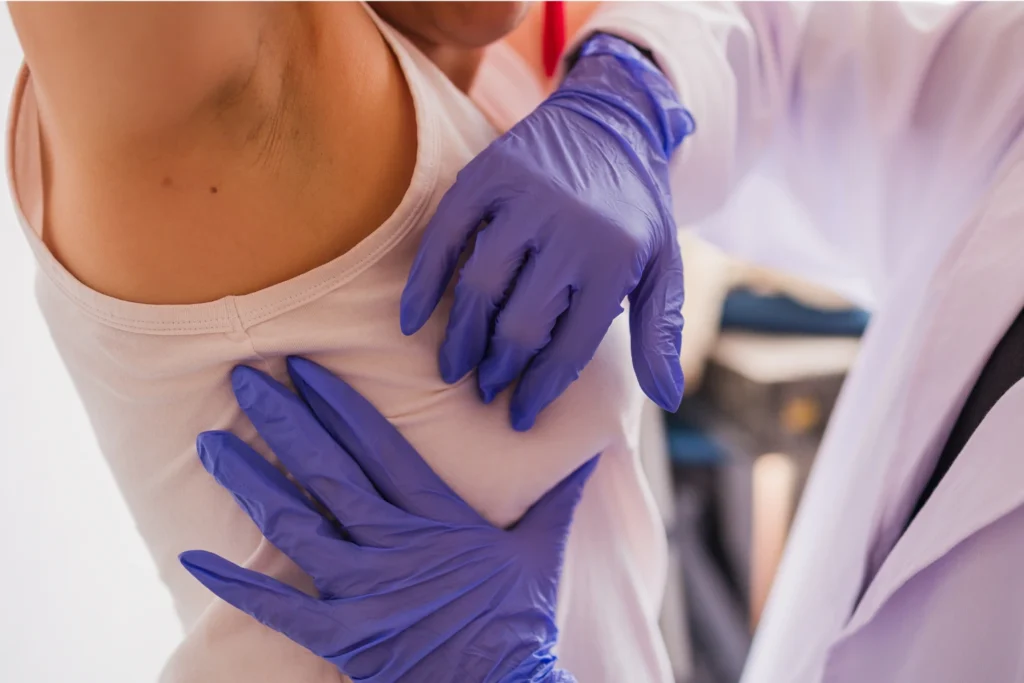
Breast cancer occurs when cells within the breast develop abnormal changes and begin to multiply without normal control, resulting in the formation of a tumour. These changes can develop in different breast tissues, including the milk ducts and the milk-producing glands.
Symptoms of Breast Cancer
Breast cancer may not cause noticeable symptoms in its early stages, and some abnormalities may first be identified through routine screening. When symptoms occur, they can vary depending on the location and characteristics of the tumour.
Common signs and symptoms include:
- A new lump or thickened area in the breast
- Changes in breast size or shape
- Swelling in the breast or underarm area
- Persistent breast discomfort or pain
- Changes in the appearance or texture of the breast skin
- Dimpling or puckering of the skin
- Inward turning or other changes in the nipple
- Unusual nipple discharge, including blood-stained discharge
- Redness, scaling, or irritation around the nipple
- Enlarged lymph nodes in the armpit
Evaluation of Breast Cancer

A detailed evaluation is essential to confirm breast cancer, identify its type, determine its extent, and guide treatment decisions.
Clinical Breast Examination
A physical examination helps assess breast lumps, changes in breast tissue, nipple abnormalities, and any enlarged lymph nodes in the surrounding areas.
Mammography
Mammography uses low-dose X-rays to identify suspicious changes within the breast. It is commonly used for both breast cancer screening and diagnostic evaluation.
Breast Ultrasound
Ultrasound provides additional information about breast abnormalities and can help distinguish solid masses from fluid-filled cysts. It can be particularly useful when evaluating a palpable breast lump.
Treatment Options for Breast Cancer

Breast cancer treatment is individualized according to the type and stage of cancer, tumour characteristics, hormone receptor and HER2 status, genetic factors, and the patient’s overall health.
Surgery is an important component of treatment for many patients with localized breast cancer. The objective is to remove the cancer completely while preserving as much healthy breast tissue as safely possible.
Radiation therapy uses high-energy radiation to destroy cancer cells that may remain after surgery. It is commonly considered after breast-conserving surgery and may also be recommended in selected patients following mastectomy based on tumour and lymph node characteristics.
Chemotherapy uses medicines that destroy cancer cells or prevent them from multiplying. It may be administered before surgery to reduce tumour size or after surgery to reduce the risk of recurrence.
Some breast cancers depend on hormones such as estrogen or progesterone for their growth. Hormone therapy works by reducing the effect of these hormones on cancer cells. It may be recommended for patients whose tumours are found to have hormone receptors, with the choice of treatment based on individual patient and tumour characteristics.
Targeted treatments are designed to act on specific proteins or molecular changes that contribute to cancer growth. For example, patients with HER2-positive breast cancer may benefit from medicines that specifically target HER2 activity. The suitability of targeted therapy is determined through appropriate tumour testing and is incorporated into the treatment plan when indicated.
Supportive Care

Nutritional Support
Maintaining adequate nutrition is an important part of breast cancer treatment and recovery. Nutritional needs can change during surgery, chemotherapy, radiation therapy, or other treatments. Individualized nutritional guidance can help patients maintain strength and support their overall well-being throughout treatment.
Physiotherapy
Physiotherapy can support recovery following breast cancer surgery by helping patients regain shoulder movement, strength, and physical function. It can also assist with a gradual return to normal daily activities.
Surgical Approaches for Ovarian Cancer

The choice of breast cancer surgery depends on factors such as tumour size and location, cancer type and stage, lymph node involvement, response to previous treatment, and the patient’s individual preferences and treatment goals.
Breast-conserving surgery, also known as lumpectomy, involves removing the tumour along with a margin of surrounding healthy tissue while retaining most of the breast.
Oncoplastic breast surgery combines cancer surgery with techniques used in reconstructive and plastic surgery. It aims to achieve appropriate tumour removal while preserving or improving the shape and appearance of the breast.
This approach may be considered when removal of the tumour could otherwise result in significant changes to breast shape or symmetry.
Dr. Ajay Simha is experienced in breast cancer surgery, including breast-conserving and mastectomy procedures and appropriate oncoplastic approaches. His treatment approach focuses on careful surgical planning, complete cancer removal where appropriate, patient safety, and supporting recovery and quality of life.
Frequently Asked Questions
Early breast cancer may not always cause noticeable symptoms. Common signs include a breast lump, changes in breast size or shape, nipple changes, unusual discharge, skin changes, and swelling in the underarm area.
Breast cancer diagnosis may involve clinical examination, mammography, ultrasound, MRI, biopsy, and laboratory testing of tumour samples to determine the type and characteristics of cancer.
Surgery is an important treatment option for many breast cancer patients, but the treatment approach depends on factors such as cancer stage, tumour characteristics, overall health, and individual treatment goals.
Breast conserving surgery involves removing the cancerous tumour along with a margin of healthy tissue while preserving most of the breast. It is suitable for selected patients where complete tumour removal can be achieved.
Chemotherapy may be recommended after surgery depending on cancer stage, tumour characteristics, lymph node involvement, and other medical factors.