- Home
- About Doctor
- Cancer Surgery
- Procedures & Techniques
- Minimally Invasive Cancer Surgery
- Robotic Cancer Surgery
- Laparoscopic Cancer Surgery
- Thoracoscopic Cancer Surgery (VATS)
- Open (Conventional) Cancer Surgery
- Sentinel Lymph Node Biopsy (SLNB)
- Cytoreductive Surgery (CRS)
- Hyperthermic Intraperitoneal Chemotherapy (HIPEC)
- Scarless/ Remote Access Thyroidectomy
- Resources
- Contact Us
Chest Wall Tumor Surgery
Message from Dr. Ajay Simha

A diagnosis of a chest wall tumour can create concerns and uncertainty for patients and their families. Understanding the condition, available treatment options, and the treatment process can help patients make informed decisions about their healthcare.
I am Dr. Ajay Simha, providing chest wall tumour care at Manipal Hospitals Sarjapur Road, Bengaluru.
Each patient’s condition is evaluated carefully by considering important factors such as tumour type, size, location, involvement of ribs or soft tissues, extent of disease, and overall health condition.
What Is Chest Wall Tumor?
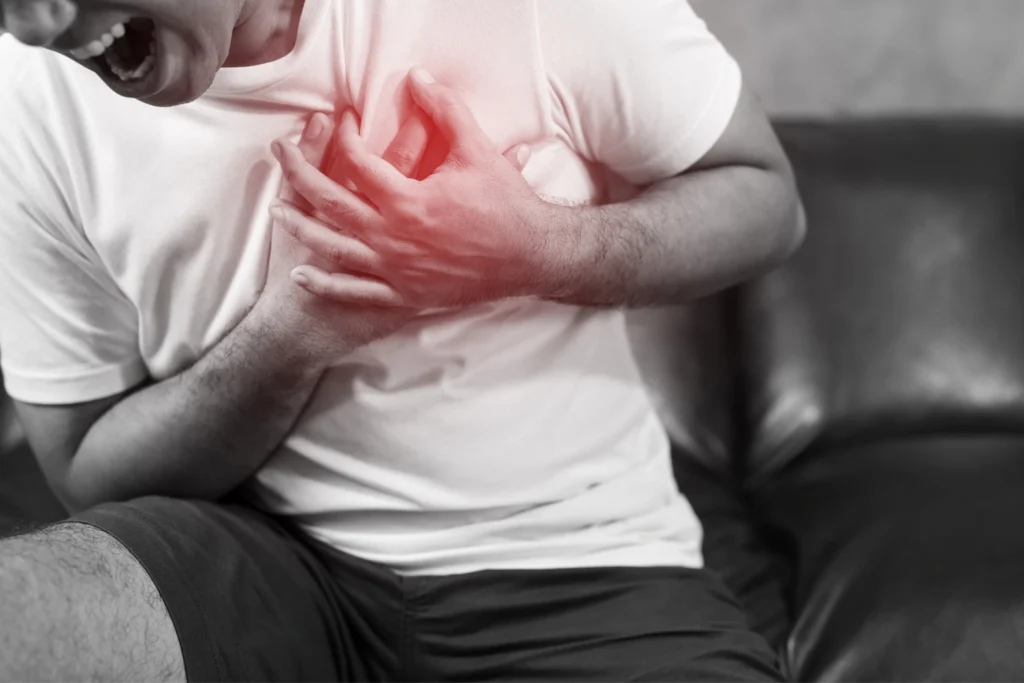
A chest wall tumour is an abnormal growth that develops in the tissues forming the chest wall. The chest wall consists of bones, muscles, connective tissues, cartilage, skin, and soft tissues that protect the organs inside the chest.
Symptoms of Chest Wall Tumors
The symptoms of chest wall tumours may vary depending on the size, location, and type of tumour.
Common signs and symptoms may include:
- A visible or growing lump on the chest wall
- Chest pain or discomfort
- Swelling over the ribs or chest area
- Tenderness at the site of the tumour
- Difficulty breathing due to pressure on nearby structures
- Restricted chest movement
- Unexplained weight loss
- Fatigue and general weakness
Some chest wall tumours may grow slowly and remain unnoticed until they become larger.
Any persistent lump, swelling, or unexplained chest discomfort should be evaluated by a specialist for proper diagnosis.
Evaluation of Chest Wall Tumor
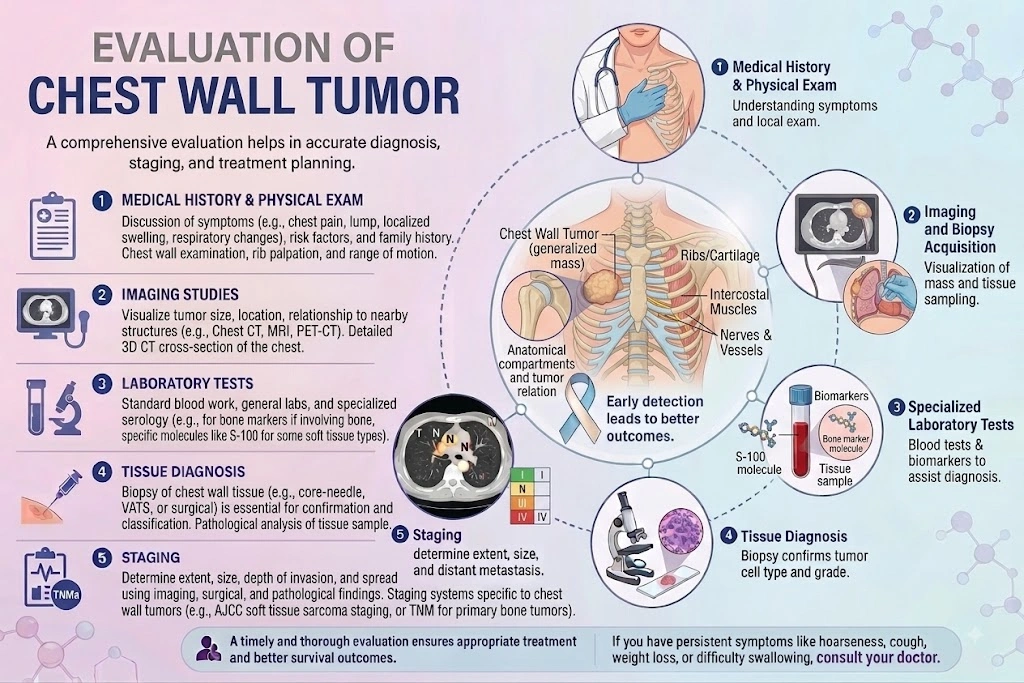
Accurate diagnosis helps determine the type, extent, and behaviour of a chest wall tumour and guides treatment planning.
The evaluation process may include:
Physical Examination
A detailed clinical examination helps assess the size, location, and characteristics of the chest wall mass.
Biopsy
A biopsy involves collecting a tissue sample from the tumour to determine the exact type and confirm the diagnosis.
Additional Assessment
Further evaluation may include blood tests and assessment of the patient’s overall health condition before planning treatment.
A detailed evaluation allows the development of a personalized treatment plan for each patient.
Treatment Options for Chest Wall Tumor
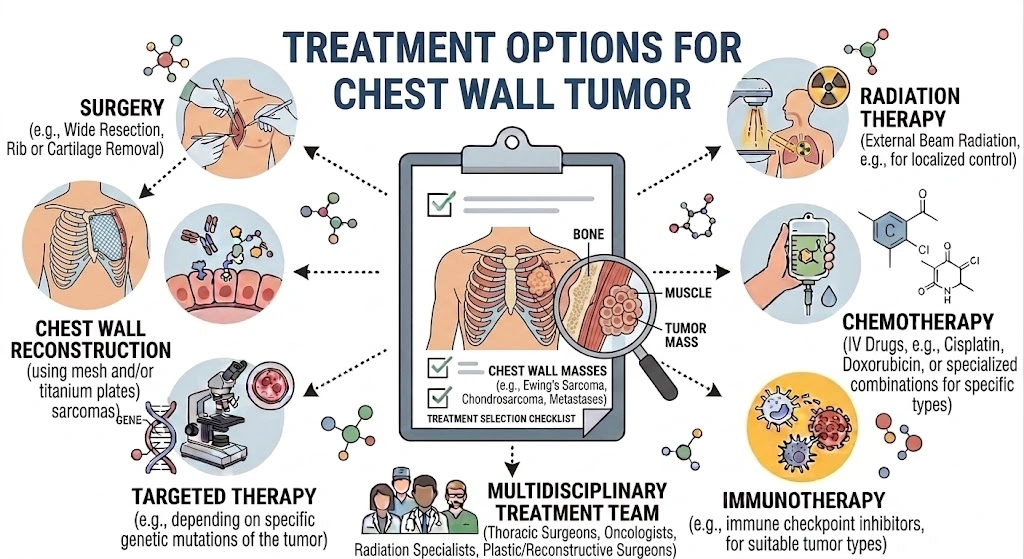
Treatment for chest wall tumours depends on several factors, including the type of tumour, size, location, involvement of ribs or surrounding tissues, whether the tumour is benign or malignant, and the overall health condition of the patient.
The treatment plan is personalized based on individual medical needs and may include surgery, chemotherapy, radiation therapy, or a combination of treatments. Depending on the tumour characteristics and individual treatment requirements, other treatment modalities may also be considered.
Surgery
Surgery is the main treatment option for many chest wall tumours, especially when the tumour is localized and can be safely removed.
The primary goal of surgery is to completely remove the tumour while maintaining chest wall stability and protecting the function of surrounding structures.
Chest wall tumour surgery may involve removal of:
- Tumour mass
- Affected soft tissues
- Portions of involved ribs
- Part of the sternum when required
- Surrounding tissues to achieve complete tumour clearance
Radiotherapy
Radiation therapy uses high-energy radiation to target and destroy cancer cells.
It may be recommended:
- Before surgery to help reduce tumour size in selected cases
- After surgery when there is a risk of residual disease
- For tumours that cannot be completely removed surgically
- For symptom control in advanced disease
Radiation treatment planning is personalized based on tumour type, location, and treatment goals.
Chemotherapy
Chemotherapy uses anti-cancer medicines to destroy tumour cells or control their growth.
It may be recommended for certain chest wall tumours, especially malignant tumours such as sarcomas.
Immunotherapy
Immunotherapy uses medicines that help the body’s immune system recognise and fight cancer cells. It may be considered for selected patients depending on the type and specific characteristics of the tumour and the overall treatment plan.
Targeted Therapy
Targeted therapy uses medicines designed to act on specific characteristics or molecular changes associated with cancer cells. It may be considered for selected patients when the tumour has features that can be addressed with targeted treatment.
Supportive Care

Supportive care is an important part of comprehensive chest wall tumour treatment. It focuses on supporting the patient’s nutritional status, physical function, recovery, and overall well-being during treatment.
Nutritional Support
Nutritional support helps maintain adequate nutrition and overall strength during cancer treatment. The need for nutritional supplementation and support is assessed based on the patient’s individual condition and treatment requirements.
Physiotherapy
Physiotherapy and rehabilitation support can help patients prepare for surgery, recover after treatment, and return to their previous activities of daily living.
Surgical Approaches for Chest Wall Tumor
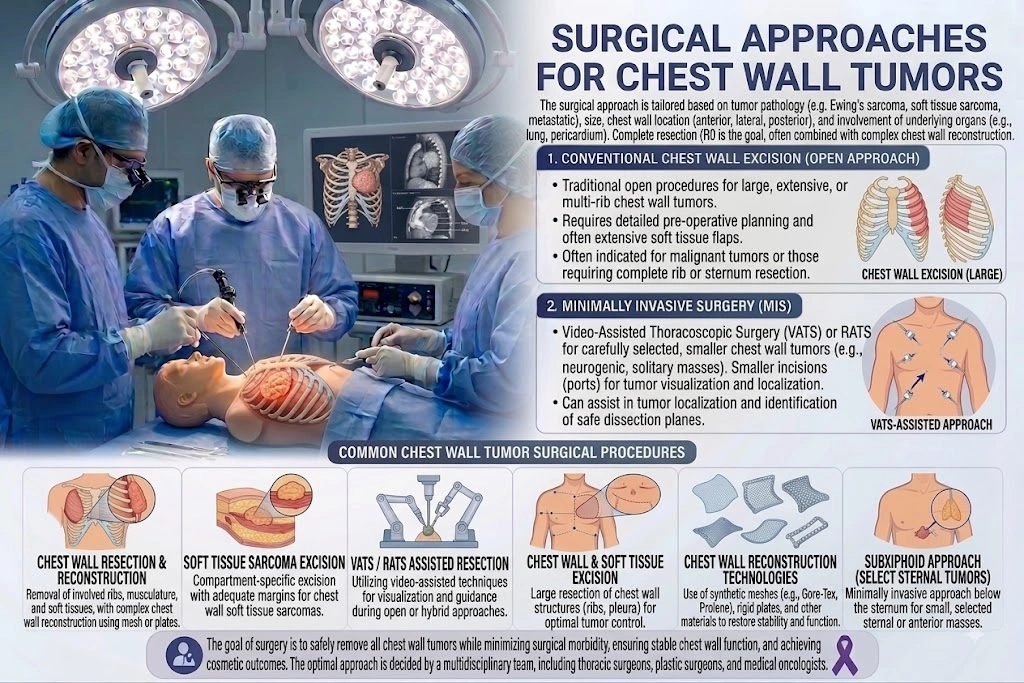
The surgical approach for chest wall tumours is selected based on tumour characteristics, location, and individual patient requirements. Depending on the nature and extent of the tumour, different surgical techniques may be considered.
Soft Tissue Tumor Excision
Soft tissue chest wall tumours may require removal of the affected muscles, connective tissues, and surrounding areas. The extent of excision depends on tumour type and its involvement with nearby structures. The goal is complete tumour removal while preserving as much normal function as possible.
Multidisciplinary Chest Wall Tumor Care
Chest wall tumour treatment often requires collaboration between multiple specialists, including:
- Thoracic surgeons
- Surgical oncologists
- Orthopaedic oncology specialists
- Plastic and reconstructive surgeons
- Medical oncologists
- Radiation oncologists
- Radiologists
- Pathologists
- Physiotherapy and rehabilitation specialists
A multidisciplinary approach helps create a comprehensive treatment plan based on accurate diagnosis, tumour characteristics, and individual patient requirements.
Dr. Ajay Simha is experienced in the surgical management of chest wall tumours using appropriate surgical techniques based on the tumour characteristics and individual patient needs. The goal is to achieve complete tumour removal while maintaining chest wall stability, protecting surrounding structures, and supporting optimal recovery.
Frequently Asked Questions
A chest wall tumour is an abnormal growth that develops in the bones, muscles, soft tissues, or connective tissues forming the chest wall.
No. Chest wall tumours can be benign or malignant. Proper evaluation helps determine the type of tumour and appropriate treatment approach.
Common symptoms include a chest wall lump, swelling, pain, tenderness, and discomfort. Some patients may also experience breathing difficulty depending on tumour size and location.
Diagnosis may involve physical examination, CT scan, MRI scan, PET-CT, biopsy, and other investigations based on the suspected tumour type.
Surgery is often recommended when the tumour can be safely removed. The decision depends on tumour type, size, location, and overall patient health.