
- Home
- About Doctor
- Cancer Surgery
- Procedures & Techniques
- Minimally Invasive Cancer Surgery
- Robotic Cancer Surgery
- Laparoscopic Cancer Surgery
- Thoracoscopic Cancer Surgery (VATS)
- Open (Conventional) Cancer Surgery
- Sentinel Lymph Node Biopsy (SLNB)
- Cytoreductive Surgery (CRS)
- Hyperthermic Intraperitoneal Chemotherapy (HIPEC)
- Scarless/ Remote Access Thyroidectomy
- Resources
- Contact Us
Stomach Cancer Surgery
Message from Dr. Ajay Simha

A diagnosis of stomach cancer can be overwhelming for patients and their families. Concerns regarding treatment options, surgery, outcomes, and the road ahead are natural.
When stomach cancer is suspected or diagnosed, a detailed evaluation is carried out to confirm the diagnosis and determine the stage of the disease. A personalized treatment plan is then formulated by a multidisciplinary team based on the patient’s overall health, cancer stage, nutritional status, and individual treatment goals.
I am Dr. Ajay Simha, Consultant Surgical Oncologist (Cancer Surgeon), and this page provides an overview of stomach cancer, from its symptoms and evaluation to the available treatment options.
What Is Stomach Cancer?

The stomach plays an important role in digestion by receiving and processing food before it passes into the intestine. Stomach cancer, also known as gastric cancer, develops when abnormal cells in the lining of the stomach begin to grow uncontrollably.
Symptoms of Stomach Cancer
The symptoms of stomach cancer may vary depending on the stage and location of the tumour. In the early stages, symptoms can sometimes be mild or similar to common digestive issues.
Common symptoms may include:
- Persistent indigestion or acidity
- Stomach discomfort or abdominal pain
- Loss of appetite
- Unexplained weight loss
- Feeling full even after eating small amounts
- Nausea or vomiting
- Difficulty swallowing in some cases
- Blood in vomit or stools
If these symptoms continue or worsen, timely medical evaluation is important.
Evaluation of Stomach Cancer
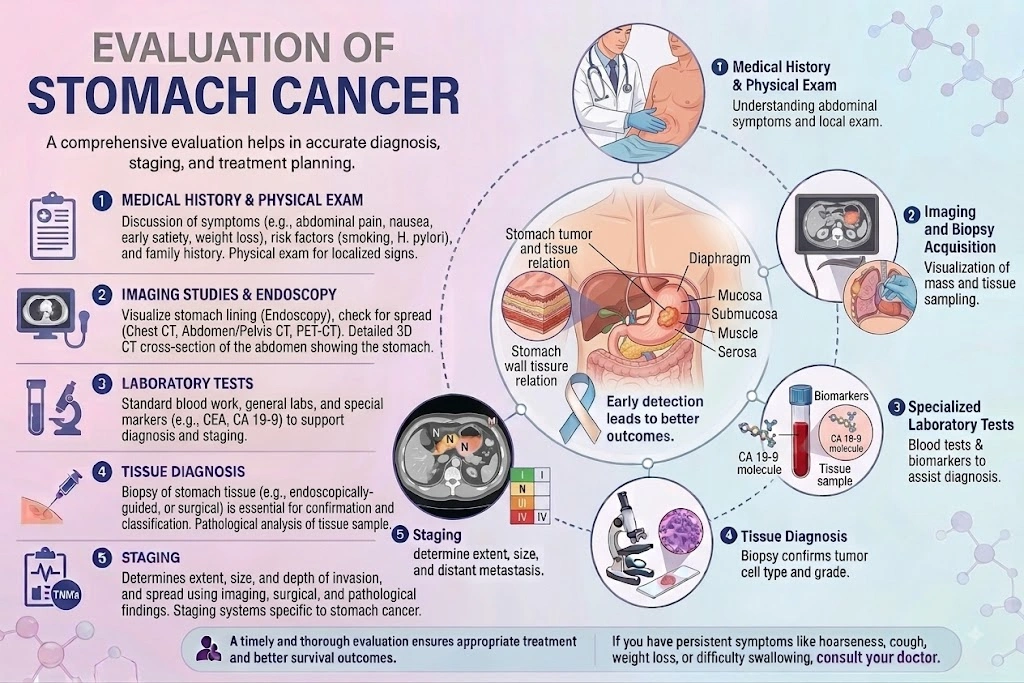
When stomach cancer is suspected based on symptoms and clinical evaluation, the first step is usually an upper gastrointestinal endoscopy to examine the lining of the stomach. Any suspicious areas are identified and biopsies are performed to confirm the diagnosis.
Once stomach cancer is confirmed, additional investigations may be carried out to determine the extent and stage of the disease. These may include CT scans and other imaging studies as required.
Blood tests and a complete assessment of the patient’s nutritional status, overall health, and fitness for cancer treatment are also important in planning appropriate treatment.
A detailed evaluation helps the multidisciplinary team determine the most suitable treatment strategy for each patient.
Treatment Options for Stomach Cancer
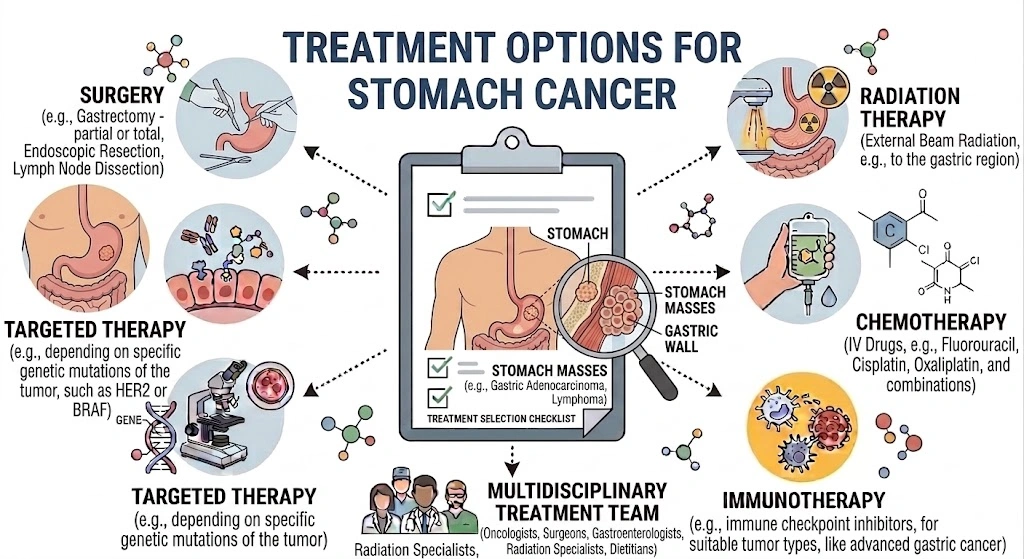
Management of stomach cancer may involve a combination of treatment modalities. The appropriate treatment and sequence are determined by a team of experts based on the tumour characteristics, stage of cancer, and the patient’s overall health.
Surgery
Surgery for stomach cancer involves removing the cancerous part of the stomach along with nearby lymph nodes. Depending on the location and extent of the tumour, either part or the entire stomach may need to be removed.
Radiotherapy
Radiation therapy uses high-energy radiation to target and destroy cancer cells in the affected area. It may be used along with chemotherapy before or after surgery, depending on the stage of stomach cancer. The treatment plan is carefully designed to control the tumour while minimizing effects on surrounding healthy tissues.
Chemotherapy
Chemotherapy uses anti-cancer medicines to destroy cancer cells or slow their growth. It may be recommended before surgery, after surgery, or as part of treatment for advanced disease, depending on the stage and individual characteristics of the cancer.
Immunotherapy
Immunotherapy helps the body’s immune system recognise and fight cancer cells more effectively. In selected stomach cancer patients, it may be considered based on tumour characteristics, disease stage, and specific biomarker results.
Targeted Therapy
Targeted therapy includes drugs that act on specific factors or molecular changes associated with cancer cells. These treatments may selectively target cancer cells while having less impact on normal cells. Targeted therapy may be considered in selected patients based on specific tumour characteristics and treatment requirements.
Supportive Care

Nutritional Support
Nutritional support is an important component of stomach cancer care, as the disease and its treatment can affect appetite, digestion, and the ability to maintain adequate nutrition. Appropriate nutritional supplementation and dietary support can help maintain strength and support patients throughout treatment and recovery.
Physiotherapy
Physiotherapy helps prepare patients for surgery, supports recovery after surgery, and helps patients gradually return to their previous activities of daily living.
Surgical Approaches for Stomach Cancer
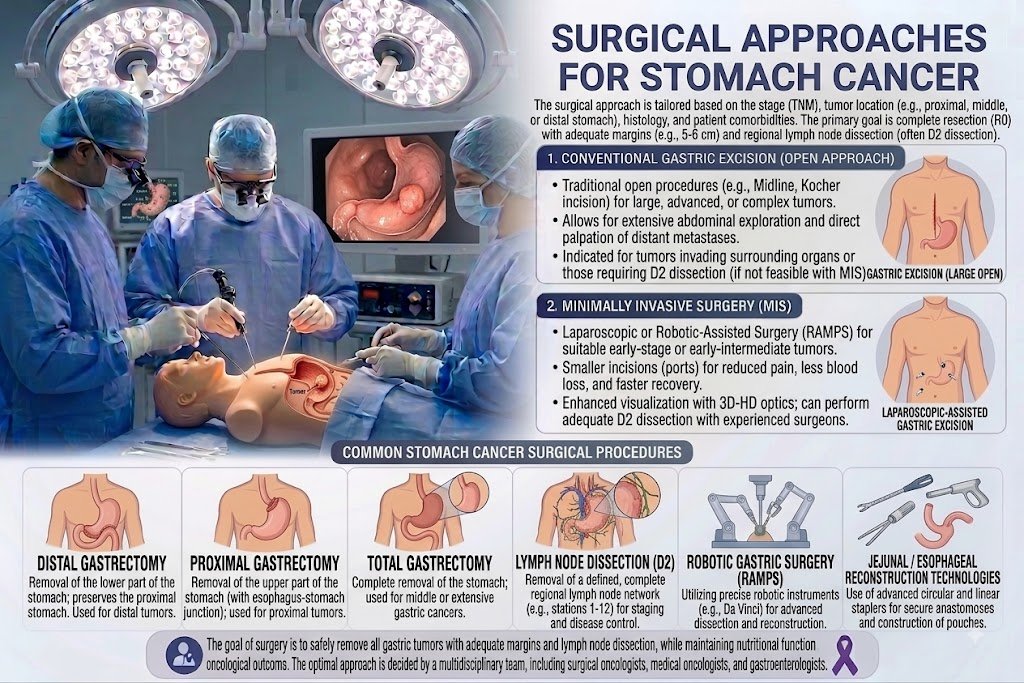
The choice of surgical approach depends on the stage of the cancer, tumour location and extent, and the patient’s overall health. Depending on the individual case, robotic-assisted, laparoscopic, minimally invasive, or open surgery may be recommended.
Minimally invasive approaches, including laparoscopic or robotic-assisted surgery, may be considered in suitable patients and can help reduce surgical trauma and support recovery. Open surgery may be recommended in complex cases where it provides better cancer control and safety.
The surgical approach is selected based on factors such as:
- The location and extent of the tumour
- The stage of stomach cancer
- Response to previous treatments, if any
- The patient’s overall health and fitness for surgery
Every treatment plan is carefully tailored to ensure the safest and most effective outcome.
Dr. Ajay Simha is experienced in advanced stomach cancer surgery using both minimally invasive and open surgical techniques. The goal is always to achieve complete cancer removal while ensuring patient safety, surgical precision, and optimal recovery.
Frequently Asked Questions
Surgery is usually recommended when the cancer is localized and can be removed safely. The decision depends on the tumour stage, location, and the patient’s overall health condition.
Treatment options may include surgery, chemotherapy, targeted therapy, immunotherapy, or a combination of these approaches. The right treatment plan is decided based on individual patient factors.
Yes, minimally invasive techniques such as laparoscopic or robotic-assisted surgery may be suitable for selected patients. The approach depends on the cancer stage and surgical requirements.
Recovery varies based on the type of surgery performed and the patient’s overall condition. Proper nutrition, follow-up care, and rehabilitation help support a smoother recovery.
Recovery depends on the type of surgery and individual health factors. Proper nutrition, regular follow-up, and supportive care help patients gradually return to normal activities.