
- Home
- About Doctor
- Cancer Surgery
- Procedures & Techniques
- Minimally Invasive Cancer Surgery
- Robotic Cancer Surgery
- Laparoscopic Cancer Surgery
- Thoracoscopic Cancer Surgery (VATS)
- Open (Conventional) Cancer Surgery
- Sentinel Lymph Node Biopsy (SLNB)
- Cytoreductive Surgery (CRS)
- Hyperthermic Intraperitoneal Chemotherapy (HIPEC)
- Scarless/ Remote Access Thyroidectomy
- Resources
- Contact Us
Cytoreductive Surgery (CRS)
Message from Dr. Ajay Simha

A diagnosis of cancer that has spread within the abdominal cavity can be particularly challenging for patients and their families. When cancer involves the lining of the abdomen, patients naturally have concerns about whether surgery is possible, the extent of the operation, recovery and the need for additional treatment.
Cytoreductive surgery (CRS) is a specialized cancer surgery performed in selected patients with tumours that have spread to the peritoneum, the lining of the abdominal cavity. The goal of CRS is to remove as much visible tumour as safely possible.
I am Dr. Ajay Simha, Consultant Surgical Oncologist (Cancer Surgeon), and this page provides an overview of cytoreductive surgery, including when it may be recommended, how patients are evaluated, available surgical approaches, the role of HIPEC, recovery and commonly asked questions.
What Is Cytoreductive Surgery (CRS)?
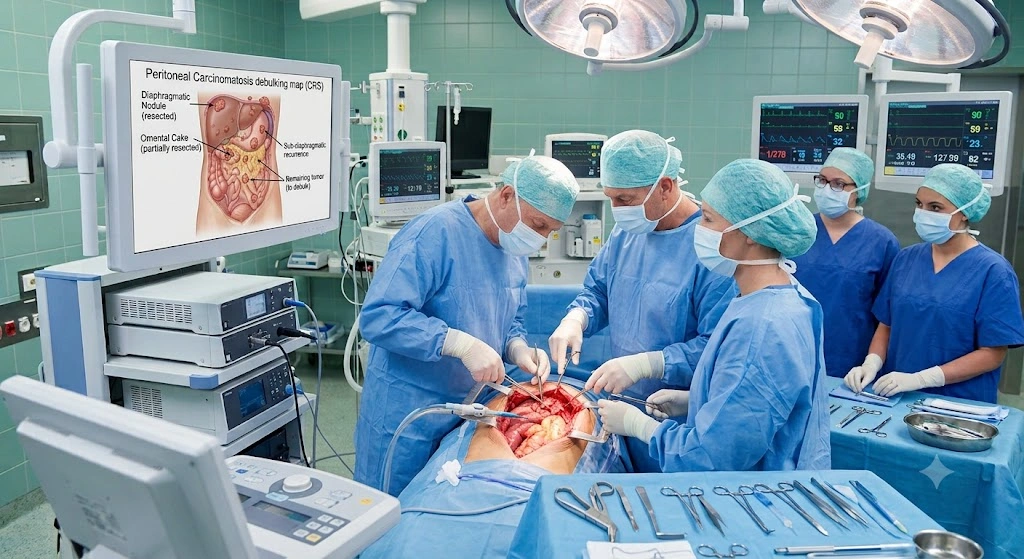
Cytoreductive surgery is an extensive surgical procedure performed to remove visible cancer deposits from the abdominal cavity. It is primarily considered for selected patients whose cancer has spread to the peritoneal surfaces. Depending on the primary cancer and the location and extent of disease, tumour deposits may be present on the peritoneum or on abdominal organs.
When is Cytoreductive Surgery Recommended?
CRS may be recommended for carefully selected patients whose cancer is predominantly or potentially treatable within the peritoneal cavity and where a meaningful degree of tumour removal can be achieved safely.
The decision depends on several factors, including:
- Type and origin of the primary cancer
- Extent and distribution of peritoneal disease
- Peritoneal Cancer Index (PCI) or other assessment of disease burden
- Involvement of the small bowel, mesentery and other important structures
- Presence or absence of cancer outside the peritoneal cavity
- Response to previous chemotherapy
- Patient’s age and overall health
- Nutritional status and physical fitness
- Ability to achieve complete or near-complete cytoreduction
- Expected benefits and risks of major abdominal surgery
Not every patient with peritoneal metastases is suitable for CRS. Extensive disease involving critical structures or disease that cannot be adequately removed may make complete cytoreduction unsafe or unlikely.
Evaluation of Cytoreductive Surgery (CRS)
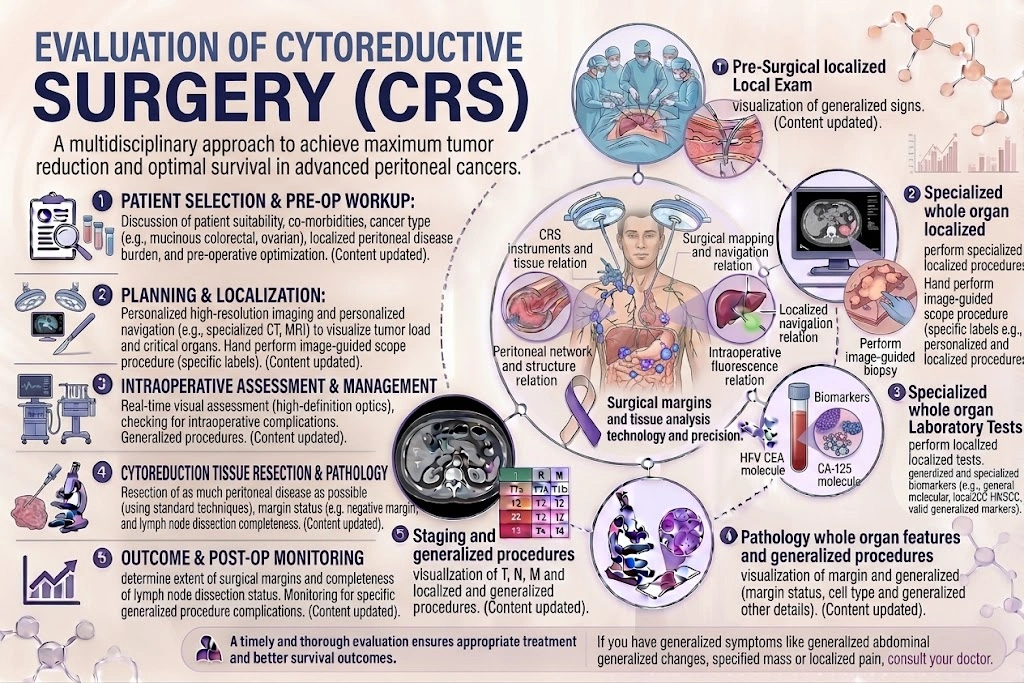
A detailed evaluation is performed before CRS to determine the extent of peritoneal disease and assess whether the patient is fit for major abdominal surgery.
Imaging investigations such as contrast-enhanced CT scans, MRI, PET-CT or other appropriate scans may be performed to assess the distribution of tumour deposits and identify disease outside the abdominal cavity.
A biopsy or previous surgical pathology may be reviewed to establish the primary cancer and its biological characteristics.
Treatment Options for Cytoreductive Surgery (CRS)
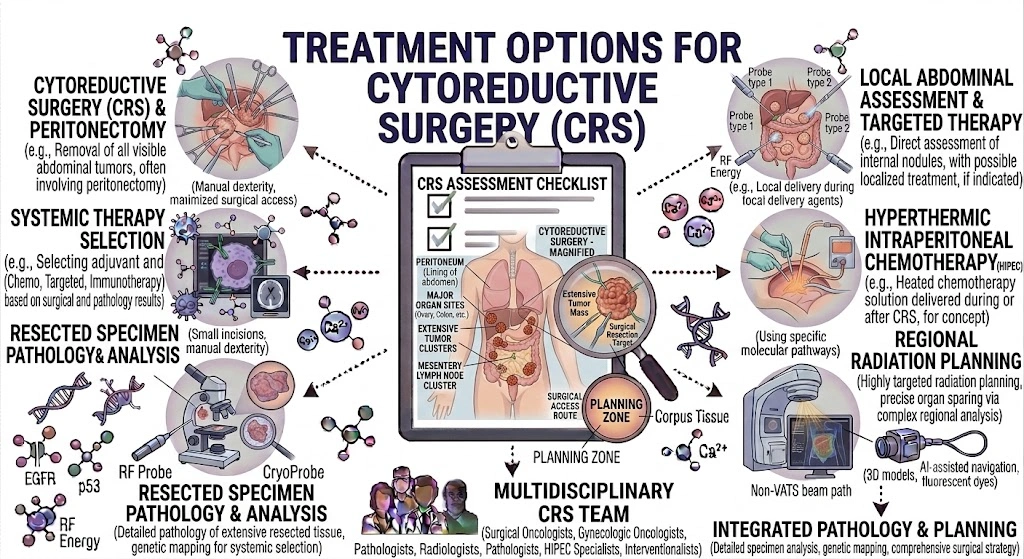
Treatment of peritoneal cancer depends on the primary cancer, stage, distribution of disease and the patient’s overall health. Treatment may involve a combination of systemic therapy and specialized surgery.
Cytoreductive surgery involves removing visible tumour deposits from the peritoneal cavity. Depending on the distribution of cancer, the operation may involve removal of tumour deposits from the abdominal lining and, when necessary, removal of affected organs or portions of organs.
Chemotherapy uses anti-cancer medicines to destroy or control cancer cells. It may be given before CRS to reduce the extent of disease, after surgery as part of ongoing cancer treatment, or at other stages depending on the primary cancer and individual treatment plan.
Radiation therapy uses high-energy radiation to destroy cancer cells. Its role varies according to the primary cancer and the location of disease. It may be recommended in selected situations but is not routinely used as the main treatment for widespread peritoneal disease.
Immunotherapy helps the body's immune system recognize and attack cancer cells. It may be considered for selected cancers based on tumour type, stage and molecular or immune characteristics. The decision is made as part of the overall multidisciplinary treatment plan.
Targeted therapy uses medicines designed to act on specific molecular features or pathways involved in cancer growth. For selected cancers, molecular testing of the tumour may help determine whether targeted treatment is appropriate.
Supportive Care

Supportive care is an important component of treatment for patients undergoing CRS. Because CRS can be a major abdominal operation, optimizing nutrition, physical fitness and general health before surgery can be important for recovery.
Nutritional Support
Nutritional support plays an important role before and after cytoreductive surgery. Patients with peritoneal cancer may experience reduced appetite, weight loss, abdominal symptoms or nutritional deficiencies. A personalized nutritional plan may therefore be recommended before surgery and continued during recovery.
Physiotherapy
Physiotherapy and physical conditioning may help patients prepare for major surgery and recover afterward. After surgery, early mobilization, breathing exercises, muscle strengthening and gradual activity progression may be incorporated into the rehabilitation plan.
Surgical Approaches for Cytoreductive Surgery (CRS)
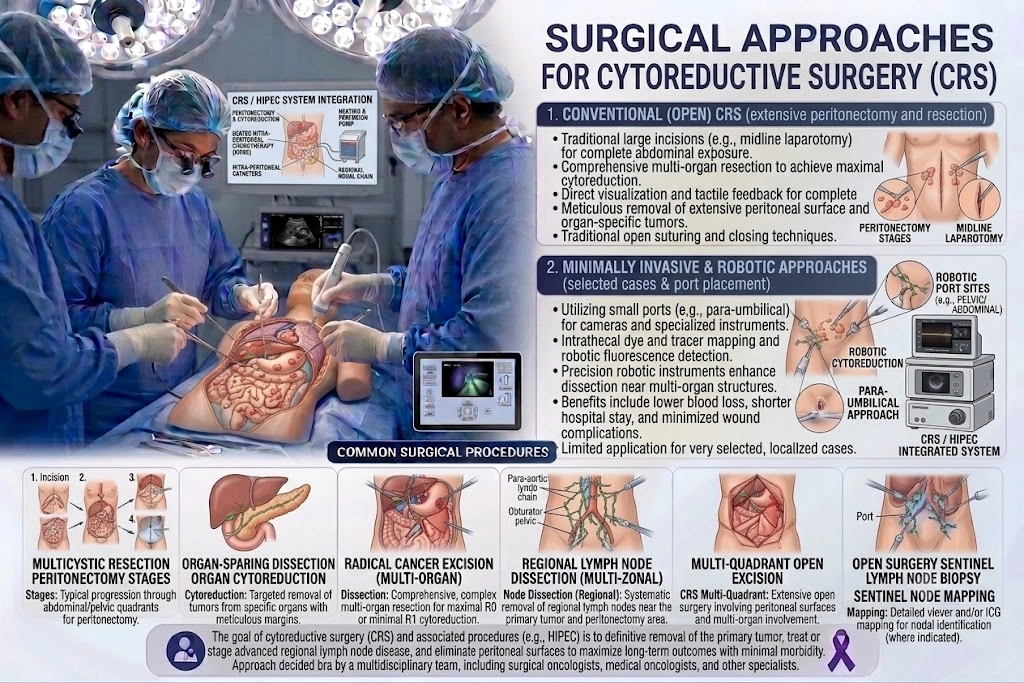
The surgical approach is determined by the extent and distribution of peritoneal disease and the organs involved.
During CRS, visible tumour deposits are carefully identified and removed from the abdominal cavity.
The surgeon may remove tumour deposits from different surfaces of the peritoneum and abdominal organs. The exact procedure depends on the distribution of the disease.
Recovery after CRS can be longer than after many routine abdominal operations because cytoreductive surgery can involve multiple organs and extensive removal of peritoneal tumour.
Early mobilization, physiotherapy, nutritional support and gradual return to oral intake form important parts of postoperative recovery.
Potential complications can include infection, bleeding, blood clots, bowel or urinary complications, leakage from surgical connections, nutritional problems and other complications related to extensive abdominal surgery.
Dr. Ajay Simha provides individualized evaluation and surgical treatment planning for patients with selected peritoneal surface malignancies. The decision to perform CRS, with or without HIPEC, is based on the primary cancer, extent of peritoneal disease, patient's overall health and the possibility of achieving meaningful tumour clearance safely.
Frequently Asked Questions
Cytoreductive surgery is a specialized operation used to remove as much visible tumour as possible, particularly in patients whose cancer has spread to the peritoneal lining of the abdomen.
CRS may be considered for selected patients with peritoneal spread from cancers such as appendiceal, colorectal, ovarian and gastric cancers, as well as peritoneal mesothelioma. Suitability depends on the primary cancer and extent of peritoneal disease.
CRS is the surgical removal of visible tumour deposits. HIPEC is a separate treatment in which heated chemotherapy is circulated inside the abdominal cavity after tumour removal. In selected patients, the two treatments may be performed during the same operation.
No. HIPEC is not required for every patient undergoing CRS. Its use depends on the type of cancer, extent of disease, treatment goals and evidence supporting its use for that particular situation.
The treatment team considers the type of primary cancer, extent and distribution of peritoneal disease, imaging findings, previous treatments, overall health and whether complete or near-complete cytoreduction can be achieved safely.