
- Home
- About Doctor
- Cancer Surgery
- Procedures & Techniques
- Minimally Invasive Cancer Surgery
- Robotic Cancer Surgery
- Laparoscopic Cancer Surgery
- Thoracoscopic Cancer Surgery (VATS)
- Open (Conventional) Cancer Surgery
- Sentinel Lymph Node Biopsy (SLNB)
- Cytoreductive Surgery (CRS)
- Hyperthermic Intraperitoneal Chemotherapy (HIPEC)
- Scarless/ Remote Access Thyroidectomy
- Resources
- Contact Us
Sentinel Lymph Node Biopsy (SLNB)
Message from Dr. Ajay Simha

A cancer diagnosis can be overwhelming for patients and their families. When surgery is recommended, patients naturally have concerns about the extent of surgery, whether the cancer has spread, recovery and the need for additional treatment.
Lymph nodes are an important part of the body’s lymphatic system and can sometimes be the first place where cancer cells spread from a primary tumour. Sentinel lymph node biopsy (SLNB) is a specialized procedure used in selected cancers to determine whether cancer cells have reached the first lymph nodes that drain the tumour area.
I am Dr. Ajay Simha, Consultant Surgical Oncologist (Cancer Surgeon), and this page provides an overview of sentinel lymph node biopsy, including when it may be recommended, how the procedure is performed, its role in cancer staging, available approaches and commonly asked questions.
What Is Sentinel Lymph Node Biopsy (SLNB)?
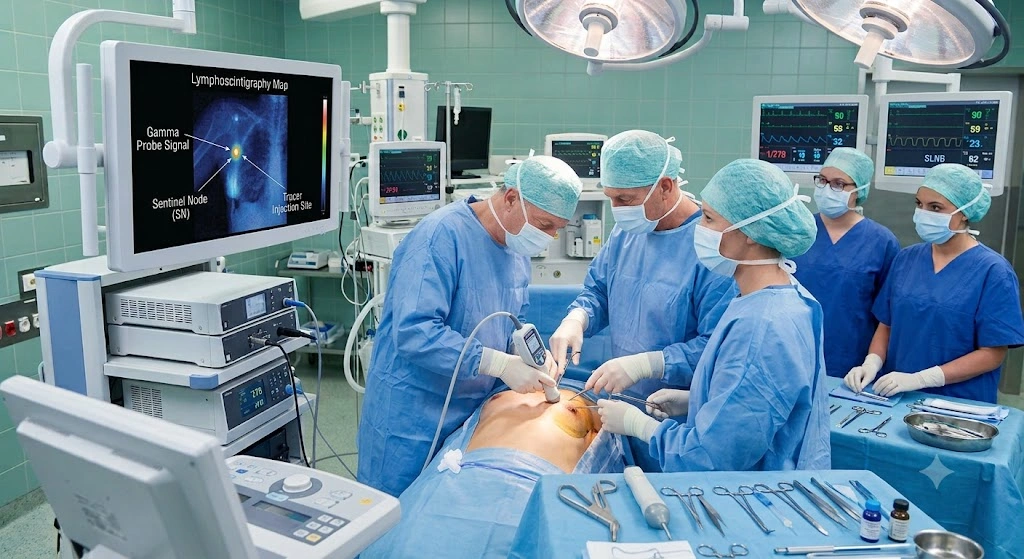
Sentinel lymph node biopsy is a procedure used to identify and remove the first lymph node or group of lymph nodes that cancer cells are most likely to reach when they spread from a primary tumour.
When is Sentinel Lymph Node Biopsy Recommended?
SLNB may be recommended when there is a risk that cancer has spread to nearby lymph nodes but there is no clear clinical or imaging evidence of lymph node involvement.
The decision depends on factors such as:
- Type and location of the primary cancer
- Size and characteristics of the tumour
- Stage of the cancer
- Whether lymph nodes appear abnormal on examination or imaging
- Previous treatment
- Tumour biology and other pathological features
- The planned cancer surgery
- Overall health and individual treatment goals
SLNB is not appropriate for every cancer or every patient. If lymph nodes are already known to contain cancer, a different form of lymph node evaluation or treatment may be required.
Evaluation of Sentinel Lymph Node Biopsy (SLNB)
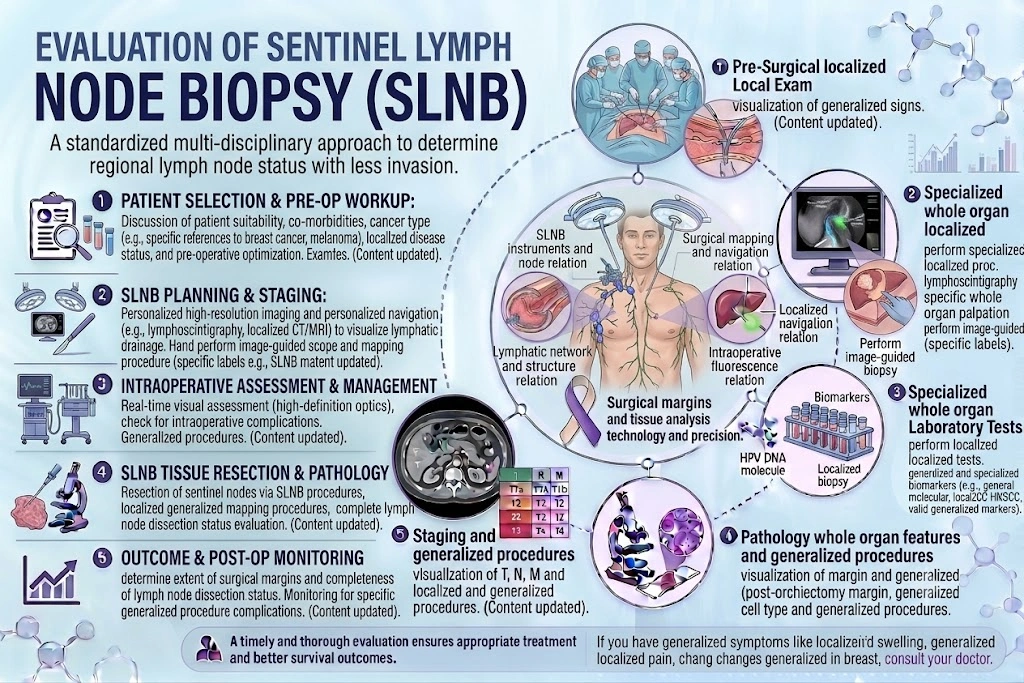
A detailed evaluation is performed before SLNB to determine whether the procedure is appropriate and to understand the characteristics of the primary tumour.
Clinical examination and appropriate imaging may be performed to assess the primary tumour and nearby lymph nodes.
The sentinel lymph node procedure is often performed during the same operation as removal of the primary tumour.
Treatment Options for Sentinel Lymph Node Biopsy (SLNB)
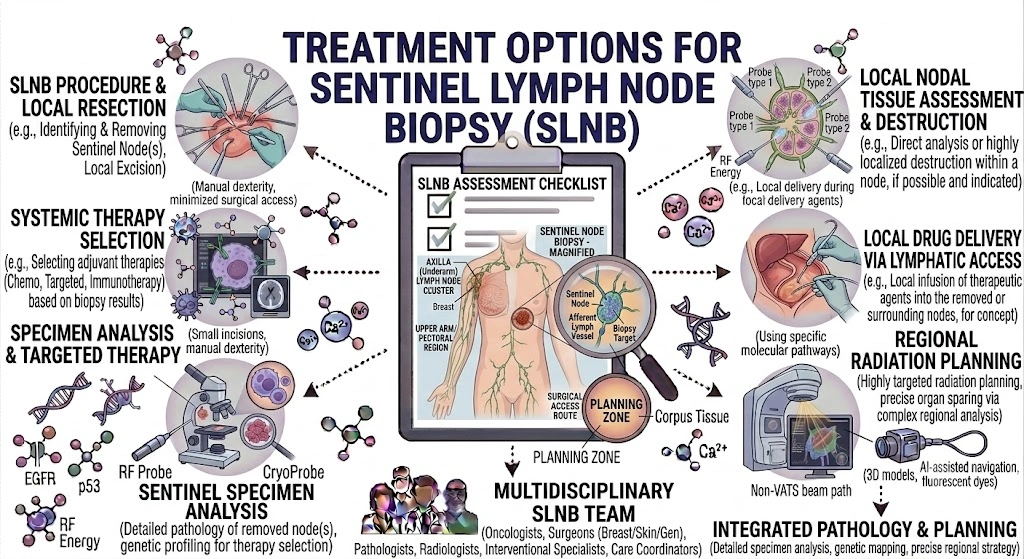
Cancer treatment depends on the type, location and stage of the cancer, as well as the patient’s overall health. SLNB is primarily a staging and diagnostic procedure rather than a standalone treatment for cancer.
The results of the biopsy can help determine whether additional treatment is required.
During cancer surgery, the primary tumour is removed according to the principles of treatment for that specific cancer. When SLNB is indicated, the sentinel lymph nodes are identified and removed during the same operation or as a planned part of the surgical treatment. The pathology results help guide decisions about further surgery and other cancer treatments.
Chemotherapy uses anti-cancer medicines to destroy or control cancer cells. Depending on the cancer type and stage, chemotherapy may be recommended before or after surgery. Sentinel lymph node results may provide important information when determining the overall stage and treatment plan.
Radiation therapy uses high-energy radiation to destroy cancer cells. The need for radiation therapy depends on the type and stage of cancer and other pathological findings. Sentinel lymph node status may be one of the factors considered when developing the treatment plan.
Immunotherapy helps the body's immune system recognize and attack cancer cells. It may be recommended for selected cancers based on the type, stage and biological characteristics of the tumour. The findings from SLNB may contribute to overall staging and treatment decisions.
Targeted therapy uses medicines designed to act on specific molecular features involved in cancer growth. For selected cancers, information from lymph node evaluation, together with other tumour characteristics, can help determine whether targeted treatment may be appropriate.
Supportive Care

Supportive care is an important part of cancer treatment and recovery. It helps patients maintain nutrition, mobility, strength and overall well-being throughout their treatment journey.
Nutritional Support
Adequate nutrition supports recovery after cancer surgery and helps patients maintain strength during further treatment. A personalized nutritional plan may be recommended based on the type of cancer, extent of surgery and overall nutritional status.
Physiotherapy
Physiotherapy may be recommended after cancer surgery to help restore mobility, strength and normal function. For patients undergoing SLNB as part of breast cancer treatment, appropriate exercises may help maintain shoulder and arm movement after surgery.
Surgical Approaches for Sentinel Lymph Node Biopsy (SLNB)
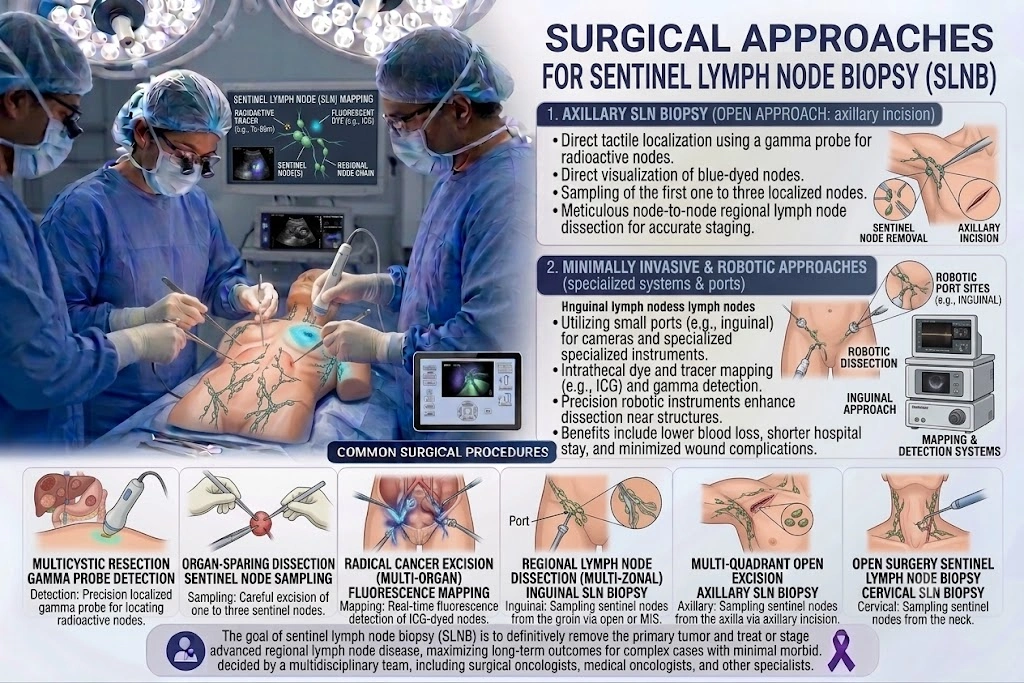
The technique used for SLNB depends on the type and location of the cancer.
Before the sentinel lymph node is removed, a mapping technique is used to identify the lymph node or nodes that are most likely to receive lymphatic drainage from the primary tumour.
A tracer may be injected near the tumour. Depending on the cancer and institutional practice, this may involve a radioactive tracer, a blue dye, a fluorescent tracer or a combination of techniques.
The tracer travels through the lymphatic channels and helps the surgeon identify the sentinel lymph nodes.
SLNB is generally less extensive than a complete lymph node dissection, and recovery depends on the type of primary cancer surgery performed at the same time.
Patients may experience temporary pain, swelling, bruising or discomfort near the site where the sentinel lymph node was removed.
Dr. Ajay Simha provides individualized evaluation and surgical planning for patients who may benefit from sentinel lymph node biopsy. The procedure is performed with the goal of obtaining accurate staging information while avoiding unnecessary lymph node surgery whenever appropriate.
Frequently Asked Questions
A sentinel lymph node is the first lymph node, or group of lymph nodes, to which cancer cells are most likely to spread from a primary tumour through the lymphatic system.
SLNB is performed to determine whether cancer cells have spread to the nearby lymph nodes. The result can help establish the stage of cancer and guide decisions about further treatment.
SLNB is commonly used in selected patients with breast cancer and melanoma. It may also be considered for other cancers depending on the type, location and stage of the disease.
A negative SLNB means that cancer was not detected in the sampled sentinel lymph nodes. However, it does not by itself rule out cancer elsewhere in the body. The result is interpreted together with imaging, pathology and other clinical findings.
Dr. Ajay Simha provides personalized evaluation and surgical treatment planning for patients who may be candidates for sentinel lymph node biopsy.