
- Home
- About Doctor
- Cancer Surgery
- Procedures & Techniques
- Minimally Invasive Cancer Surgery
- Robotic Cancer Surgery
- Laparoscopic Cancer Surgery
- Thoracoscopic Cancer Surgery (VATS)
- Open (Conventional) Cancer Surgery
- Sentinel Lymph Node Biopsy (SLNB)
- Cytoreductive Surgery (CRS)
- Hyperthermic Intraperitoneal Chemotherapy (HIPEC)
- Scarless/ Remote Access Thyroidectomy
- Resources
- Contact Us
Open (Conventional) Cancer Surgery
Message from Dr. Ajay Simha
A cancer diagnosis can be overwhelming for patients and their families. When surgery is recommended, patients naturally have concerns about the type of operation, recovery, pain, possible complications and the overall outcome of treatment.
Open or conventional cancer surgery remains an important and established approach for treating many cancers. Unlike minimally invasive procedures, open surgery uses a larger incision to provide direct access to the tumour and surrounding structures.
I am Dr. Ajay Simha, Consultant Surgical Oncologist (Cancer Surgeon), and this page provides an overview of open cancer surgery, including when it may be recommended, how patients are evaluated, available surgical approaches, recovery and commonly asked questions.
What Is Open (Conventional) Cancer Surgery?
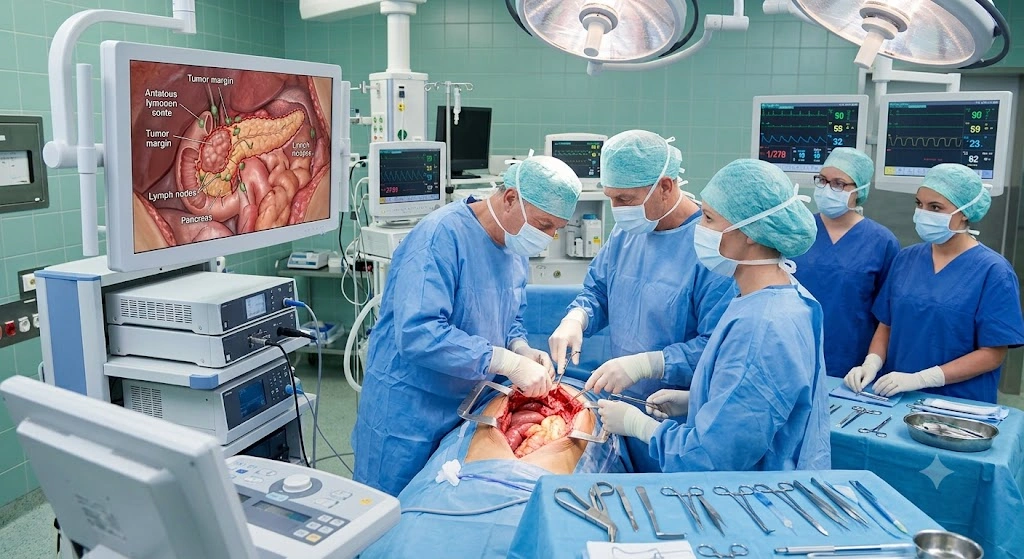
Open cancer surgery is a surgical approach in which the surgeon accesses the tumour through a larger incision compared with minimally invasive techniques such as laparoscopic, thoracoscopic or robotic surgery.
When is Open Cancer Surgery Recommended?
Open cancer surgery may be recommended when it provides the safest and most effective way to perform the required cancer operation.
Factors that may influence the decision include:
- Type and location of the cancer
- Size and extent of the tumour
- Stage of the cancer
- Involvement of nearby organs, blood vessels or other structures
- Extent of lymph node involvement
- Previous surgeries or treatments
- Patient’s overall health and fitness for surgery
- Need for complex reconstruction
- Ability to achieve complete cancer removal through a minimally invasive approach
Open surgery may also be required when a minimally invasive procedure cannot provide adequate access or when conversion to an open procedure becomes necessary during surgery.
Evaluation of Open (Conventional) Cancer Surgery
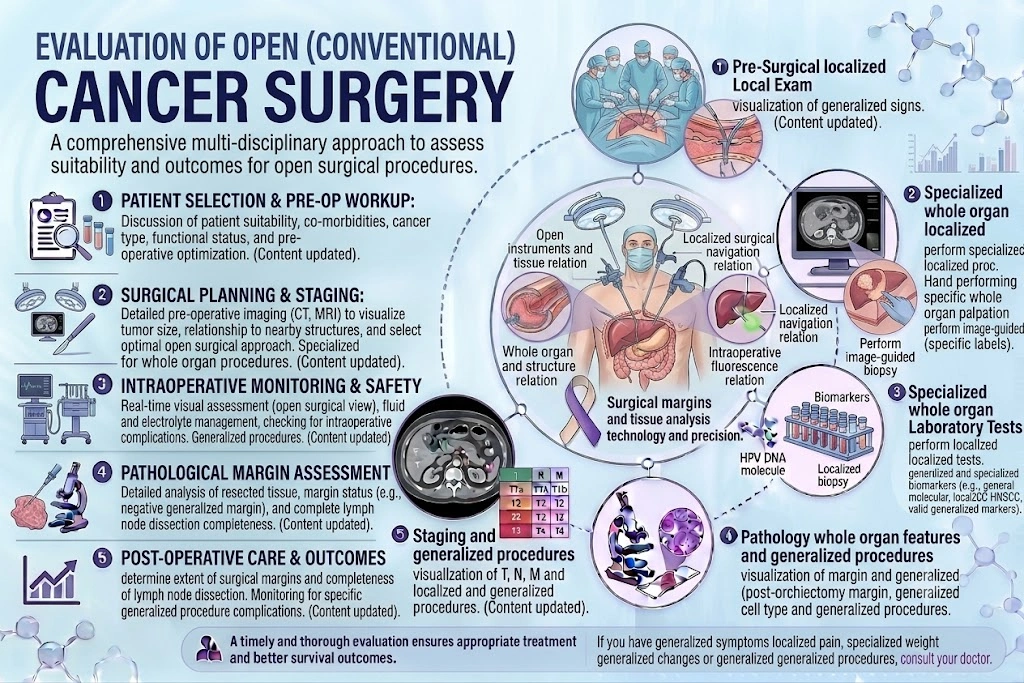
A detailed evaluation is performed before open cancer surgery to determine the extent of the disease and assess the patient’s fitness for the planned operation.
Imaging investigations such as CT scans, MRI, PET-CT, ultrasound or other appropriate scans may be used to identify the location and extent of the tumour and assess nearby organs and lymph nodes.
A biopsy is often performed to confirm the diagnosis and determine the type of cancer. Additional investigations may be recommended to establish the stage of the disease and determine whether the cancer has spread to other parts of the body.
Treatment Options for Open (Conventional) Cancer Surgery
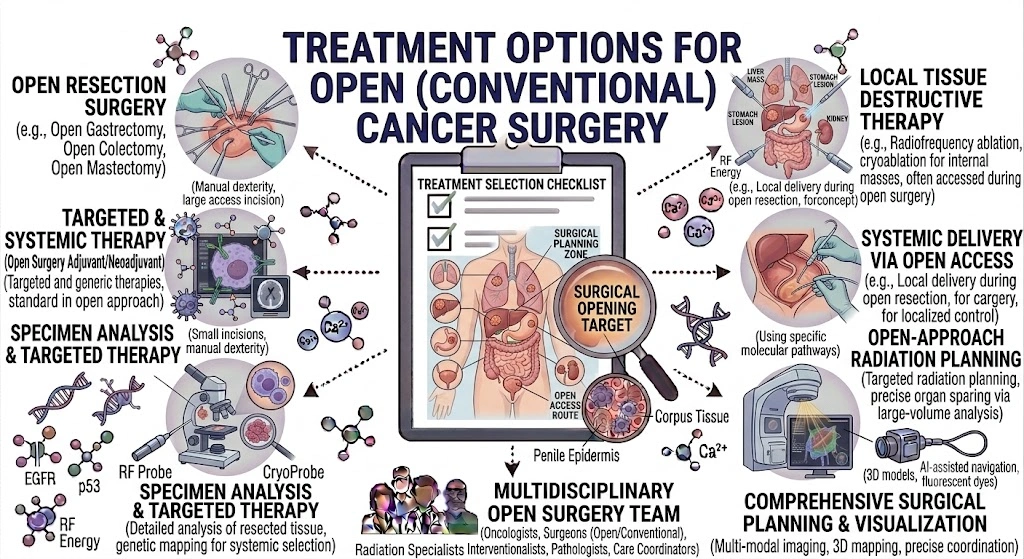
Cancer treatment depends on the type, location and stage of the cancer, as well as the patient’s overall health. Surgery may form one part of a multidisciplinary treatment plan and may be combined with other cancer treatments when appropriate.
Open surgery may be performed to remove the primary tumour along with an appropriate margin of surrounding tissue. Depending on the cancer, surgery may also involve removal of nearby lymph nodes or affected adjacent organs. In selected cases, reconstruction may be performed during the same operation to restore the function or structure of the affected area.
Chemotherapy uses anti-cancer medicines to destroy or control cancer cells. Depending on the type and stage of cancer, chemotherapy may be given before surgery to reduce the size or extent of the tumour, after surgery to reduce the risk of recurrence, or as part of treatment for advanced cancer.
Radiation therapy uses high-energy radiation to destroy cancer cells. It may be recommended before or after surgery for selected cancers and may sometimes be combined with chemotherapy. The decision to use radiation therapy depends on the type, location and stage of cancer and the overall treatment plan.
Radiation therapy uses high-energy radiation to destroy cancer cells. It may be recommended before or after surgery for selected cancers and may sometimes be combined with chemotherapy. The decision to use radiation therapy depends on the type, location and stage of cancer and the overall treatment plan.
Targeted therapy uses medicines designed to act on specific molecular changes or biological pathways involved in cancer growth. These medicines may be recommended when the tumour has specific molecular or genetic characteristics that make it suitable for targeted treatment.
Supportive Care

Supportive care plays an important role before and after major cancer surgery. It helps patients maintain nutrition, strength, mobility and overall well-being throughout treatment and recovery.
Nutritional Support
Adequate nutrition is important before and after cancer surgery. Patients with cancer may experience reduced appetite, weight loss or difficulty maintaining adequate nutritional intake. A personalized nutritional plan may be recommended based on the patient’s nutritional status, cancer type, planned surgery and recovery requirements.
Physiotherapy
Physiotherapy and early mobilization can support recovery following major cancer surgery. Depending on the type of operation, physiotherapy may include breathing exercises, mobility training, muscle strengthening and guidance on gradually returning to normal daily activities.
Surgical Approaches for Open (Conventional) Cancer Surgery
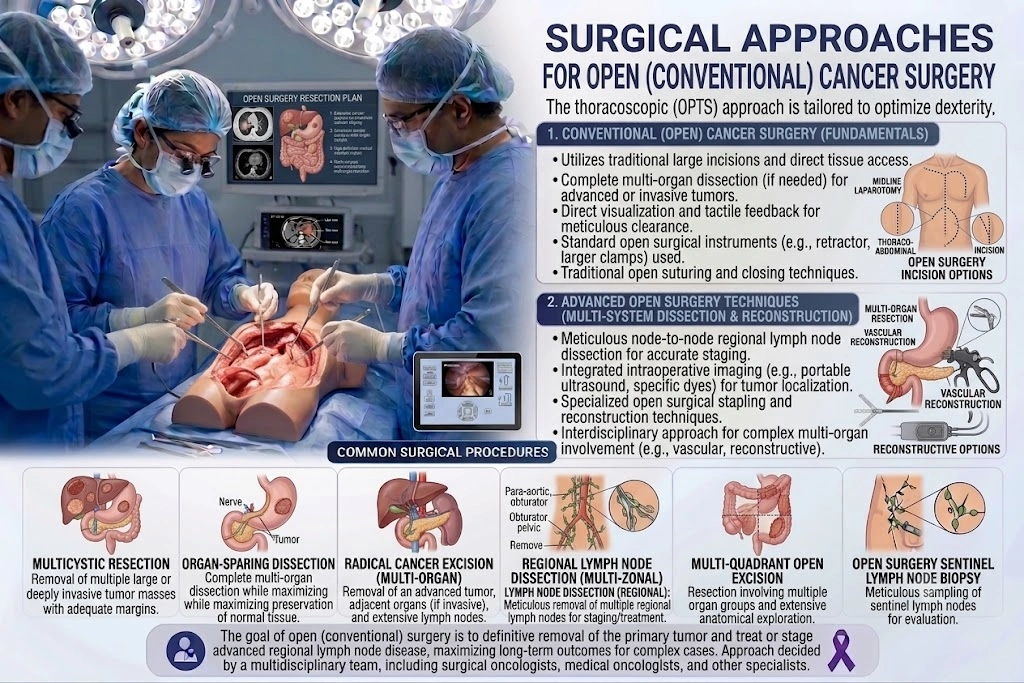
The specific open surgical approach depends on the location and extent of the tumour and the organs or structures involved.
Open abdominal surgery involves accessing the organs within the abdomen through an abdominal incision. It may be used for selected cancers involving the stomach, colon, rectum, liver, pancreas, gallbladder and other abdominal organs.
The operation may involve removal of the tumour, surrounding tissues and lymph nodes depending on the type and stage of cancer.
Recovery after open cancer surgery varies depending on the type and extent of the operation, the patient's overall health and whether additional cancer treatments are required.
Because open surgery involves a larger incision, recovery may take longer compared with some minimally invasive procedures. Patients may experience postoperative pain and require appropriate pain-management measures.
The goal is to support a safe recovery while helping the patient gradually return to normal daily activities.
Dr. Ajay Simha has experience in advanced cancer surgery using open, laparoscopic and robotic-assisted techniques. The choice of surgical approach is individualized according to the cancer, the patient's overall health and the safest way to achieve complete cancer removal.
Frequently Asked Questions
Open cancer surgery is a conventional surgical approach in which the surgeon accesses the tumour through a larger incision to directly visualize and operate on the affected area.
Open surgery may be recommended when the tumour is large or locally advanced, involves surrounding structures, requires complex reconstruction, or when a minimally invasive approach cannot safely achieve the required cancer operation.
When surgery is appropriate and the cancer can be completely removed, the aim of open cancer surgery is to remove the tumour along with an appropriate margin of surrounding tissue and lymph nodes when required.
Open surgery may be used for cancers involving many parts of the body, including the abdomen, chest, pelvis, head and neck and other areas. The suitability of surgery depends on the type, location and stage of the cancer.
Recovery after open surgery may take longer than after some minimally invasive procedures because of the larger incision and greater tissue disruption.