
- Home
- About Doctor
- Cancer Surgery
- Procedures & Techniques
- Minimally Invasive Cancer Surgery
- Robotic Cancer Surgery
- Laparoscopic Cancer Surgery
- Thoracoscopic Cancer Surgery (VATS)
- Open (Conventional) Cancer Surgery
- Sentinel Lymph Node Biopsy (SLNB)
- Cytoreductive Surgery (CRS)
- Hyperthermic Intraperitoneal Chemotherapy (HIPEC)
- Scarless/ Remote Access Thyroidectomy
- Resources
- Contact Us
Laparoscopic Cancer Surgery
Message from Dr. Ajay Simha

A cancer diagnosis can be overwhelming for patients and their families. When surgery is recommended, patients naturally have concerns about the type of surgery, recovery, pain, possible complications and how the procedure may affect their daily life.
Advances in surgical techniques have made it possible to perform many cancer operations through small incisions using laparoscopic techniques. Laparoscopic cancer surgery is a minimally invasive approach that uses a camera and specialized instruments to allow the surgeon to operate while viewing the surgical area on a monitor.
I am Dr. Ajay Simha, Consultant Surgical Oncologist (Cancer Surgeon), and this page provides an overview of laparoscopic cancer surgery, including when it may be recommended, how patients are evaluated, available surgical approaches, recovery and commonly asked questions.
What Is Laparoscopic Cancer Surgery?
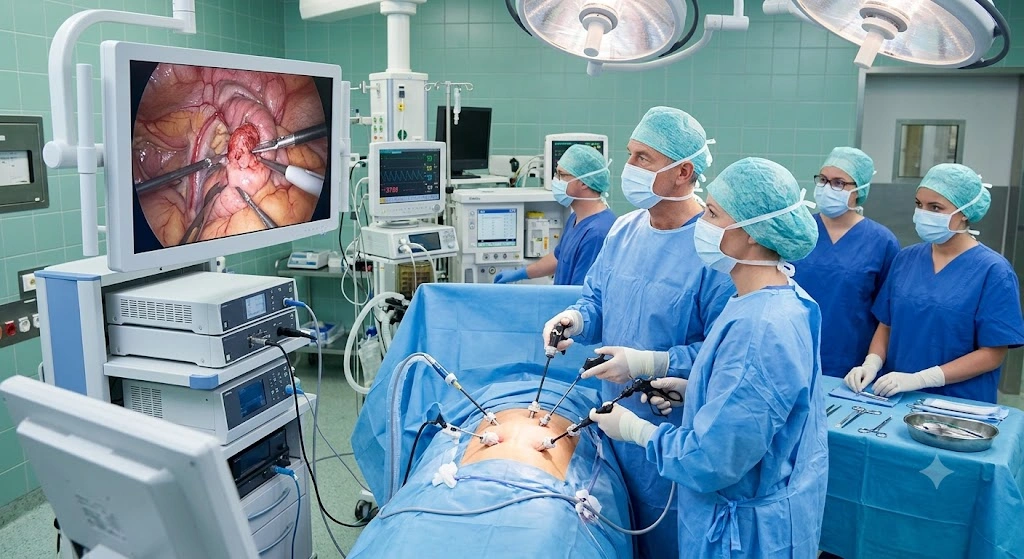
Laparoscopic cancer surgery, commonly known as keyhole surgery, is a minimally invasive surgical technique in which cancer surgery is performed through several small incisions instead of one larger incision used during conventional open surgery.
When is Laparoscopic Cancer Surgery Recommended?
Laparoscopic surgery may be considered when the cancer can be safely and effectively removed through a minimally invasive approach.
The suitability of laparoscopic cancer surgery depends on several factors, including:
- Type and location of the cancer
- Size and extent of the tumour
- Stage of the cancer
- Involvement of nearby organs or lymph nodes
- Previous abdominal or pelvic surgeries
- Patient’s overall health and fitness for surgery
- Response to chemotherapy or radiation therapy, when applicable
- Ability to achieve complete cancer removal safely using a laparoscopic approach
Not every cancer or every patient is suitable for laparoscopic surgery. In certain situations, robotic-assisted or open surgery may provide a safer or more appropriate approach.
Evaluation of Laparoscopic Cancer Surgery
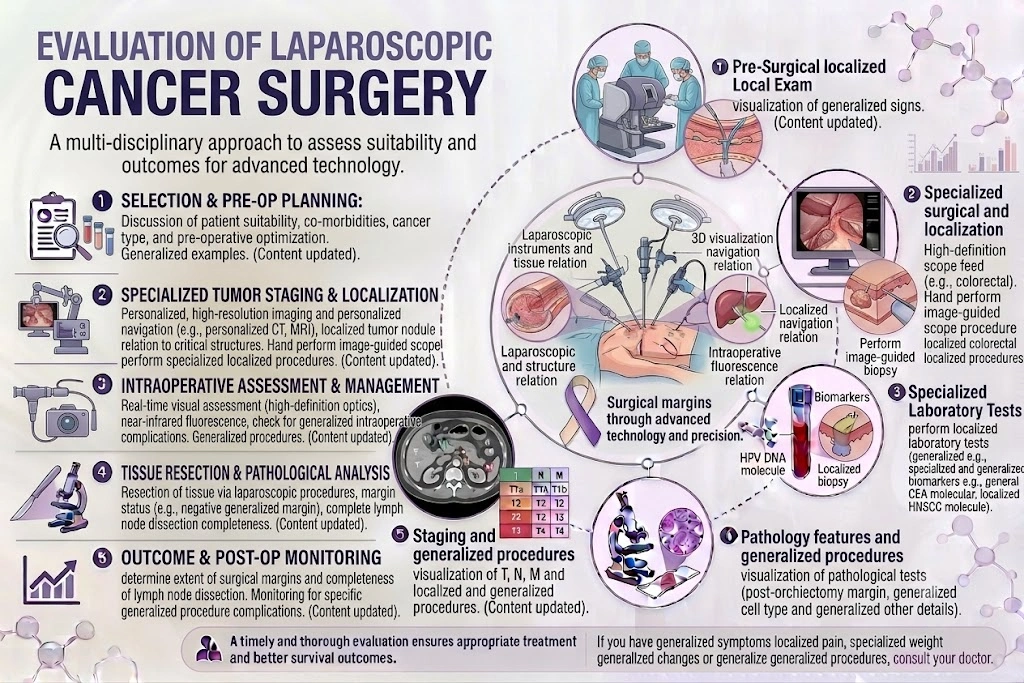
A detailed evaluation is performed before laparoscopic cancer surgery to understand the extent of the disease and assess whether the patient is fit for the planned procedure.
Imaging investigations such as CT scans, MRI, PET-CT or other appropriate scans may be performed to determine the location and extent of the tumour.
A biopsy may be required to confirm the diagnosis and determine the type of cancer. Depending on the cancer, additional investigations may be performed to evaluate nearby lymph nodes or identify disease spread to other organs.
Treatment Options for Laparoscopic Cancer Surgery
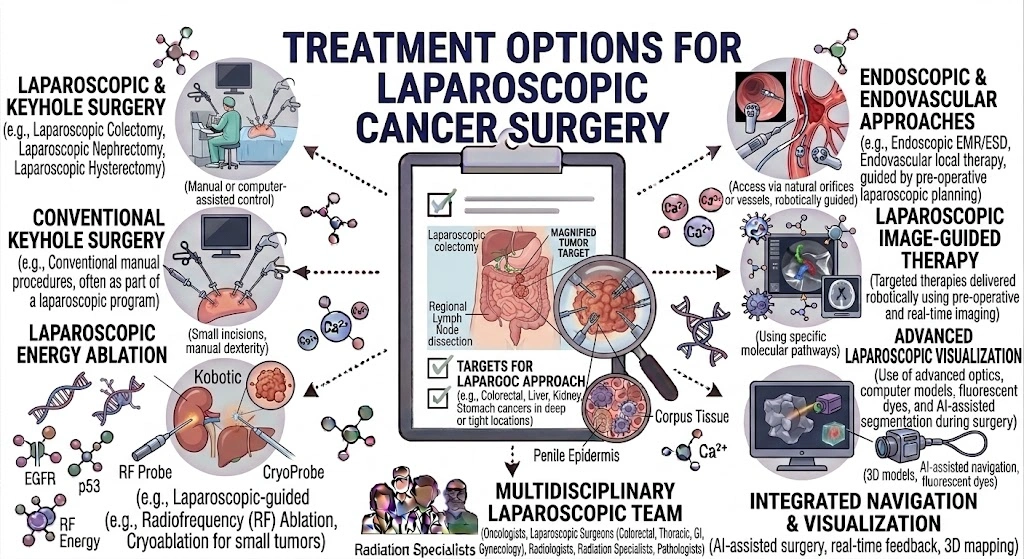
Cancer treatment depends on the type, location and stage of cancer, as well as the patient’s overall health. Surgery may form one part of a multidisciplinary treatment plan and may be combined with other cancer treatments when appropriate.
Surgery may be recommended to remove a localized tumour along with an appropriate margin of surrounding tissue. Nearby lymph nodes may also be removed when necessary for cancer treatment and staging. For selected patients, the required cancer operation can be performed laparoscopically through small incisions. The aim is to achieve complete cancer removal while minimizing unnecessary surgical trauma.
Chemotherapy uses anti-cancer medicines to destroy or control cancer cells. Depending on the type and stage of cancer, it may be administered before surgery to shrink the tumour, after surgery to reduce the risk of recurrence, or as part of treatment for advanced cancer.
Radiation therapy uses high-energy radiation to destroy cancer cells. It may be recommended before or after surgery for selected cancers and can sometimes be combined with chemotherapy. The need for radiation therapy depends on the type, stage and location of the cancer and the overall treatment plan.
Immunotherapy helps the body's immune system recognize and attack cancer cells. It may be recommended for selected cancers based on the type and stage of disease and specific characteristics of the tumour.
Targeted therapy uses medicines designed to act on specific molecules or biological pathways involved in cancer growth.
These medicines may be recommended when the cancer has particular molecular or genetic characteristics that make it suitable for targeted treatment.
Supportive Care

Supportive care is an important part of cancer treatment and helps patients maintain nutrition, strength, mobility and overall well-being during treatment and recovery.
Nutritional Support
Adequate nutrition is important before and after cancer surgery. Some patients may have difficulty maintaining adequate nutritional intake because of the cancer, previous treatments or the effects of surgery. A personalized nutritional plan may be recommended based on the patient’s nutritional status, type of cancer and planned operation.
Physiotherapy
Physiotherapy and early mobilization may help patients regain strength and mobility following cancer surgery. Depending on the type of operation, physiotherapy may include breathing exercises, mobility training, muscle strengthening and guidance on gradually returning to normal daily activities.
Surgical Approaches for Laparoscopic Cancer Surgery
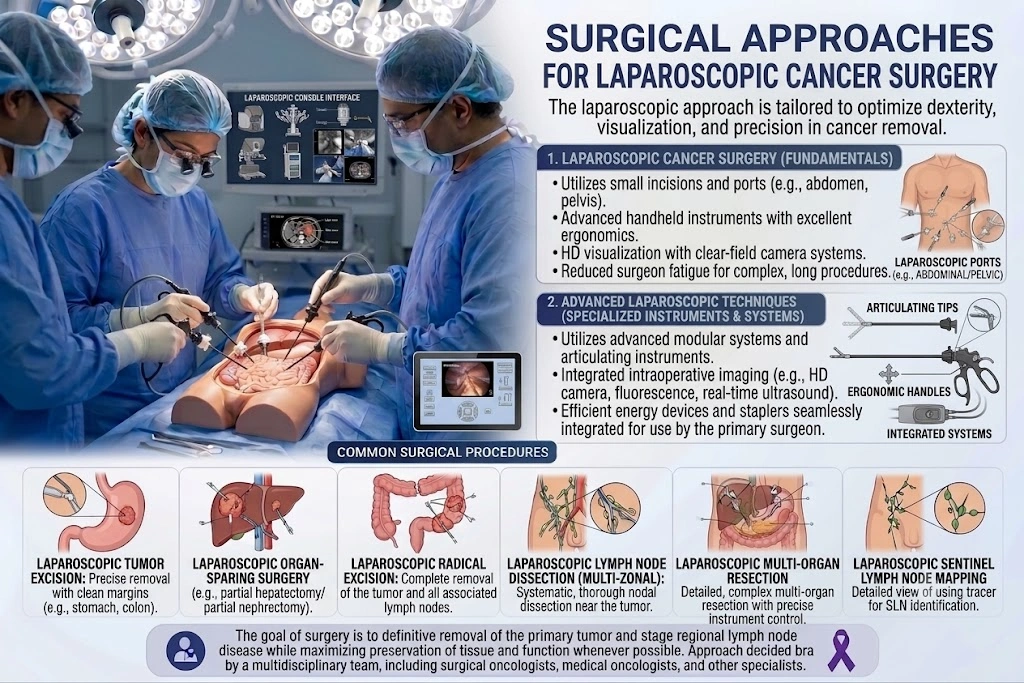
The choice of laparoscopic technique depends on the type and location of cancer, the extent of the tumour and the surgical procedure required.
Laparoscopic resection involves removing the tumour along with an appropriate margin of surrounding tissue. Depending on the cancer, nearby lymph nodes or other tissues may also need to be removed.
The removed specimen is usually extracted through a suitably planned incision after the laparoscopic portion of the operation has been completed.
Recovery depends on the type and extent of cancer surgery, the patient's overall health and whether additional cancer treatment is required.
Because laparoscopic surgery uses smaller incisions, selected patients may experience less postoperative discomfort, reduced scarring and an earlier return to normal activities compared with some open procedures.
However, the recovery period also depends on the complexity of the cancer operation. A minimally invasive procedure can still involve major cancer surgery.
Dr. Ajay Simha has experience in advanced cancer surgery using laparoscopic, robotic-assisted and open surgical techniques. The choice of surgical approach is individualized, with emphasis on complete cancer removal, patient safety, surgical precision and appropriate recovery.
Frequently Asked Questions
Laparoscopic cancer surgery is a minimally invasive surgical technique in which cancer surgery is performed through small incisions using a camera and specialized surgical instruments.
No. Suitability depends on the type, location and stage of cancer, the extent of the tumour, the patient's overall health and the complexity of the planned operation.
For appropriately selected patients, laparoscopic surgery may offer smaller incisions, less postoperative pain, reduced scarring and potentially faster recovery compared with conventional open surgery.
When a patient is appropriately selected, the goal of laparoscopic cancer surgery is to perform the required cancer operation and completely remove the tumour along with appropriate surrounding tissue and lymph nodes when necessary.
Dr. Ajay Simha provides personalized evaluation and surgical treatment planning for patients who may be suitable for laparoscopic cancer surgery.