
- Home
- About Doctor
- Cancer Surgery
- Procedures & Techniques
- Minimally Invasive Cancer Surgery
- Robotic Cancer Surgery
- Laparoscopic Cancer Surgery
- Thoracoscopic Cancer Surgery (VATS)
- Open (Conventional) Cancer Surgery
- Sentinel Lymph Node Biopsy (SLNB)
- Cytoreductive Surgery (CRS)
- Hyperthermic Intraperitoneal Chemotherapy (HIPEC)
- Scarless/ Remote Access Thyroidectomy
- Resources
- Contact Us
Penile Cancer Surgery
Message from Dr. Ajay Simha

A diagnosis of penile cancer can be emotionally challenging for patients and their families. Concerns regarding the condition, available treatment options, outcomes, and the road ahead are natural.
When penile cancer is suspected or diagnosed, a detailed evaluation is carried out to determine the tumour location, size, type, stage of cancer, involvement of nearby lymph nodes, extent of tissue spread, and the patient’s overall health. A personalised treatment plan is then formulated based on the individual patient’s condition, treatment goals, and functional requirements.
I am Dr. Ajay Simha, Consultant Surgical Oncologist (Cancer Surgeon), providing penile cancer care at Manipal Hospitals Sarjapur Road, Bengaluru. This page provides an overview of penile cancer, from its symptoms and evaluation to the available treatment options.
What Is Penile Cancer?

Penile cancer is a rare type of cancer that develops in the tissues of the penis. Most penile cancers begin in the skin cells of the penis, particularly the squamous cells, and are known as squamous cell carcinoma of the penis.
Symptoms of Penile Cancer
Symptoms of penile cancer may vary depending on the location and stage of the tumour. Common signs and symptoms include:
- A lump or growth on the penis
- Changes in skin colour or thickness
- Persistent sores or ulcers
- Bleeding from the penis
- Unusual discharge
- Pain or irritation
- Swelling of the penis
- Difficulty retracting the foreskin
- Enlarged lymph nodes in the groin
- Persistent discomfort in advanced cases
Any unusual changes in the penis that do not heal should be evaluated by a specialist for proper diagnosis.
Evaluation of Penile Cancer
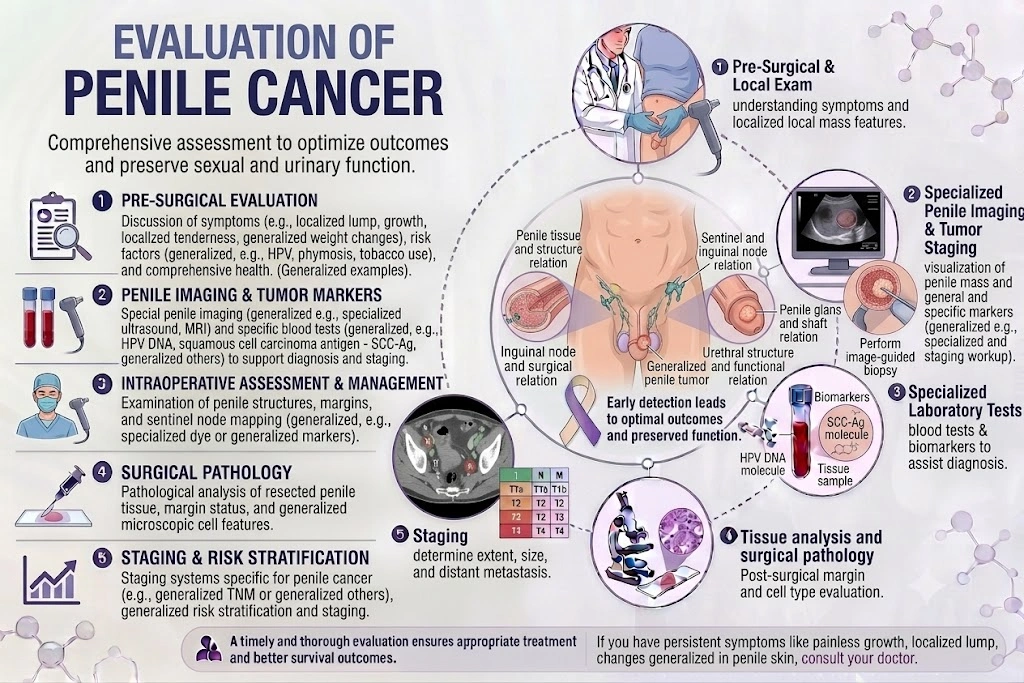
When penile cancer is suspected based on symptoms and clinical examination, a detailed evaluation is carried out to determine the type, stage, and extent of the disease.
Physical Examination
A detailed clinical examination helps assess the size, location, and appearance of the lesion and provides important information for further evaluation.
Biopsy
A biopsy is performed to confirm the diagnosis and determine the type and grade of cancer.
Lymph Node Assessment
Evaluation of the groin lymph nodes is important because penile cancer can spread to nearby lymph nodes.
A comprehensive evaluation helps determine the extent of disease and develop a personalised treatment plan for each patient.
Treatment Options for Penile Cancer
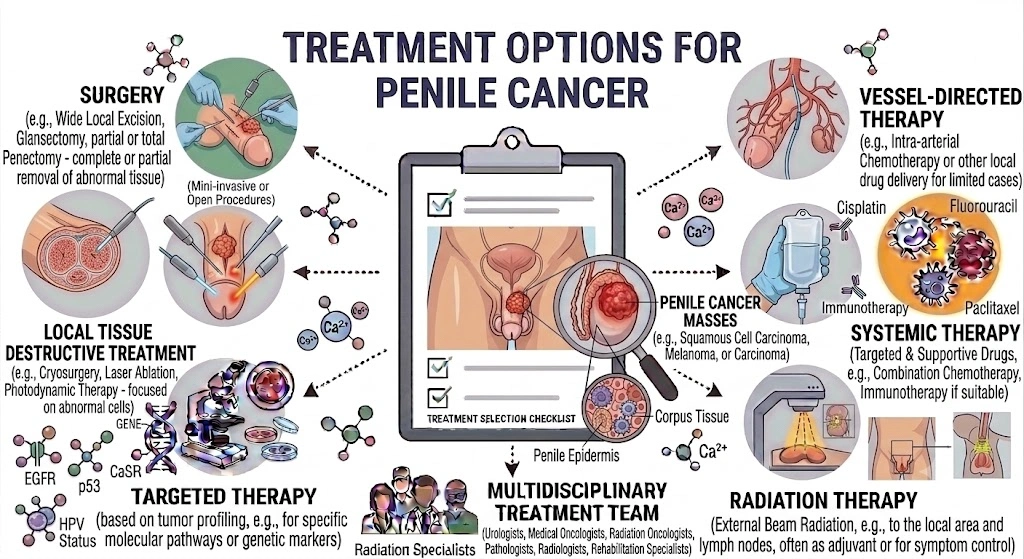
Treatment for penile cancer depends on several factors, including the size and location of the tumour, stage of cancer, depth of invasion, lymph node involvement, spread of disease, and the overall health condition of the patient.
Surgery
Surgery is the main treatment option for many patients with localised penile cancer. The goal of surgery is to remove the cancer completely while preserving as much healthy tissue and normal function as possible.
Depending on the extent of disease, penile cancer surgery may involve:
- Removal of the cancerous lesion
- Partial removal of the penis
- Complete removal of the penis in advanced cases
- Removal of affected groin lymph nodes
- Reconstruction procedures when required
The type and extent of surgery depend on the location of the tumour, size and depth of cancer invasion, stage of disease, involvement of surrounding structures, lymph node status, and the overall health of the patient.
Radiation Therapy
Radiation therapy uses high-energy radiation to destroy cancer cells.
It may be considered:
- As an alternative treatment for selected early-stage cancers
- After surgery in specific situations
- For lymph node disease
- To control symptoms in advanced cancer
Treatment planning is individualised based on tumour characteristics and patient requirements.
Chemotherapy
Chemotherapy uses anti-cancer medicines to destroy cancer cells or control their growth.
It may be recommended:
- Before surgery to reduce tumour size in selected patients
- After surgery for high-risk disease
- For advanced or metastatic penile cancer
The choice of chemotherapy depends on the cancer stage, overall health condition, and treatment goals.
Immunotherapy
Immunotherapy helps the body’s immune system recognise and fight cancer cells. It may be considered for selected patients with advanced penile cancer depending on the characteristics of the tumour, stage of disease, and individual treatment requirements.
Targeted Therapy
Targeted therapy uses medicines designed to act on specific factors involved in cancer cell growth. It may be considered in selected patients based on the biological characteristics of the tumour and the overall treatment plan.
Supportive Care

Supportive care is an important part of penile cancer treatment and focuses on maintaining the patient’s nutritional status, physical well-being, recovery, and quality of life throughout treatment.
Nutritional Support
Adequate nutrition and nutritional support are important during cancer treatment and recovery. Individualised nutritional guidance may help patients maintain their strength and support recovery during and after treatment.
Physiotherapy
Physiotherapy can help patients prepare for surgery, support recovery after surgery, and help them return to their previous activities of daily living. Rehabilitation is planned according to the patient’s condition, treatment received, and functional requirements.
Surgical Approaches for Penile Cancer
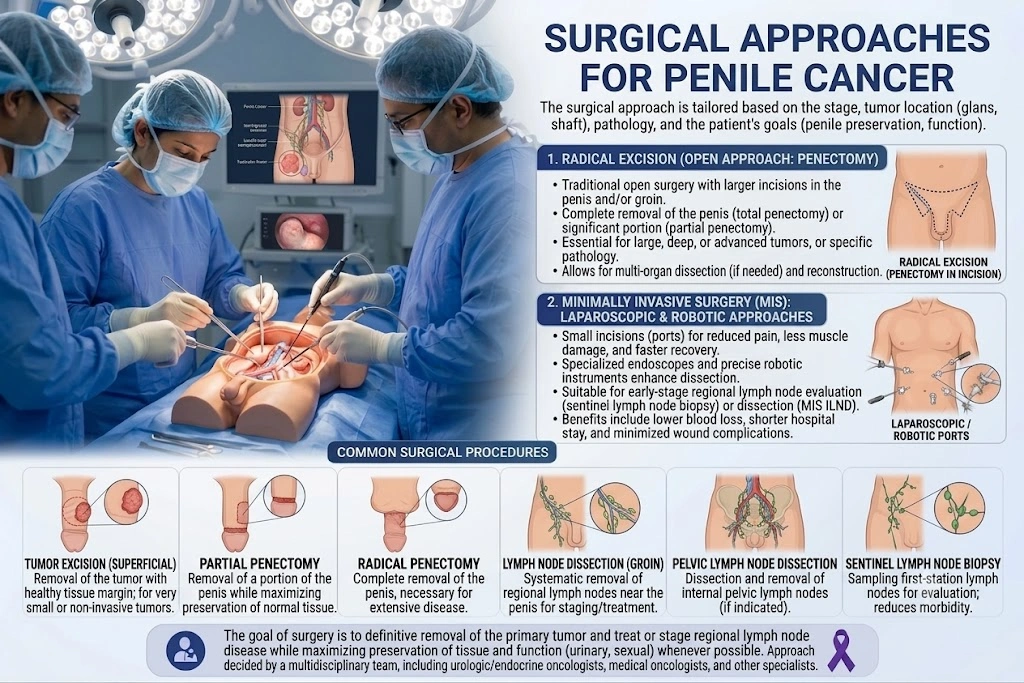
The surgical approach is selected based on tumour characteristics, cancer stage, and individual patient requirements. The primary aim is to achieve complete cancer removal while preserving as much normal penile tissue and function as possible whenever clinically appropriate.
Partial Penectomy
Partial penectomy is a surgical procedure performed when the tumour involves a portion of the penis but adequate healthy tissue can be preserved.
The procedure involves removing the affected part of the penis while maintaining sufficient length for urination and function whenever possible.
Sentinel Lymph Node Evaluation
For selected patients with early-stage penile cancer, sentinel lymph node evaluation may be considered.
This technique helps identify whether cancer has spread to the first lymph node that drains the tumour area.
Dr. Ajay Simha is experienced in the surgical management of penile cancer, including procedures ranging from organ-preserving approaches to partial or total penectomy and lymph node evaluation when required. The surgical plan is carefully tailored to the tumour characteristics and individual patient needs, with the goal of achieving complete cancer removal while maintaining patient safety, urinary function, and quality of life whenever possible.
Frequently Asked Questions
Penile cancer is a rare cancer that develops in the tissues of the penis, most commonly from squamous cells of the penile skin.
Early symptoms may include a lump, skin changes, persistent sores, bleeding, unusual discharge, or changes in the appearance of the penis.
Diagnosis usually involves physical examination, biopsy, imaging studies, and assessment of nearby lymph nodes.
Yes. Surgery is the primary treatment for many localized penile cancers. The type of surgery depends on tumour size, location, and stage.
In selected patients, organ-preserving procedures may help maintain appearance, urinary function, and quality of life while achieving cancer control.