
- Home
- About Doctor
- Cancer Surgery
- Procedures & Techniques
- Minimally Invasive Cancer Surgery
- Robotic Cancer Surgery
- Laparoscopic Cancer Surgery
- Thoracoscopic Cancer Surgery (VATS)
- Open (Conventional) Cancer Surgery
- Sentinel Lymph Node Biopsy (SLNB)
- Cytoreductive Surgery (CRS)
- Hyperthermic Intraperitoneal Chemotherapy (HIPEC)
- Scarless/ Remote Access Thyroidectomy
- Resources
- Contact Us
Testicular Cancer Surgery
Message from Dr. Ajay Simha
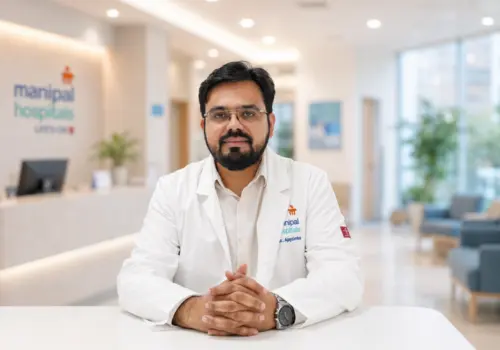
A diagnosis of testicular cancer can be emotionally challenging for patients and their families. Understanding the condition, available treatment options, and expected outcomes can help patients make informed decisions about their healthcare.
I am Dr. Ajay Simha, providing testicular cancer care at Manipal Hospitals Sarjapur Road, Bengaluru.
Each patient’s condition is evaluated carefully by considering factors such as tumour type, cancer stage, fertility concerns, overall health condition, and treatment goals. Based on this evaluation, a personalized treatment plan is developed with a focus on complete cancer removal, preservation of quality of life, and long-term cancer control.
What Is Testicular Cancer?

Testicular cancer develops when abnormal cells in one or both testicles begin to grow uncontrollably, forming a tumour. The testicles are part of the male reproductive system and are responsible for producing sperm and the hormone testosterone.
Symptoms of Testicular Cancer
Testicular cancer often presents as changes in one testicle and may not always cause pain during the early stages.
Common signs and symptoms may include:
- A painless lump or swelling in the testicle
- Enlargement of one testicle
- A feeling of heaviness in the scrotum
- Dull ache in the lower abdomen or groin
- Testicular discomfort or pain
- Sudden fluid collection in the scrotum
- Back pain in advanced stages
- Unexplained fatigue
- Swelling of the legs in advanced disease
Any persistent lump, swelling, or change in the testicle should be evaluated promptly by a specialist for accurate diagnosis.
Evaluation of Testicular Cancer
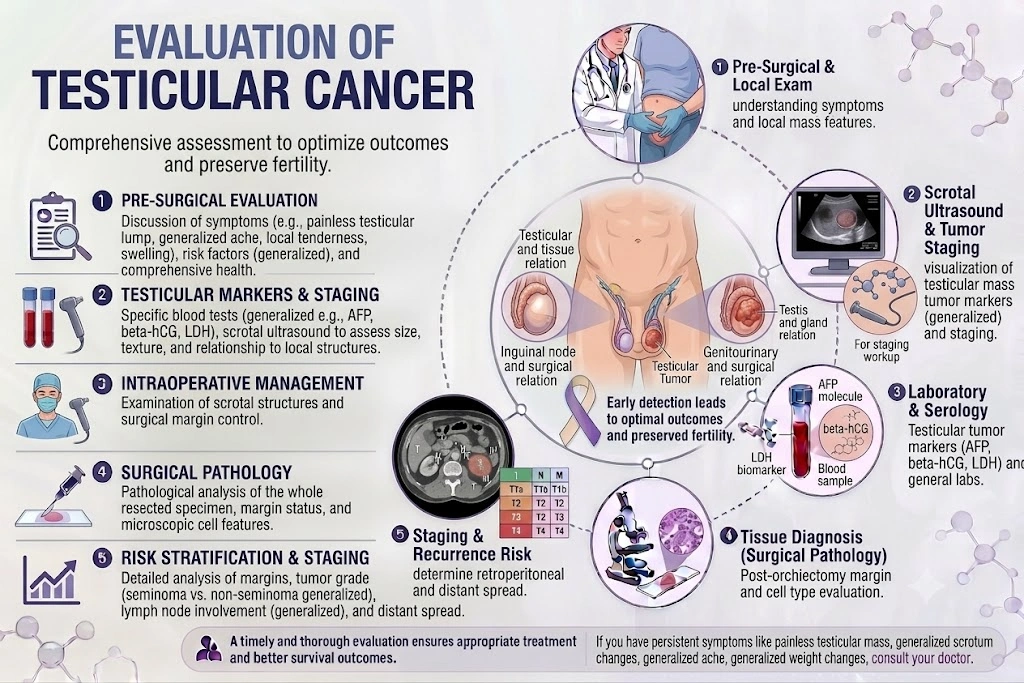
Accurate diagnosis helps determine the type and stage of testicular cancer and guides treatment planning.
The evaluation process may include:
Physical Examination
A clinical examination helps assess the size and characteristics of the testicular lump.
Scrotal Ultrasound
Ultrasound is the primary imaging test used to evaluate a testicular mass.
Blood Tests
Tumour marker blood tests may include:
- Alpha-fetoprotein (AFP)
- Beta-human chorionic gonadotropin (Beta-hCG)
- Lactate dehydrogenase (LDH)
These markers help support diagnosis and monitor treatment response.
Treatment Options for Testicular Cancer
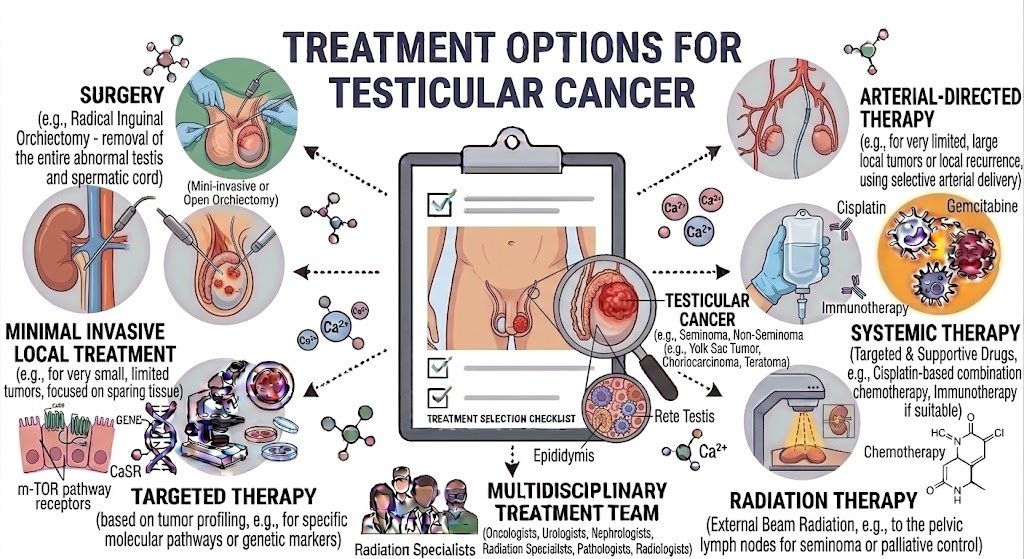
Treatment for testicular cancer depends on several factors, including the type of tumour, stage of cancer, tumour marker levels, involvement of lymph nodes or other organs, fertility considerations, and the overall health condition of the patient.
Surgery
Surgery is the primary treatment for most patients with testicular cancer. The main goal of surgery is to completely remove the cancer while obtaining accurate information about the disease stage. Depending on the extent of the cancer, surgery may also involve evaluation or removal of nearby lymph nodes.
Radiotherapy
Radiation therapy uses high-energy radiation to destroy cancer cells. It may be considered for selected patients with seminoma, particularly in specific stages where radiation offers benefit. Radiation therapy is less commonly used for non-seminomatous germ cell tumours. Treatment planning is individualized based on tumour type and stage.
Chemotherapy
Chemotherapy uses anti-cancer medicines to destroy cancer cells or prevent their growth.
It may be recommended:
- After surgery for certain stages of testicular cancer
- Before or after RPLND in selected cases
- For advanced or metastatic disease
The choice and duration of chemotherapy depend on the type and stage of cancer, tumour marker levels, and the patient’s individual treatment requirements.
Targeted Therapy
Targeted therapy uses medicines that act on specific characteristics of cancer cells. It may be considered in selected patients depending on the tumour characteristics, stage of disease, and previous treatments.
Immunotherapy
Immunotherapy helps the body’s immune system recognise and fight cancer cells. It may be considered in selected patients based on the type and stage of cancer, treatment response, and individual clinical requirements.
Supportive Care

Supportive care is an important part of comprehensive testicular cancer treatment. It focuses on maintaining the patient’s physical well-being, supporting recovery, addressing treatment-related concerns, and preserving quality of life.
Nutritional Support
Nutritional support helps patients maintain adequate nutrition and strength during cancer treatment and recovery. Individual nutritional needs are assessed based on the patient’s overall health condition and treatment requirements.
Physiotherapy
Physiotherapy can help patients prepare for treatment, support recovery after surgery, and return to their previous activities of daily living.
Surgical Approaches for Testicular Cancer
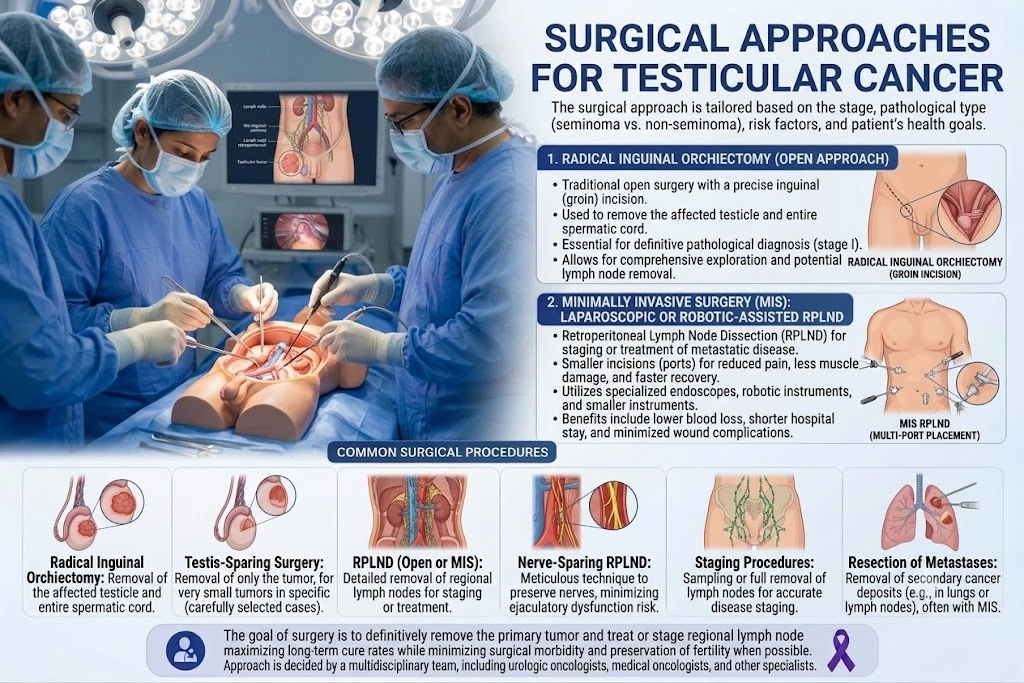
The surgical approach for testicular cancer is selected based on the type of tumour, stage of disease, imaging findings, and individual patient requirements.
Radical Inguinal Orchiectomy
Radical inguinal orchiectomy is the standard surgical procedure for treating testicular cancer. The affected testicle is removed through an incision in the groin rather than the scrotum to reduce the risk of tumour spread and allow accurate pathological evaluation.
Retroperitoneal Lymph Node Dissection (RPLND)
For selected patients, cancer may spread to lymph nodes located behind the abdominal organs.
RPLND involves careful removal of these lymph nodes while preserving important surrounding nerves whenever possible.
Dr. Ajay Simha is experienced in the surgical management of testicular cancer using appropriate surgical approaches based on tumour type, disease stage, and individual patient requirements. The goal is to achieve complete cancer removal while supporting accurate staging, preserving quality of life, addressing fertility considerations, and ensuring appropriate long-term cancer management.
Frequently Asked Questions
For most patients, the first treatment is radical inguinal orchiectomy, where the affected testicle is surgically removed.
Common early symptoms include a painless lump in the testicle, swelling, heaviness in the scrotum, or discomfort in the groin.
Diagnosis usually involves physical examination, scrotal ultrasound, tumour marker blood tests, and CT scans for staging.
Many cases of testicular cancer can be treated successfully, especially when diagnosed early. The treatment approach depends on the type and stage of the disease.
It is a surgical procedure in which the affected testicle is removed through an incision in the groin to treat and diagnose testicular cancer.