
- Home
- About Doctor
- Cancer Surgery
- Procedures & Techniques
- Minimally Invasive Cancer Surgery
- Robotic Cancer Surgery
- Laparoscopic Cancer Surgery
- Thoracoscopic Cancer Surgery (VATS)
- Open (Conventional) Cancer Surgery
- Sentinel Lymph Node Biopsy (SLNB)
- Cytoreductive Surgery (CRS)
- Hyperthermic Intraperitoneal Chemotherapy (HIPEC)
- Scarless/ Remote Access Thyroidectomy
- Resources
- Contact Us
Adrenal Tumors Surgery
Message from Dr. Ajay Simha

Being diagnosed with an adrenal tumour can create uncertainty and concern for patients and their families. Understanding the nature of the tumour, available treatment options, and expected outcomes can help patients make informed decisions regarding their healthcare.
When an adrenal tumour is suspected or diagnosed, a detailed evaluation is carried out to determine its size, location, hormonal activity, imaging characteristics, possibility of malignancy, involvement of surrounding structures, and the patient’s overall health. A personalised treatment plan is then formulated based on these factors and the individual patient’s treatment goals.
I am Dr. Ajay Simha, Consultant Surgical Oncologist (Cancer Surgeon), providing adrenal tumour evaluation and surgical care at Manipal Hospitals Sarjapur Road, Bengaluru. This page provides an overview of adrenal tumours, from their symptoms and evaluation to the available treatment options.
What Is Adrenal Tumors?
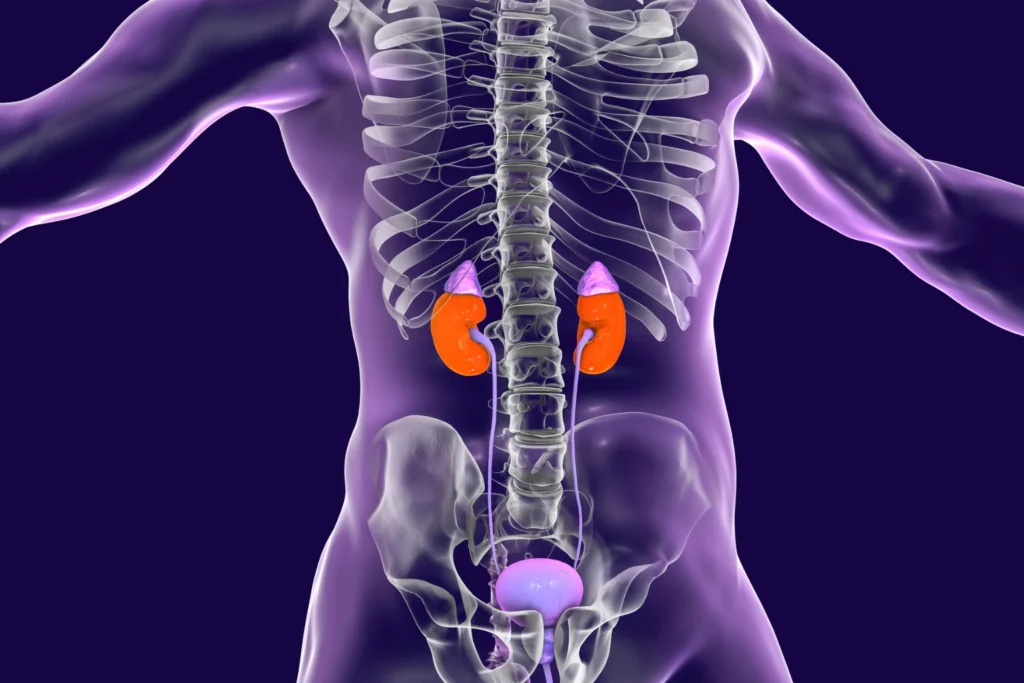
Adrenal tumours are abnormal growths that develop in the adrenal glands, two small glands located above each kidney. These glands produce important hormones that regulate several body functions, including blood pressure, metabolism, stress response, and electrolyte balance.
Symptoms of Adrenal Tumors
Symptoms of adrenal tumours may vary depending on whether the tumour produces hormones and the size of the growth.
Common symptoms may include:
- High blood pressure that is difficult to control
- Unexplained weight gain or weight loss
- Increased sweating
- Rapid heartbeat or palpitations
- Anxiety or nervousness
- Muscle weakness
- Excessive hair growth or hormonal changes
- Abdominal or back discomfort
- Changes in blood sugar levels
- Electrolyte imbalance
Some adrenal tumours may be discovered incidentally during imaging tests performed for unrelated conditions.
Any suspicious adrenal growth requires specialist evaluation for proper diagnosis and treatment planning.
Evaluation of Adrenal Tumors
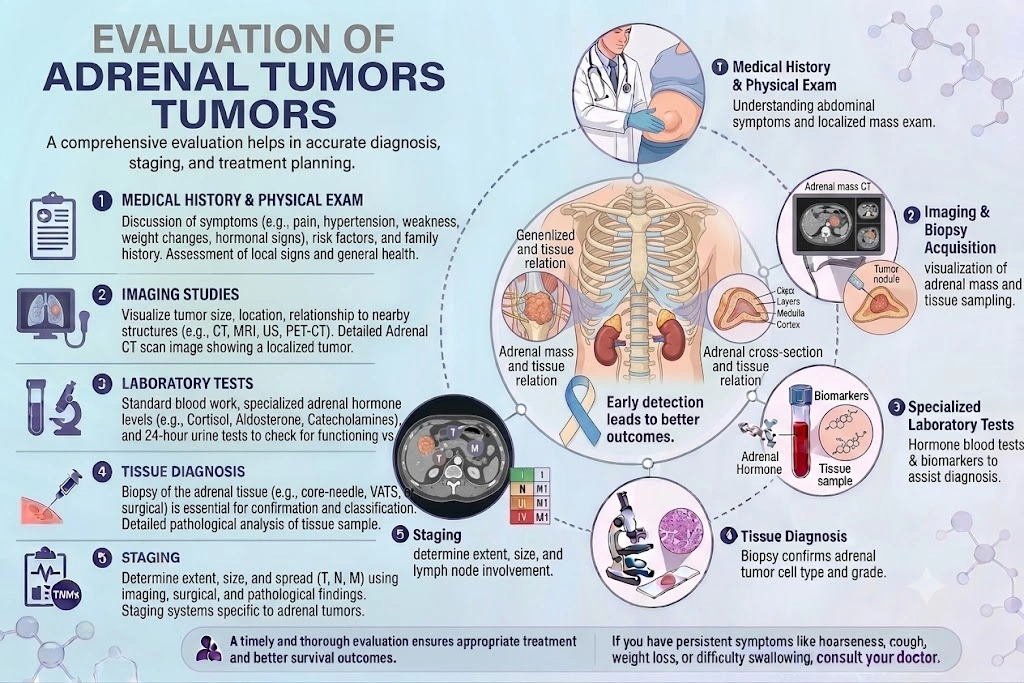
When an adrenal tumour is suspected, a detailed evaluation is carried out to determine its type, size, hormonal activity, imaging characteristics, and potential risk of malignancy.
Medical History and Physical Examination
A detailed assessment helps understand symptoms, hormonal changes, previous medical conditions, and the patient’s overall health status.
Hormonal Evaluation
Blood and urine tests may be performed to determine whether the adrenal tumour is producing excess hormones.
Hormonal tests may evaluate:
- Cortisol levels
- Aldosterone levels
- Catecholamine levels
- Other adrenal hormone levels
Biopsy Evaluation
In selected cases, further evaluation may be required to determine the nature of the tumour. A comprehensive evaluation helps develop an individualised treatment plan based on the patient’s condition.
Treatment Options for Adrenal Tumors
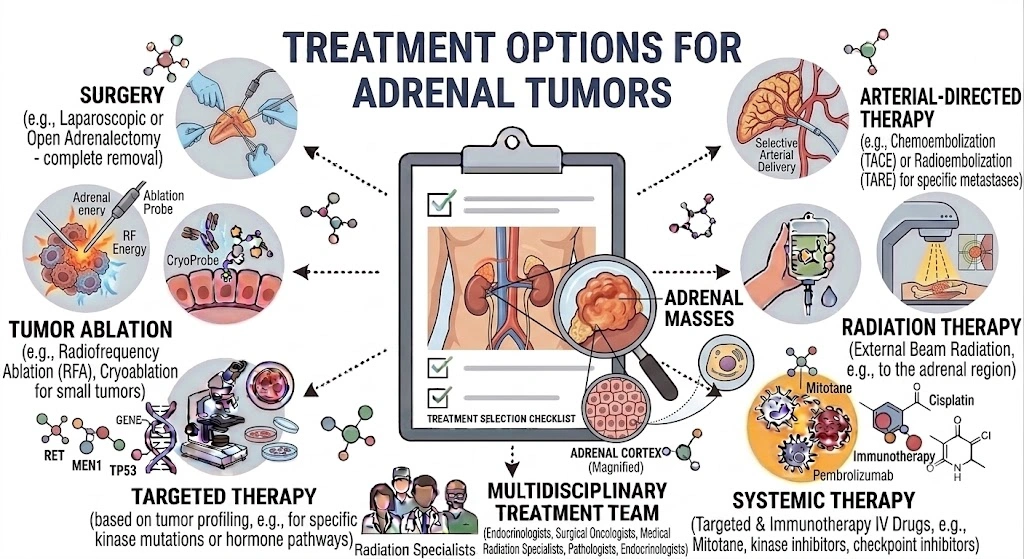
Treatment for adrenal tumours depends on several factors, including:
- Tumour size
- Hormonal activity
- Imaging characteristics
- Risk of cancer
- Growth pattern
- Patient’s overall health condition
Surgery
Adrenal tumour surgery involves removing the affected adrenal gland or tumour to achieve disease control and prevent complications. The surgical procedure is known as adrenalectomy.
Adrenalectomy may be recommended for:
- Adrenal cancers
- Large adrenal tumours
- Hormone-producing tumours
- Tumours with suspicious imaging features
The type and extent of surgery are determined based on the tumour characteristics, hormonal activity, possibility of malignancy, involvement of nearby structures, and the patient’s overall health.
Radiotherapy
Radiotherapy may be considered in selected patients with adrenal cancer, depending on the extent and characteristics of the disease. Treatment decisions are individualised and may be made as part of a multidisciplinary treatment plan.
Chemotherapy
Chemotherapy may be considered in selected patients with adrenal cancer, particularly when the disease is advanced or requires systemic treatment. The choice of treatment depends on the tumour type, stage, disease extent, overall health, and individual treatment goals.
Immunotherapy
Immunotherapy may be considered for selected patients with advanced adrenal cancer depending on the tumour characteristics and overall treatment plan. Its suitability is assessed on an individual basis as part of multidisciplinary cancer care.
Targeted Therapy
Targeted therapy uses medicines directed at specific biological factors involved in cancer growth. It may be considered for selected patients depending on the type and characteristics of the adrenal tumour and the extent of disease.
Supportive Care

the patient’s nutritional status, physical well-being, recovery, and overall quality of life throughout treatment.
Nutritional Support
Adequate nutrition and nutritional support are important during cancer treatment and recovery. Individualised nutritional guidance may help patients maintain their strength and support recovery during and after treatment.
Physiotherapy
Physiotherapy can help prepare patients for surgery, support recovery after surgery, and help patients return to their previous activities of daily living. Rehabilitation is planned according to the patient’s condition, treatment received, and functional requirements.
Surgical Approaches for Adrenal Tumors
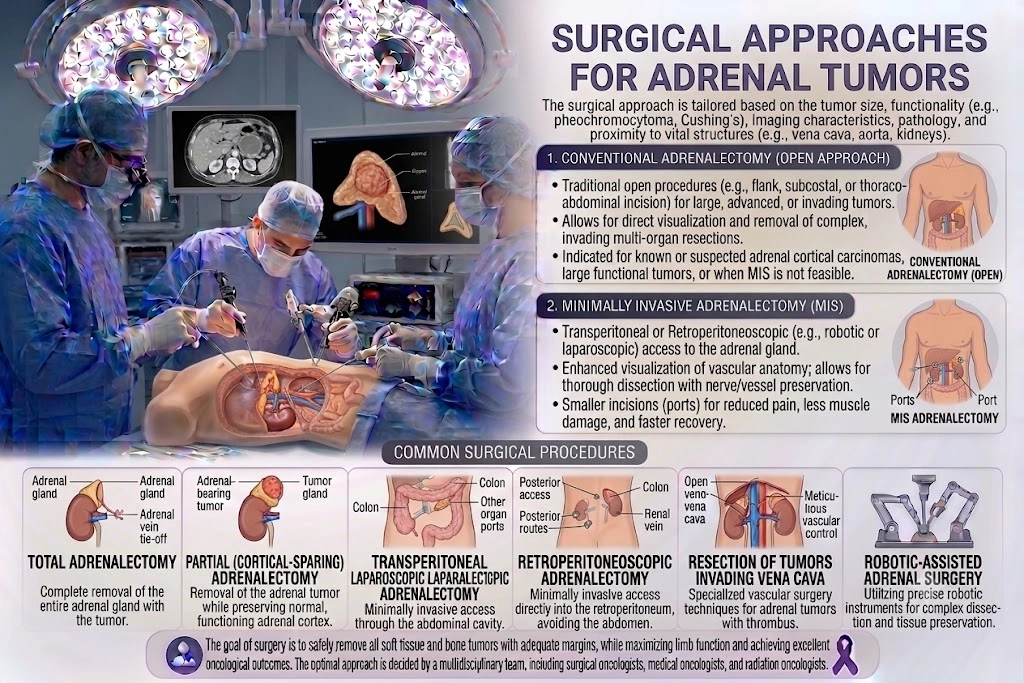
The choice of surgical approach for adrenal tumours depends on several important factors related to the tumour characteristics and the patient’s overall health condition.
Surgery for Functional Adrenal Tumors
Some adrenal tumours produce excess hormones that can affect the body’s normal functions.
Examples include:
- Pheochromocytoma
- Adrenal adenomas causing excess cortisol production
- Aldosterone-producing adrenal tumours
Adrenal Cancer Surgery
Adrenal cancer requires specialised surgical planning because complete removal of the tumour is important for cancer control.
Surgery may involve:
- Removal of the affected adrenal gland
- Removal of surrounding involved tissues when necessary
- Evaluation of nearby structures
Treatment decisions are personalised based on tumour stage and disease extent.
Dr. Ajay Simha is experienced in the surgical management of adrenal tumours, including minimally invasive and open surgical approaches. The treatment strategy is carefully tailored to the tumour characteristics, hormonal activity, possibility of malignancy, disease extent, and overall health of the patient, with the goal of achieving effective tumour control while ensuring patient safety and supporting recovery and long-term health.
Frequently Asked Questions
Adrenal tumors are abnormal growths that develop in the adrenal glands located above the kidneys. They may be benign or cancerous.
No. Some small and non-functional adrenal tumors may only require regular monitoring. Surgery is recommended based on tumour characteristics and patient condition.
Adrenalectomy is a surgical procedure performed to remove an adrenal gland affected by a tumour.
Symptoms may include high blood pressure, hormonal changes, sweating, rapid heartbeat, weight changes, and abdominal discomfort.
For selected patients, laparoscopic adrenalectomy is a safe and effective minimally invasive surgical option.