
- Home
- About Doctor
- Cancer Surgery
- Procedures & Techniques
- Minimally Invasive Cancer Surgery
- Robotic Cancer Surgery
- Laparoscopic Cancer Surgery
- Thoracoscopic Cancer Surgery (VATS)
- Open (Conventional) Cancer Surgery
- Sentinel Lymph Node Biopsy (SLNB)
- Cytoreductive Surgery (CRS)
- Hyperthermic Intraperitoneal Chemotherapy (HIPEC)
- Scarless/ Remote Access Thyroidectomy
- Resources
- Contact Us
Liver Cancer Surgery
Message from Dr. Ajay Simha

A diagnosis of liver cancer can be a challenging experience for patients and their families. Questions about the type of cancer, available treatment options, liver function, surgery, and expected outcomes are common.
When liver cancer is suspected or diagnosed, a comprehensive evaluation is performed to understand the tumour characteristics, extent of disease, liver function, and the patient’s overall health. These factors help a multidisciplinary team determine the most appropriate treatment strategy for each patient.
I am Dr. Ajay Simha, Consultant Surgical Oncologist (Cancer Surgeon), and this page provides an overview of liver cancer, including its symptoms, evaluation, treatment options, and surgical approaches.
What Is Liver Cancer?

The liver is a vital organ involved in several important functions, including metabolism, digestion, detoxification, and processing nutrients. Liver cancer occurs when abnormal cells within the liver begin to multiply in an uncontrolled manner and form a tumour.
Symptoms of Liver Cancer
The symptoms of liver cancer can vary depending on the size and location of the tumour, the stage of disease, and its effect on normal liver function.
Common symptoms may include:
- Unexplained weight loss
- Loss of appetite
- Persistent tiredness or weakness
- Pain or discomfort in the upper right side of the abdomen
- Feeling full after eating small amounts
- Yellowing of the skin and eyes (jaundice)
- Nausea or vomiting
- Swelling or increased fullness of the abdomen
- Unexplained fever
Persistent or worsening symptoms should be medically evaluated to identify the underlying cause and determine whether further investigation is required.
Evaluation of Liver Cancer
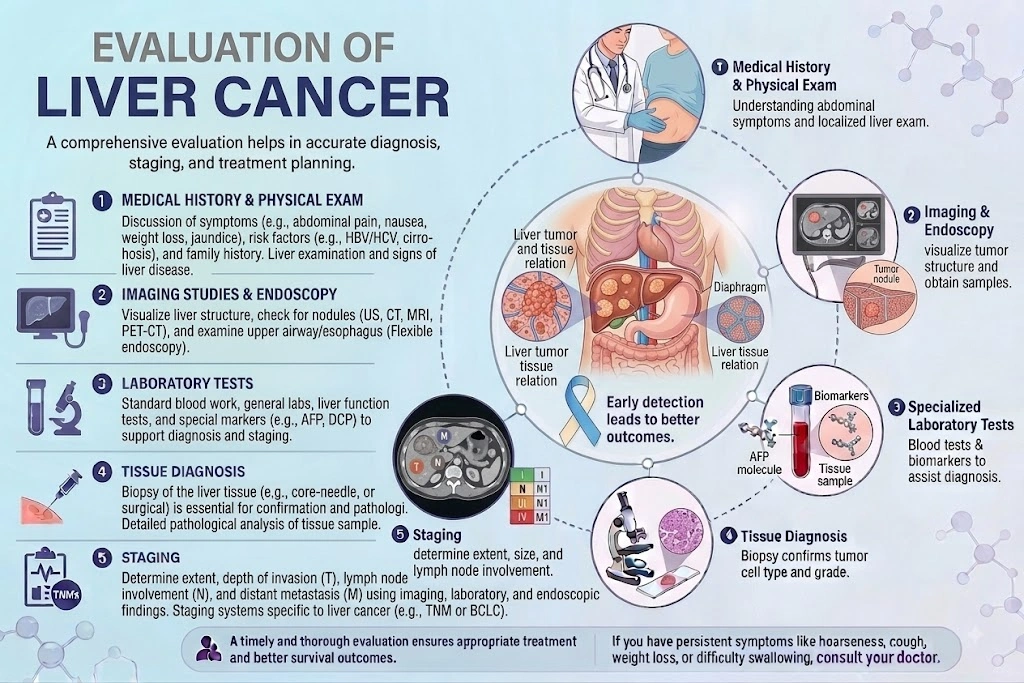
A detailed evaluation is important to establish the type and extent of liver cancer and to assess whether the liver can safely tolerate treatment.
Initial investigations may include blood tests to assess liver function and other relevant parameters. Tumour marker tests may also provide additional information in selected patients.
Imaging investigations such as ultrasound, CT scans, and MRI are used to identify the number, size, and location of liver tumours and assess their relationship with surrounding structures.
A biopsy may be recommended in selected cases when imaging findings do not provide sufficient information to establish the diagnosis.
Treatment Options for Liver Cancer
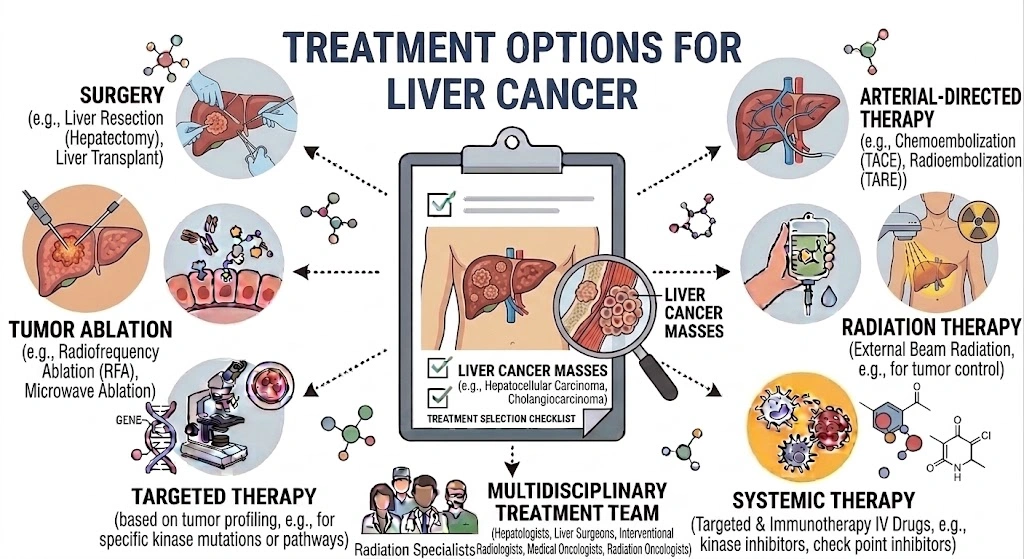
The treatment of liver cancer depends on the type and stage of cancer, tumour characteristics, liver function, and the patient’s overall health. Management may involve surgery, liver-directed treatments, systemic therapies, or a combination of different approaches. The appropriate treatment is determined after a detailed assessment by the treating team.
Surgery
Surgery may provide an effective treatment option for selected patients in whom the liver tumour can be completely removed while preserving sufficient healthy liver tissue. The extent of surgery is carefully planned according to the tumour’s size, location, number, and the functional reserve of the remaining liver.
Liver Resection
Liver resection involves removing the portion of the liver containing the tumour along with an appropriate margin of surrounding tissue. It may be considered when the cancer is localized and adequate healthy liver tissue can be preserved after surgery. The extent of resection is determined by the tumour characteristics and the patient’s underlying liver health.
Liver Transplantation
Liver transplantation may be considered in selected patients with certain types and stages of liver cancer when they meet appropriate medical and transplant criteria. The decision involves careful assessment of the tumour characteristics, liver function, overall health, and suitability for transplantation. It aims to treat the cancer while also addressing significant underlying liver disease when present.
Targeted Therapy
Targeted therapy uses medicines that act on specific pathways or features involved in the growth and survival of cancer cells. It may be considered for selected patients depending on the type, stage, and characteristics of the liver cancer. The choice of treatment is individualized according to the patient’s disease and overall treatment plan.
Immunotherapy
Immunotherapy works by helping the body’s immune system recognise and attack cancer cells. It may be recommended for selected patients with liver cancer depending on the type and stage of disease and the patient’s individual treatment requirements.
Supportive Care

Nutritional Support
Maintaining adequate nutrition is an important part of liver cancer care. The disease and its treatment can affect appetite, nutritional status, and overall physical strength. Personalized nutritional support can help patients maintain adequate nourishment and support their strength during treatment and recovery.
Physiotherapy
Physiotherapy can help patients improve physical fitness before treatment and regain mobility and strength following surgery or other cancer treatments. It also supports a gradual return to daily activities.
Surgical Approaches for Liver Cancer
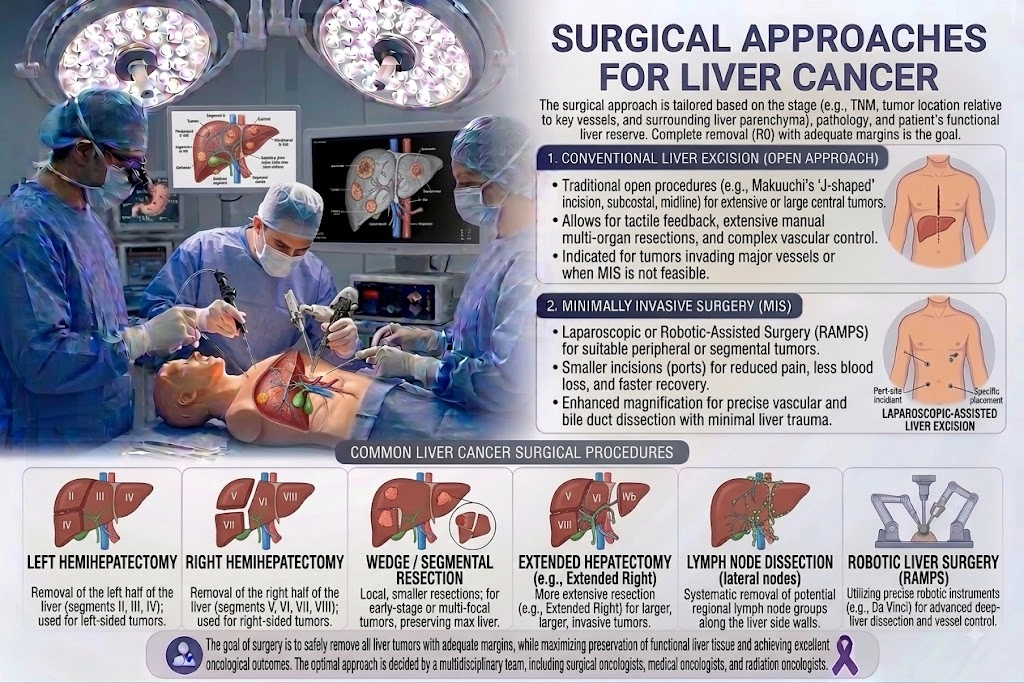
The surgical technique is selected based on the tumour’s location and extent, the patient’s liver function, overall health, and the complexity of the planned procedure.
Open Liver Surgery
Open surgery may be recommended when the tumour is complex, extensive, or located in an area where wider surgical access is required. This approach allows the surgeon to directly access the liver and perform the necessary tumour removal safely.
Minimally Invasive Liver Surgery
For selected patients, laparoscopic or robotic-assisted liver surgery may be considered. These approaches use smaller incisions and may help reduce surgical trauma and support postoperative recovery.
The suitability of a minimally invasive approach depends on the tumour’s size, location, number, underlying liver condition, and complexity of the procedure.
The surgical plan is individualized after a detailed assessment, with the primary goal of achieving complete cancer removal while preserving sufficient healthy liver tissue and maintaining liver function.
Dr. Ajay Simha is experienced in advanced liver cancer surgery, including open and minimally invasive approaches. His treatment approach focuses on careful surgical planning, complete cancer removal where feasible, preservation of liver function, patient safety, and supporting recovery throughout the treatment journey.
Frequently Asked Questions
Early liver cancer may not always cause noticeable symptoms. Possible signs include abdominal discomfort, weight loss, loss of appetite, fatigue, jaundice, and abdominal swelling.
Ovarian cancer diagnosis may involve pelvic examination, ultrasound, CT scan, MRI, blood tests such as CA-125, and tissue examination when required.
Surgery depends on factors such as tumour size, location, liver function, cancer stage, and overall health. A detailed evaluation helps determine whether surgery is suitable.
Liver resection is a procedure where the cancerous portion of the liver is removed while preserving enough healthy liver tissue to maintain liver function.
In selected cases, laparoscopic or robotic-assisted liver surgery may be considered depending on the tumour and patient condition.