
- Home
- About Doctor
- Cancer Surgery
- Procedures & Techniques
- Minimally Invasive Cancer Surgery
- Robotic Cancer Surgery
- Laparoscopic Cancer Surgery
- Thoracoscopic Cancer Surgery (VATS)
- Open (Conventional) Cancer Surgery
- Sentinel Lymph Node Biopsy (SLNB)
- Cytoreductive Surgery (CRS)
- Hyperthermic Intraperitoneal Chemotherapy (HIPEC)
- Scarless/ Remote Access Thyroidectomy
- Resources
- Contact Us
Colon Cancer Surgery
Message from Dr. Ajay Simha

Being diagnosed with colon cancer can be a challenging experience for patients and their families. Concerns about treatment choices, surgery, recovery, and what to expect next are common.
When colon cancer is suspected or confirmed, a detailed evaluation is performed to understand the tumour, determine its stage, and assess the patient’s overall health. Based on these findings, a personalized treatment plan is developed by a multidisciplinary team according to the patient’s condition and treatment goals.
I am Dr. Ajay Simha, Consultant Surgical Oncologist (Cancer Surgeon), and this page provides an overview of colon cancer, including its symptoms, evaluation, treatment options, and surgical approaches.
What Is Colon Cancer?
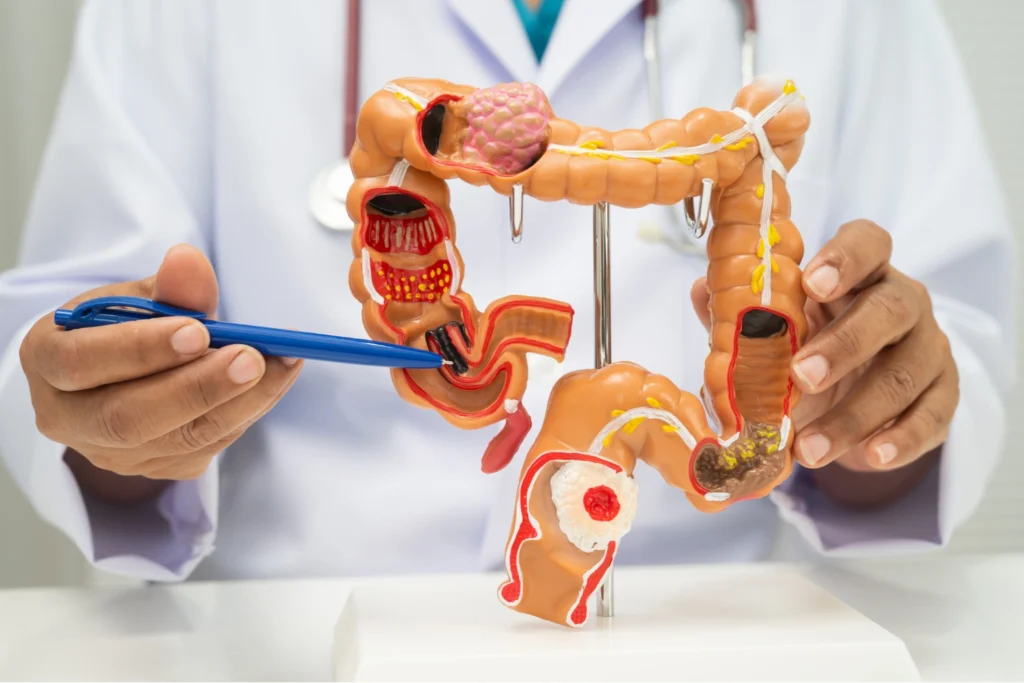
The colon is an important part of the digestive system that absorbs water and helps form and process waste. Colon cancer occurs when cells lining the colon undergo abnormal and uncontrolled growth, eventually forming a tumour.
Symptoms of Colon Cancer
The symptoms of colon cancer may differ depending on the location and extent of the tumour. Some patients may experience persistent digestive or bowel-related changes, while others may have less specific symptoms.
Common symptoms include:
- Changes in bowel habits
- Blood in stools
- Persistent abdominal discomfort or pain
- Unexplained weight loss
- Feeling of incomplete bowel emptying
- Long-lasting constipation or diarrhoea
- Fatigue or weakness
Persistent or unusual bowel-related symptoms should be medically evaluated to identify the underlying cause and enable timely treatment when required.
Evaluation of Colon Cancer
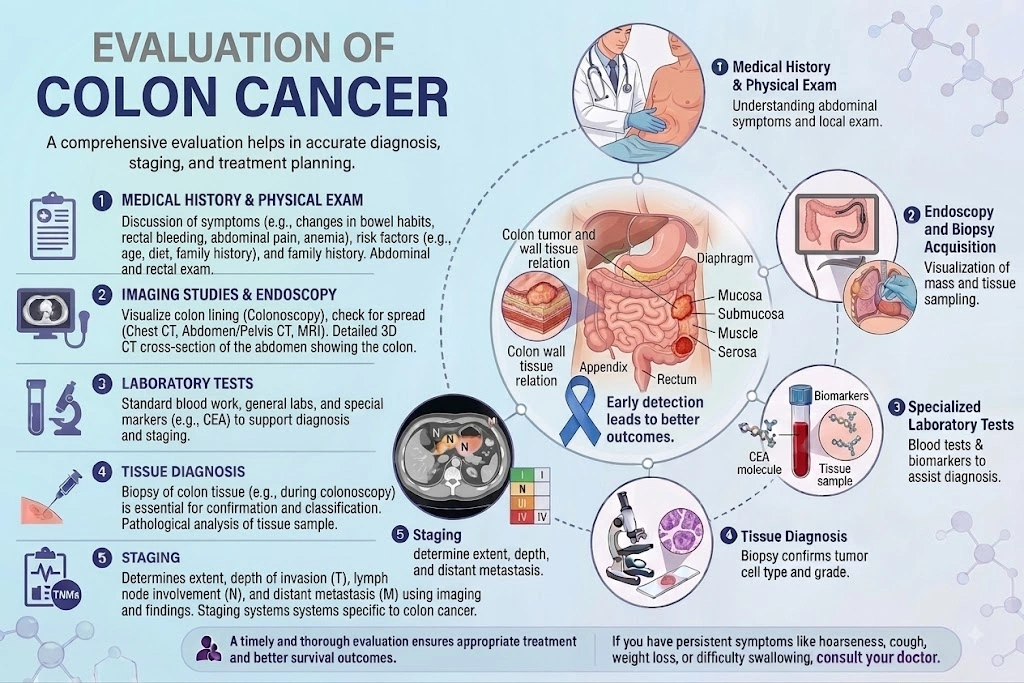
When colon cancer is suspected, a detailed evaluation is performed to confirm the diagnosis and determine how far the disease has progressed.
Colonoscopy is an important diagnostic procedure that allows the inner lining of the colon to be examined and any suspicious growths to be identified. A biopsy may be performed during the procedure to confirm whether the abnormal tissue is cancerous.
Imaging investigations may also be recommended to assess the extent of the disease and identify any involvement beyond the colon. The stage of cancer, tumour location, lymph node involvement, and the patient’s overall health are considered while planning treatment.
A comprehensive evaluation allows the treating team to develop an individualized treatment strategy suited to the patient’s condition.
Treatment Options for Colon Cancer
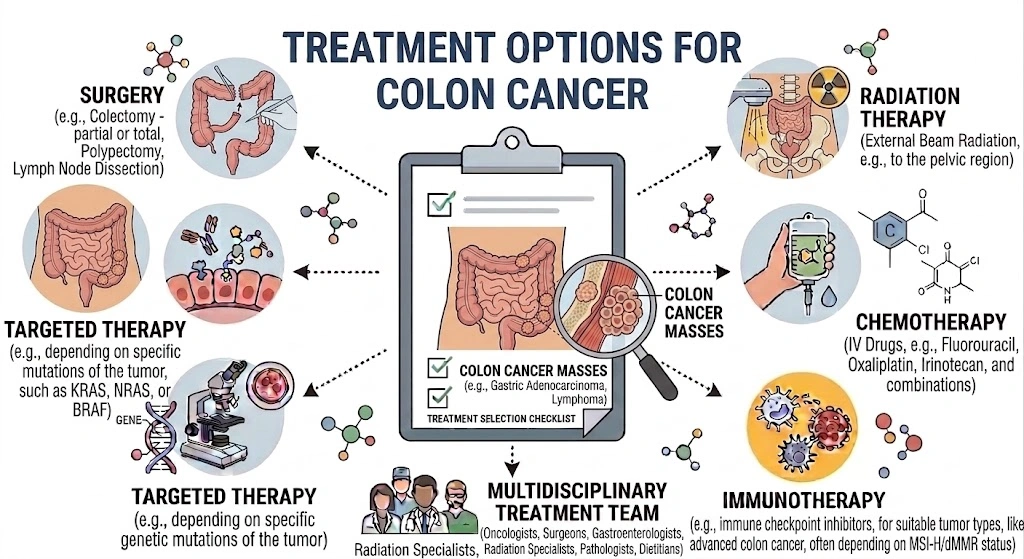
The management of colon cancer depends on the stage and location of the tumour, its characteristics, and the patient’s overall health. Treatment may involve surgery, systemic therapies, or a combination of different approaches. The appropriate treatment sequence is determined by a multidisciplinary team based on the individual patient’s needs.
Surgery
Surgery is an important treatment option for patients with colon cancer that can be removed safely. The procedure involves removing the section of the colon containing the tumour along with nearby lymph nodes. After removing the affected portion, the remaining healthy ends of the colon are usually joined to restore bowel continuity. The extent of surgery depends on the location and spread of the cancer.
Radiotherapy
Radiation therapy uses high-energy radiation to target cancer cells. Its role in colon cancer is more selective and depends on the tumour location and individual treatment requirements. In specific situations, radiation therapy may be considered along with other treatment modalities as part of an individualized cancer treatment plan.
Chemotherapy
Chemotherapy uses medicines that target and destroy cancer cells or limit their ability to grow. Depending on the stage and characteristics of the cancer, it may be recommended before surgery, after surgery, or for patients with advanced disease. The choice and duration of chemotherapy are determined according to the patient’s cancer characteristics and overall treatment plan.
Immunotherapy
Immunotherapy supports the body’s immune system in recognising and attacking cancer cells. It may be considered for selected colon cancer patients whose tumours have specific biological or molecular characteristics. Appropriate testing helps determine whether immunotherapy is likely to be beneficial as part of the patient’s treatment.
Targeted Therapy
Targeted therapy uses medicines designed to act on specific molecular features involved in the growth and spread of cancer cells. These treatments may be considered for selected patients based on tumour characteristics and specific test results. The use of targeted therapy is individualized and may be combined with other cancer treatments depending on the patient’s condition.
Supportive Care

Nutritional Support
Maintaining adequate nutrition is an important part of colon cancer care. Cancer and its treatment can affect appetite, digestion, bowel function, and overall nutritional status. Personalized nutritional guidance can help patients maintain strength, support treatment, and promote recovery.
Physiotherapy
Physiotherapy can help patients prepare for surgery, improve physical strength, and support recovery following treatment. It also helps patients gradually return to their regular daily activities.
Surgical Approaches for Colon Cancer
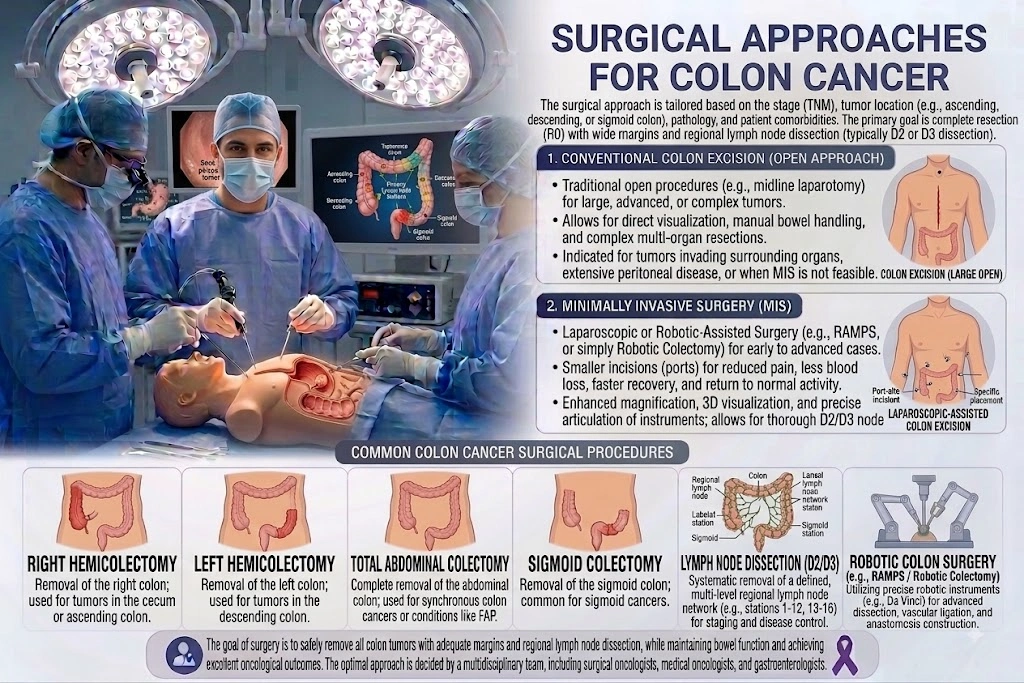
The choice of surgical technique depends on the tumour’s location and extent, the patient’s overall health, and the complexity of the procedure.
For suitable patients, minimally invasive approaches such as laparoscopic or robotic-assisted surgery may be considered. These techniques can reduce the extent of surgical trauma and may support a smoother postoperative recovery.
Open surgery may be recommended when the tumour is extensive or when a more complex procedure is required to achieve safe and complete cancer removal.
The surgical approach is selected after considering factors such as:
- The location of the tumour within the colon
- The extent and stage of the cancer
- Involvement of nearby lymph nodes or other structures
- The patient’s overall health and fitness for surgery
Every surgical plan is individualized with the primary objective of achieving complete cancer removal while preserving bowel function wherever safely possible.
Dr. Ajay Simha is experienced in advanced colon cancer surgery using minimally invasive as well as open surgical techniques. His approach focuses on surgical precision, effective cancer control, patient safety, and supporting recovery throughout the treatment journey.
Frequently Asked Questions
Common signs may include changes in bowel habits, blood in stools, abdominal discomfort, unexplained weight loss, and persistent fatigue. Early evaluation can help in timely diagnosis and treatment planning.
Colon cancer is usually diagnosed through tests such as colonoscopy, biopsy, and imaging scans. These evaluations help determine the location and stage of cancer.
The type of surgery depends on the tumour location, cancer stage, extent of spread, and the patient’s overall health. The aim is to remove the cancer completely while preserving bowel function.
Treatment depends on the stage and nature of the cancer. While surgery is the main treatment for many cases, chemotherapy, targeted therapy, or other treatments may be recommended based on individual needs.
Colon cancer surgery involves removing the affected portion of the colon along with nearby lymph nodes. The remaining healthy sections are usually reconnected to restore bowel continuity.