
- Home
- About Doctor
- Cancer Surgery
- Procedures & Techniques
- Minimally Invasive Cancer Surgery
- Robotic Cancer Surgery
- Laparoscopic Cancer Surgery
- Thoracoscopic Cancer Surgery (VATS)
- Open (Conventional) Cancer Surgery
- Sentinel Lymph Node Biopsy (SLNB)
- Cytoreductive Surgery (CRS)
- Hyperthermic Intraperitoneal Chemotherapy (HIPEC)
- Scarless/ Remote Access Thyroidectomy
- Resources
- Contact Us
Esophageal Cancer Surgery
Message from Dr. Ajay Simha

A diagnosis of esophageal cancer can be overwhelming for patients and their families. Concerns regarding treatment options, outcomes and the road ahead are but natural.
When esophageal cancer is suspected or diagnosed, a detailed evaluation is carried out to confirm the diagnosis and stage. A personalized treatment plan is then formulated by a multidisciplinary team based on the patient’s overall health, stage and individual goals
I am Dr. Ajay Simha, Consultant Surgical Oncologist (Cancer Surgeon) and this page gives an overview of esophageal cancer- right from symptoms and evaluation to treatment options.
What Is Esophageal Cancer?
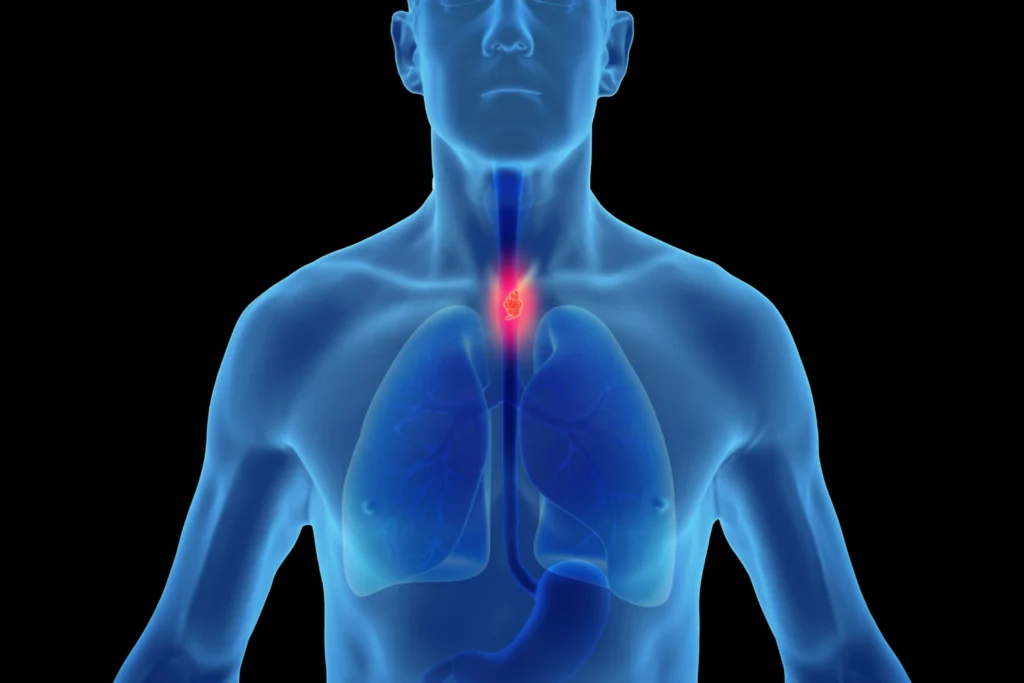
The esophagus, also known as the food pipe, facilitates movement of food from the throat to the stomach. Esophageal cancer develops as a result of abnormal growth of the cells lining the food pipe. Progressive growth of the cancer results in narrowing of the passage and causes difficulty swallowing and other symptoms.
Symptoms of Esophageal Cancer
The symptoms of esophageal cancer may vary depending on the size and progression of the tumour. Common symptoms include:
- Difficulty swallowing (dysphagia)
- Pain or discomfort while swallowing
- Feeling of food getting stuck in the chest or throat
- Unexplained weight loss
- Loss of appetite
- Persistent chest pain or discomfort
- Long-term indigestion or heartburn
- Nausea or vomiting
- Changes in voice or persistent cough
If these symptoms continue or worsen, timely medical evaluation is important.
Evaluation of Esophageal Cancer
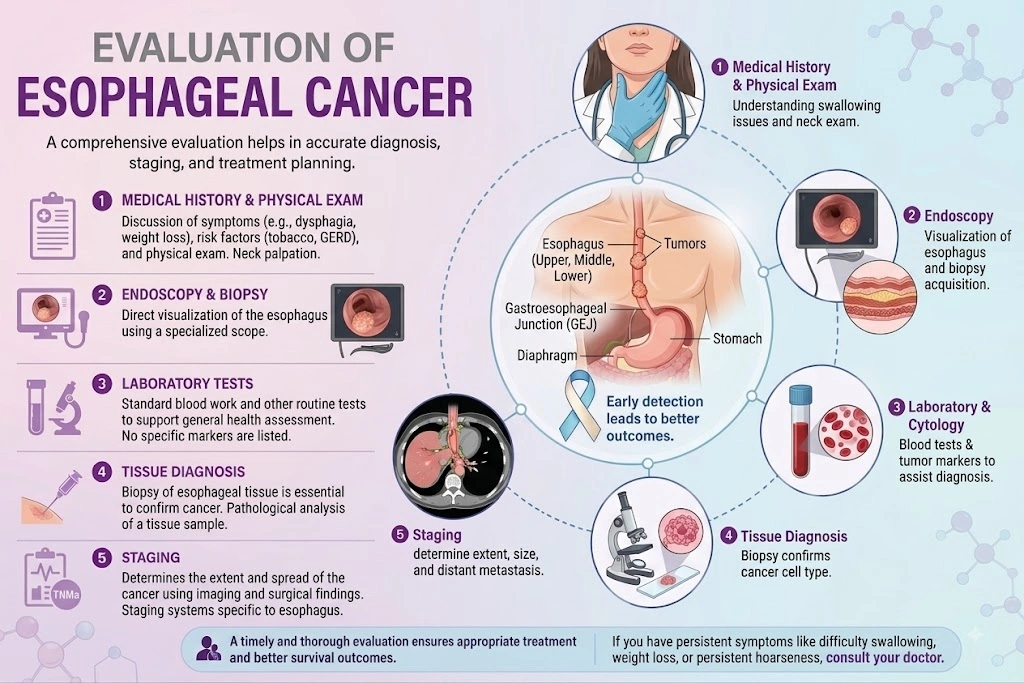
When esophageal cancer is suspected based on symptoms and clinical examination, the first step in evaluation is usually an endoscopy to inspect the food pipe. The exact location of any abnormal areas are noted and biopsies are performed to confirm the diagnosis. Adenocarcinoma and squamous cell carcinoma are the most common types of esophageal cancer.
Once the diagnosis of esophageal cancer is confirmed, the stage of the tumor is determined using PET-CT or CT scan.
Additional tests (blood tests, lung and heart function assessments) are carried to assess the patient’s overall health and fitness for cancer treatment.
Treatment Options for Esophageal Cancer
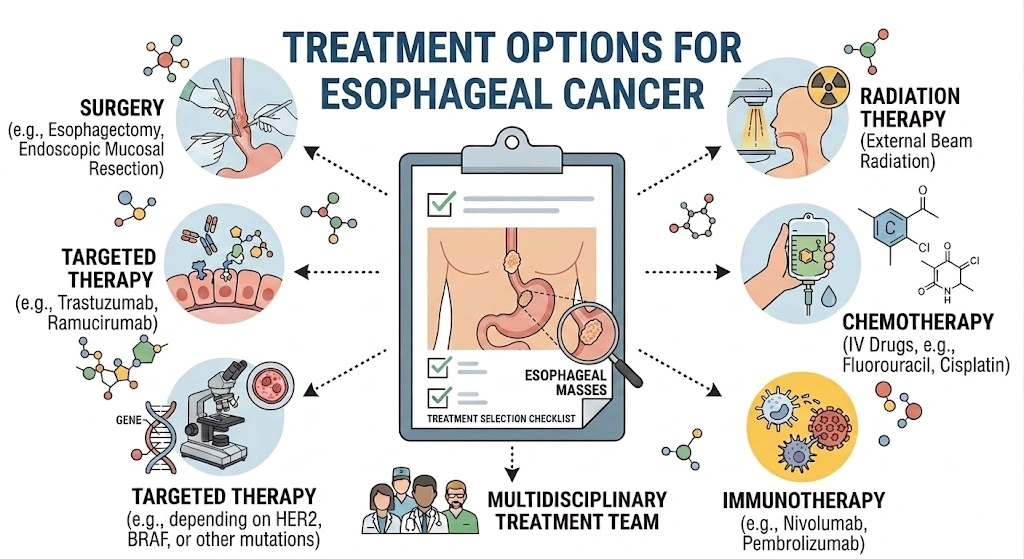
Management of esophageal cancer usually involves a combination of treatment modalities. The right combination and sequencing of treatments is determined by a team of experts.
Surgery
Surgery for esophageal cancer involves removal of the affected part of the food pipe along with nearby lymph nodes. The food pipe is then reconstructed using the stomach. In selected patients, surgery is the primary treatment and offers the best chance of long term disease control.
Chemotherapy
Chemotherapy uses anti-cancer medicines to destroy or control the growth of cancer cells. It may be given before surgery, after surgery, or along with other treatments based on the stage of cancer.
Radiation Therapy
Radiation therapy uses high-energy rays to target and destroy cancer cells. It is often combined with chemotherapy to improve treatment outcomes and may also help relieve symptoms in certain patients.
Immunotherapy
Immunotherapy empowers the body’s immune system, helping recognize and kill cancer cells. Depending on certain tumor factors and stage, immunotherapy may be incorporated along with chemotherapy as part of the treatment plan for esophageal cancer.
Targeted Therapy
Targeted therapy includes drugs which specifically acts on certain factors expressed by cancer cells. The result is a selective killing of cancer cells with minimal impact on normal cells. They are employed usually in combination with chemotherapy in the treatment of esophageal cancer.
Supportive Care

Nutritional support
An important component of esophageal cancer is nutritional supplementation and support. It is sometimes the first intervention required for esophageal cancer patients who are have difficulty swallowing.
Physiotherapy
Physiotherapy helps prepare patients for surgery, expedites recovery after surgery and helps patients return to their previous activities of daily living.
Surgical Approaches for Esophageal Cancer
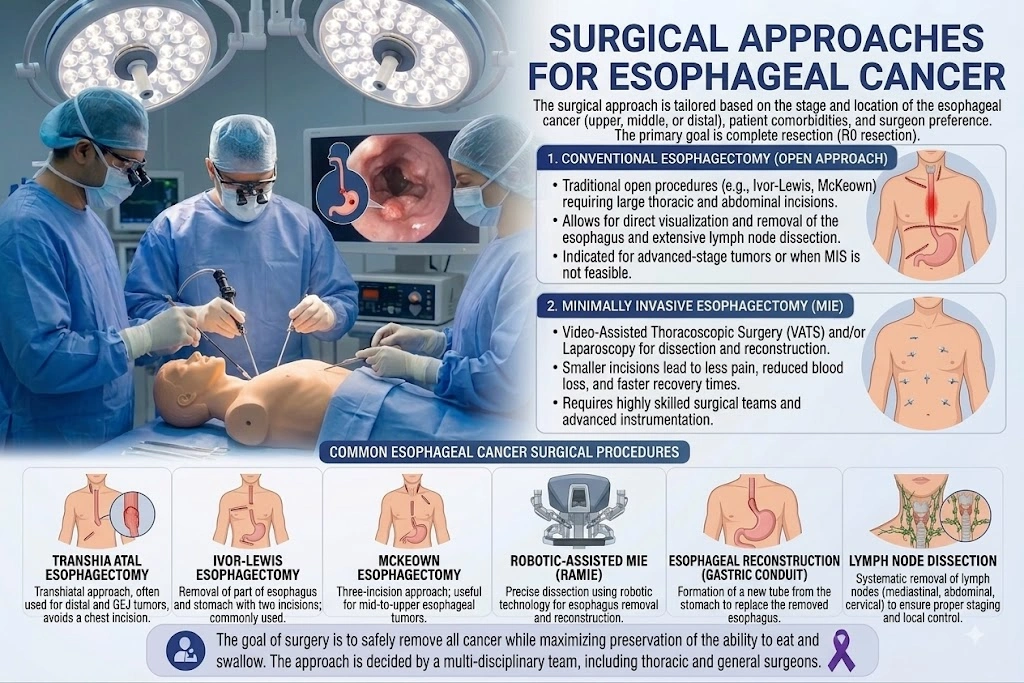
The choice of surgical approach depends on the stage of the cancer, tumor location, and the patient’s overall health. Depending on the individual case, robotic-assisted, laparoscopic, thoracoscopic, minimally invasive, or open surgery may be recommended. Each technique offers distinct advantages and is selected based on factors such as:
- The location of the tumor within the esophagus
- The extent or stage of the cancer
- Response to previous treatments, if any
- The patient’s overall health and fitness for surgery
Every treatment plan is carefully tailored to ensure the safest and most effective outcome.
Dr. Ajay Simha is experienced in advanced esophageal cancer surgery using both minimally invasive and open surgical techniques. The goal is always to achieve complete cancer removal while ensuring patient safety, surgical precision, and optimal recovery.
Frequently Asked Questions
Surgery is usually recommended when the cancer is localized and can be safely removed. The decision depends on the stage of the disease, tumour location, and the patient's overall health.
Treatment options may include surgery, chemotherapy, radiation therapy, targeted therapy, immunotherapy, or a combination of these. The right approach is determined after a detailed evaluation.
Yes, minimally invasive techniques such as laparoscopic or robotic-assisted surgery may be suitable for selected patients. The surgical approach is chosen based on the individual patient's condition.
Recovery varies from patient to patient depending on the type of surgery and overall health. Most patients gradually return to their normal activities with proper follow-up and rehabilitation.
Dr. Ajay Simha provides personalized evaluation, advanced surgical expertise, and comprehensive treatment planning for patients with esophageal cancer.