- Home
- About Doctor
- Cancer Surgery
- Procedures & Techniques
- Minimally Invasive Cancer Surgery
- Robotic Cancer Surgery
- Laparoscopic Cancer Surgery
- Thoracoscopic Cancer Surgery (VATS)
- Open (Conventional) Cancer Surgery
- Sentinel Lymph Node Biopsy (SLNB)
- Cytoreductive Surgery (CRS)
- Hyperthermic Intraperitoneal Chemotherapy (HIPEC)
- Scarless/ Remote Access Thyroidectomy
- Resources
- Contact Us
Thyroid Cancer Surgery
Message from Dr. Ajay Simha

A diagnosis of thyroid cancer can create concerns for patients and their families. Questions regarding the type of cancer, treatment options, surgery, recovery, and expected outcomes are natural.
When thyroid cancer is suspected or diagnosed, a detailed evaluation is carried out to confirm the diagnosis and determine the extent of the disease. A personalised treatment plan is then formulated based on the type and characteristics of the thyroid cancer, tumour size and location, lymph node involvement, overall health, and individual treatment goals.
I am Dr. Ajay Simha, Consultant Surgical Oncologist (Cancer Surgeon), providing thyroid cancer care at Manipal Hospitals Sarjapur Road, Bengaluru. This page provides an overview of thyroid cancer, including its symptoms, evaluation, treatment options, and surgical approaches.
What Is Thyroid Cancer?
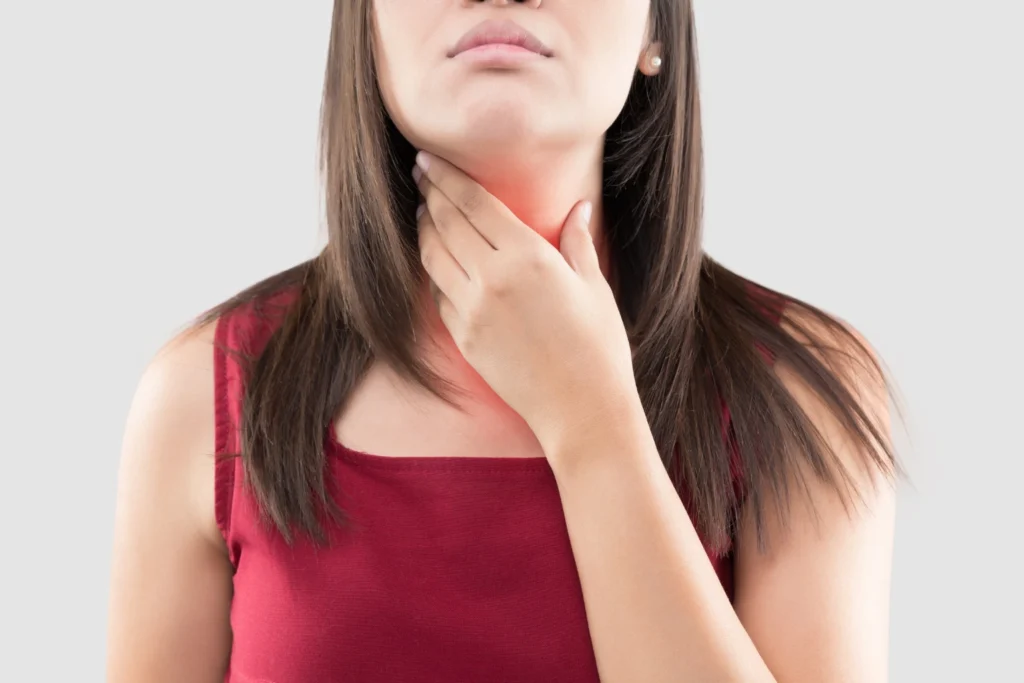
Thyroid cancer develops when abnormal cells in the thyroid gland begin to grow uncontrollably, forming a tumour. The thyroid is a small, butterfly-shaped gland located at the front of the neck. It produces hormones that help regulate metabolism, energy levels, and several other body functions.
Symptoms of Thyroid Cancer
Thyroid cancer may not always cause noticeable symptoms during the early stages. Some thyroid cancers are detected during evaluation of a thyroid nodule or neck swelling.
Common signs and symptoms include:
- Lump or swelling in the neck
- Enlargement of the thyroid gland
- Difficulty swallowing
- Difficulty breathing
- Persistent hoarseness or voice changes
- Neck pain or discomfort
- Swollen lymph nodes in the neck
- Persistent cough without another apparent cause
- Feeling of pressure in the neck
Any new or persistent neck swelling should be evaluated by a specialist for proper diagnosis and timely treatment planning.
Evaluation of Thyroid Cancer
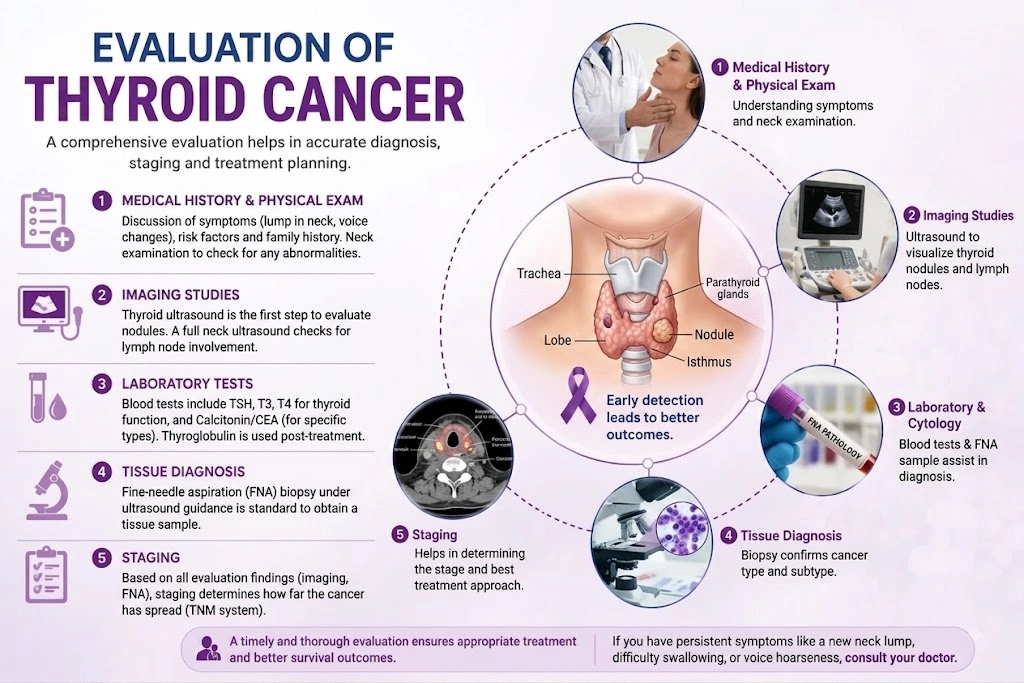
When thyroid cancer is suspected based on symptoms or examination findings, a detailed evaluation is performed to confirm the diagnosis and understand the extent of the disease.
The diagnostic process may include:
Physical Examination
A detailed examination of the neck helps assess thyroid swelling, nodules, and nearby lymph node involvement.
Thyroid Ultrasound
Ultrasound imaging helps evaluate thyroid nodules and identify features that may require further investigation.
Fine Needle Aspiration Cytology (FNAC)
FNAC involves collecting cells from a thyroid nodule using a thin needle. The sample is examined to determine whether cancer cells are present.
Treatment Options for Thyroid Cancer
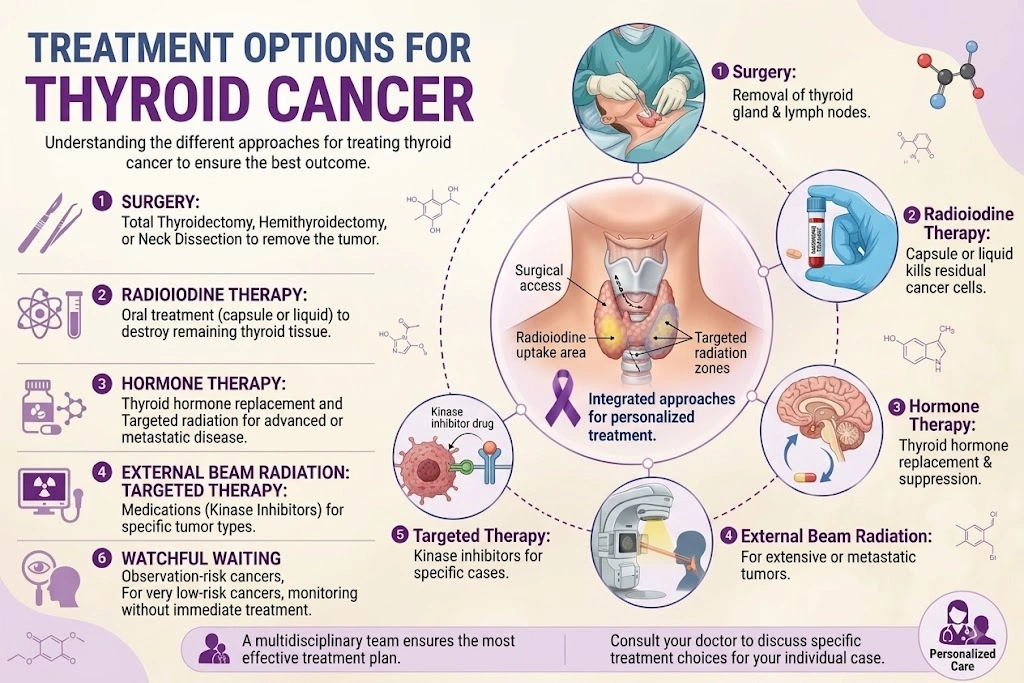
Treatment for thyroid cancer depends on several factors, including the type of thyroid cancer, tumour size and location, cancer stage, lymph node involvement, spread of disease, and the patient’s overall health.
Surgery
Surgery is the primary treatment option for many thyroid cancer patients. The main goal is to remove the cancerous thyroid tissue while protecting important structures located near the thyroid gland.
Radioactive Iodine Therapy
Radioactive iodine therapy may be recommended for selected patients after thyroid surgery, depending on the type and characteristics of the thyroid cancer and the risk of recurrence.
It is used to target remaining thyroid tissue or thyroid cancer cells that can take up iodine. The need for radioactive iodine treatment is determined based on individual cancer characteristics and treatment goals.
Targeted Therapy
Targeted therapy focuses on specific changes within thyroid cancer cells that help them grow and survive.
It may be considered for selected patients with advanced or recurrent thyroid cancers, particularly when surgery or radioactive iodine therapy may not be sufficient.
External Beam Radiation Therapy
External beam radiation therapy uses high-energy radiation to target cancer cells.
It may be considered in selected thyroid cancer cases, particularly when:
- Cancer has spread to nearby structures
- Disease cannot be completely removed surgically
- Additional local control is required
Treatment planning is personalised based on the patient’s condition, disease extent, and individual treatment goals.
Multidisciplinary Thyroid Cancer Care
Thyroid cancer treatment often requires collaboration between multiple specialists, including:
- Endocrine surgeons
- Surgical oncologists
- Endocrinologists
- Nuclear medicine specialists
- Medical oncologists
- Radiologists
- Pathologists
- Supportive care teams
A multidisciplinary approach helps create a comprehensive treatment plan based on accurate diagnosis, staging, and individual patient needs.
Supportive Care

Supportive care is an important part of thyroid cancer treatment and focuses on helping patients manage treatment-related concerns, maintain overall well-being, and support recovery.
Nutritional Support
Maintaining adequate nutrition is important during cancer treatment and recovery. Personalised nutritional guidance may help patients maintain strength and support overall well-being throughout treatment.
Physiotherapy and Rehabilitation
Physiotherapy and rehabilitation may be recommended when required to support recovery after surgery, improve mobility, manage treatment-related functional difficulties, and help patients gradually return to their daily activities.
Surgical Approaches for Thyroid Cancer
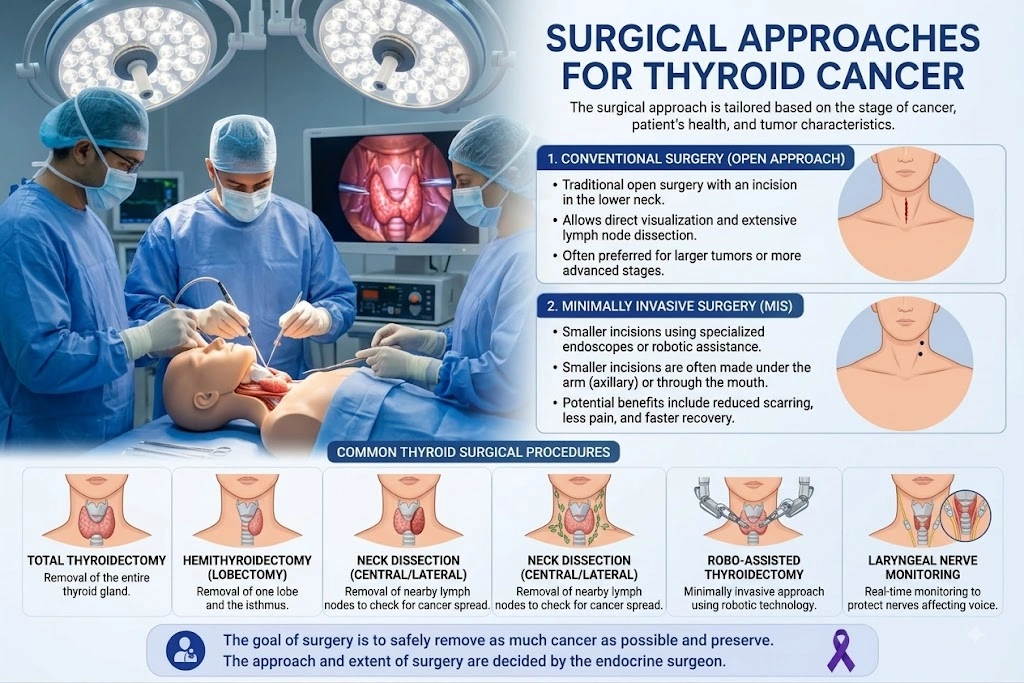
The surgical approach for thyroid cancer is selected based on tumour characteristics, cancer stage, disease extent, lymph node involvement, and individual patient requirements.
Thyroid Lobectomy
Thyroid lobectomy involves removing one lobe of the thyroid gland containing the cancer. It may be suitable for selected patients with small, localized thyroid cancers where complete removal can be achieved while preserving the remaining thyroid tissue.
The decision between lobectomy and total thyroidectomy depends on the type and characteristics of the cancer and other individual patient factors.
Minimally Invasive Thyroid Surgery
Advances in thyroid surgery focus on achieving effective cancer removal while reducing the surgical impact where appropriate.
The surgical approach is planned after detailed evaluation, with the aim of achieving effective cancer control while protecting important neck structures and supporting optimal recovery.
Dr. Ajay Simha is experienced in advanced thyroid cancer surgery, including thyroidectomy, lymph node surgery, and appropriate minimally invasive surgical techniques when suitable for the individual patient. The goal is always to achieve effective cancer removal while ensuring patient safety, surgical precision, protection of important neck structures, and optimal recovery.
Frequently Asked Questions
Common symptoms of thyroid cancer include a lump in the neck, thyroid swelling, difficulty swallowing, voice changes, neck discomfort, and enlarged lymph nodes.
Thyroid cancer diagnosis may involve neck examination, thyroid ultrasound, fine needle aspiration cytology (FNAC), blood tests, and imaging studies when required.
Surgery is the main treatment option for many thyroid cancer patients, but the exact treatment approach depends on cancer type, stage, tumour characteristics, and individual health factors.
A thyroidectomy is a surgical procedure to remove part or all of the thyroid gland affected by cancer.
Thyroid lobectomy removes one side of the thyroid gland, while total thyroidectomy removes the entire thyroid gland. The choice depends on cancer characteristics and treatment requirements.