
- Home
- About Doctor
- Cancer Surgery
- Procedures & Techniques
- Minimally Invasive Cancer Surgery
- Robotic Cancer Surgery
- Laparoscopic Cancer Surgery
- Thoracoscopic Cancer Surgery (VATS)
- Open (Conventional) Cancer Surgery
- Sentinel Lymph Node Biopsy (SLNB)
- Cytoreductive Surgery (CRS)
- Hyperthermic Intraperitoneal Chemotherapy (HIPEC)
- Scarless/ Remote Access Thyroidectomy
- Resources
- Contact Us
Vulvar Cancer Surgery
Message from Dr. Ajay Simha

A diagnosis of vulvar cancer can be challenging for patients and their families. Concerns regarding treatment options, surgery, outcomes, and the road ahead are natural.
When vulvar cancer is suspected or diagnosed, a detailed evaluation is carried out to confirm the diagnosis and determine the stage of the disease. A personalised treatment plan is then formulated based on the type and extent of cancer, tumour location, lymph node involvement, overall health, and individual treatment goals.
I am Dr. Ajay Simha, Consultant Surgical Oncologist (Cancer Surgeon), providing vulvar cancer care at Manipal Hospitals Sarjapur Road, Bengaluru. This page provides an overview of vulvar cancer, including its symptoms, evaluation, treatment options, and surgical approaches.
What Is Vulvar Cancer?

Vulvar cancer develops when abnormal cells in the vulva begin to grow uncontrollably, forming a tumour. The vulva is the external female genital area and includes the labia, clitoris, and surrounding skin and tissues.
Symptoms of Vulvar Cancer
The symptoms of vulvar cancer may vary depending on the location and stage of the disease. Some changes may initially appear as skin-related problems and should be evaluated if they persist.
Common signs and symptoms include:
- Persistent itching or irritation of the vulvar area
- A lump, growth, or swelling on the vulva
- Changes in vulvar skin colour or texture
- Thickening of vulvar skin
- Open sores or ulcers that do not heal
- Pain or tenderness in the vulvar region
- Bleeding not related to menstruation
- Unusual discharge
- Burning sensation during urination
- Persistent discomfort in the vulvar area
Any persistent vulvar changes or unusual symptoms should be evaluated by a specialist for proper diagnosis and timely treatment planning.
Evaluation of Vulvar Cancer
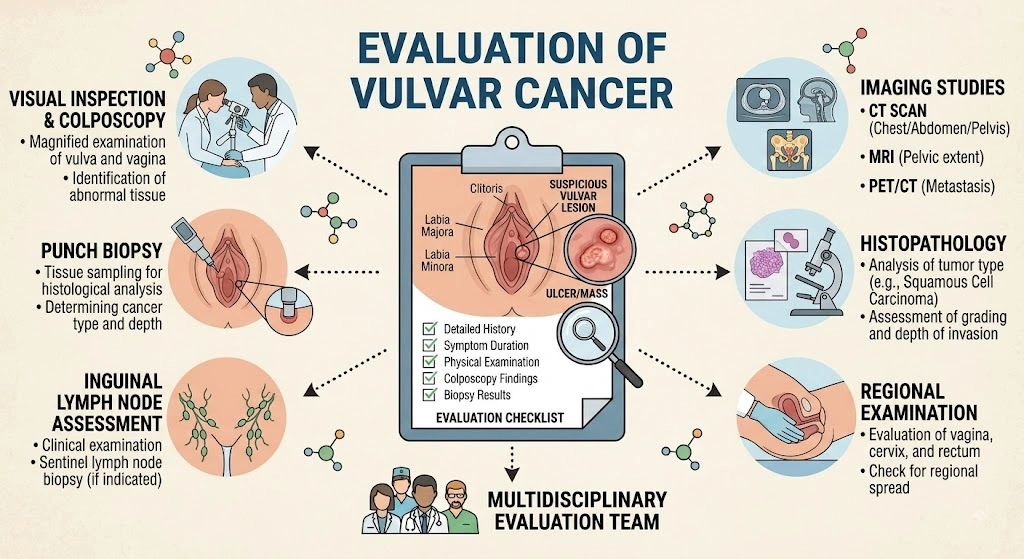
When vulvar cancer is suspected based on symptoms and clinical examination, a detailed evaluation is performed to confirm the diagnosis and determine the extent of the disease. The diagnostic process may include:
Physical Examination
A detailed examination helps assess the vulvar lesion, including its size, location, appearance, and involvement of surrounding tissues.
Vulvar Biopsy
A biopsy involves collecting a small tissue sample from the abnormal area. The sample is examined to confirm the diagnosis and identify the specific type of vulvar cancer.
Treatment Options for Vulvar Cancer
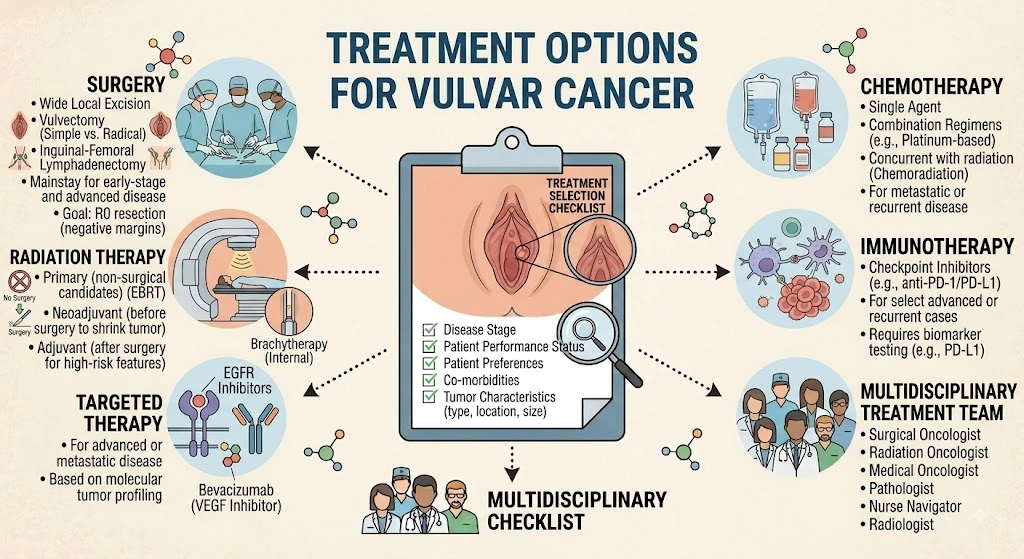
Treatment for vulvar cancer depends on the type of tumour, stage of cancer, tumour location, extent of disease, lymph node involvement, and the patient’s overall health.
Surgery
Surgery is the primary treatment option for many patients with localized vulvar cancer. The main objective is to remove the cancer completely while preserving surrounding healthy tissues and maintaining function and quality of life whenever possible. The extent of surgery depends on the size, location, and depth of the tumour and whether nearby tissues or lymph nodes are involved.
Wide Local Excision
Wide local excision involves removing the tumour along with a margin of surrounding healthy tissue. It is commonly considered for selected patients with small and localized vulvar cancers. The aim is to achieve complete cancer removal while preserving as much normal tissue and function as possible.
Radiation Therapy
Radiation therapy uses high-energy radiation to target and destroy cancer cells.
Depending on the individual case, radiation therapy may be recommended:
- Before surgery to reduce tumour size in selected cases
- After surgery to reduce the risk of recurrence
- As part of treatment for advanced vulvar cancer
Radiation treatment planning is personalised based on the tumour characteristics, cancer stage, and overall treatment goals.
Chemotherapy
Chemotherapy uses anti-cancer medicines to destroy cancer cells or control their growth.
It may be recommended:
- Along with radiation therapy for certain advanced vulvar cancers
- Before surgery in selected cases
- For recurrent or metastatic vulvar cancer
The type and duration of chemotherapy depend on the stage of cancer, tumour characteristics, and individual treatment response.
Targeted Therapy and Immunotherapy
For selected patients with advanced vulvar cancer, targeted therapies or immunotherapy may be considered based on tumour characteristics and treatment eligibility. Targeted therapies act on specific cancer-related changes, while immunotherapy helps the body’s immune system recognise and attack cancer cells.
Supportive Care

Supportive care is an important part of vulvar cancer treatment and focuses on helping patients manage treatment-related symptoms, maintain physical well-being, and support recovery.
Depending on the patient’s individual needs, supportive care may include:
Nutritional Support
Maintaining adequate nutrition is important during cancer treatment and recovery. Personalised nutritional guidance may help patients maintain strength and support overall well-being during treatment.
Physiotherapy and Rehabilitation
Physiotherapy may be recommended when required to support recovery after surgery, improve mobility, manage treatment-related functional difficulties, and help patients gradually return to their daily activities.
Surgical Approaches for Vulvar Cancer
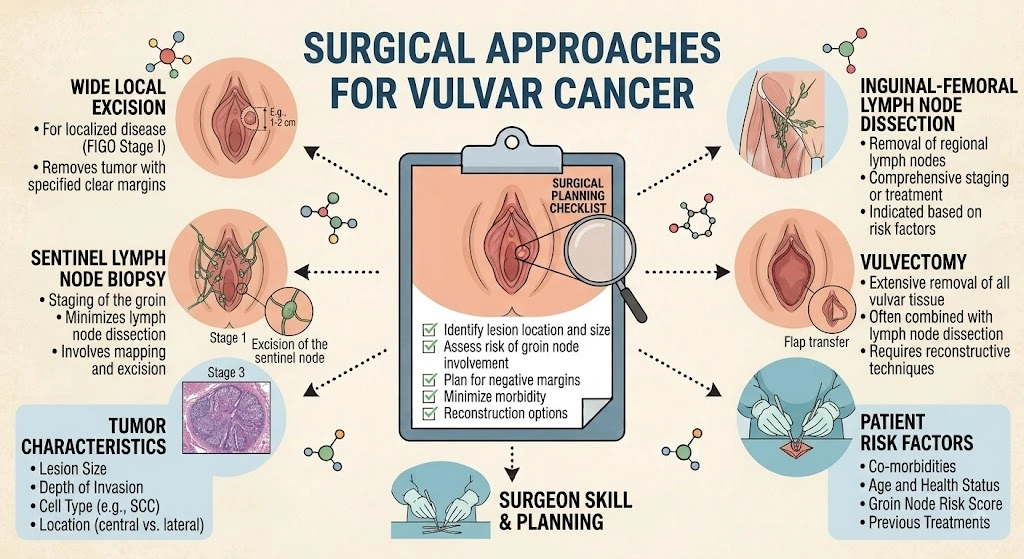
The surgical approach for vulvar cancer is selected based on the extent of disease, tumour characteristics, lymph node involvement, and individual patient requirements.
Radical Vulvectomy
Radical vulvectomy involves removal of a larger area of vulvar tissue when required based on the extent of cancer.
The procedure may be recommended for more advanced or extensive tumours where wider removal is needed to achieve effective cancer control.
Reconstructive Surgery
In cases where extensive tissue removal is required, reconstructive procedures may be considered to support healing, restore anatomy, and improve functional outcomes.
Dr. Ajay Simha is experienced in advanced surgical management of cancer, with treatment plans tailored to the individual needs and condition of each patient.
Frequently Asked Questions
Common symptoms of vulvar cancer include persistent itching, skin changes, lumps, sores that do not heal, pain, unusual bleeding, and discomfort in the vulvar area.
Vulvar cancer diagnosis may involve physical examination, biopsy, imaging tests such as CT or MRI scans, and lymph node evaluation when required.
Surgery is an important treatment option for many vulvar cancer patients, but the treatment approach depends on cancer stage, tumour characteristics, overall health, and individual treatment goals.
Wide local excision is a surgical procedure that removes the cancerous area along with a margin of surrounding healthy tissue to achieve complete tumour removal.
Radical vulvectomy is a surgical procedure that involves removing a larger portion of vulvar tissue affected by cancer when wider removal is required.