
- Home
- About Doctor
- Cancer Surgery
- Procedures & Techniques
- Minimally Invasive Cancer Surgery
- Robotic Cancer Surgery
- Laparoscopic Cancer Surgery
- Thoracoscopic Cancer Surgery (VATS)
- Open (Conventional) Cancer Surgery
- Sentinel Lymph Node Biopsy (SLNB)
- Cytoreductive Surgery (CRS)
- Hyperthermic Intraperitoneal Chemotherapy (HIPEC)
- Scarless/ Remote Access Thyroidectomy
- Resources
- Contact Us
Cervical Cancer Surgery
Message from Dr. Ajay Simha

A diagnosis of cervical cancer can be difficult for patients and their families, often bringing concerns about treatment options, surgery, recovery, and what to expect in the future.
When cervical cancer is suspected or confirmed, a detailed assessment is performed to determine the type and stage of the disease, tumour size, involvement of surrounding tissues, and the patient’s overall health. These findings help in selecting an appropriate treatment plan based on the individual patient’s condition and treatment goals.
I am Dr. Ajay Simha, Consultant Surgical Oncologist (Cancer Surgeon), and this page provides an overview of cervical cancer, including its symptoms, evaluation, treatment options, and surgical approaches.
What Is Cervical Cancer?

The cervix is the lower portion of the uterus that connects the uterus to the vagina. Cervical cancer develops when cells in the cervix undergo abnormal changes and begin to multiply uncontrollably, eventually forming a tumour.
Symptoms of Cervical Cancer
Cervical cancer may not cause obvious symptoms during its early stages. As the disease progresses, certain changes may become more noticeable.
Common symptoms may include:
- Abnormal vaginal bleeding
- Bleeding between menstrual periods
- Bleeding after sexual intercourse
- Vaginal bleeding after menopause
- Unusual or persistent vaginal discharge
- Pelvic pain or discomfort
- Pain during sexual intercourse
- Changes in the usual pattern of menstrual bleeding
- Persistent lower abdominal or back pain
- Unexplained tiredness or weakness
Unusual vaginal bleeding, particularly bleeding after menopause or after sexual intercourse, should not be ignored. Medical evaluation can help identify the underlying cause and enable timely treatment when necessary.
Evaluation of Cervical Cancer
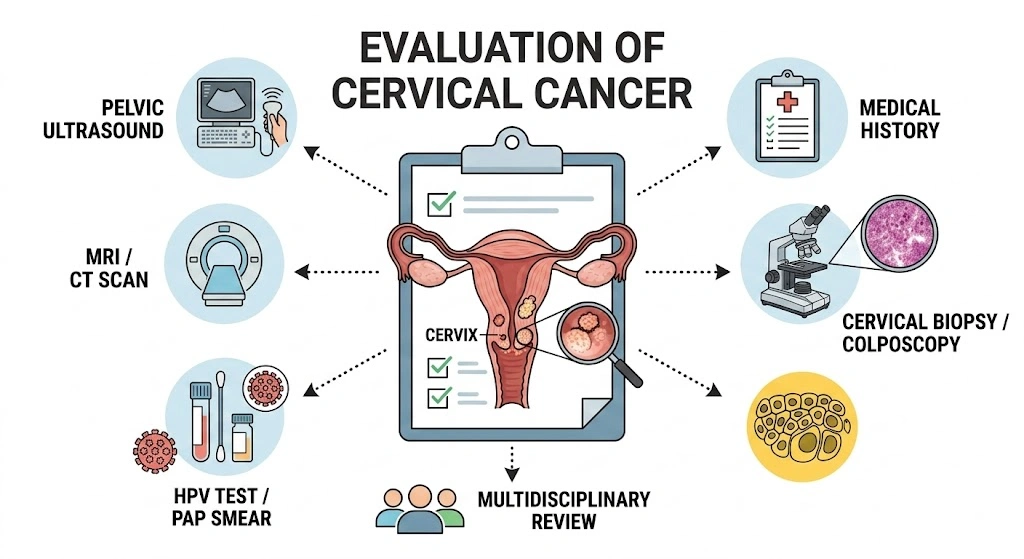
A detailed evaluation is required to confirm cervical cancer, identify the type of tumour, and determine the extent of disease.
Pelvic Examination
A pelvic examination allows the doctor to inspect the cervix and assess for visible abnormalities, growths, bleeding, or other changes that may require further investigation.
Pap Smear
A Pap smear is used to identify abnormal cervical cells, including precancerous changes that may require further evaluation. It plays an important role in cervical cancer screening.
HPV Testing
Testing for high-risk HPV types can help identify infections associated with the development of cervical cancer and may be used alongside cervical screening.
Treatment Options for Cervical Cancer
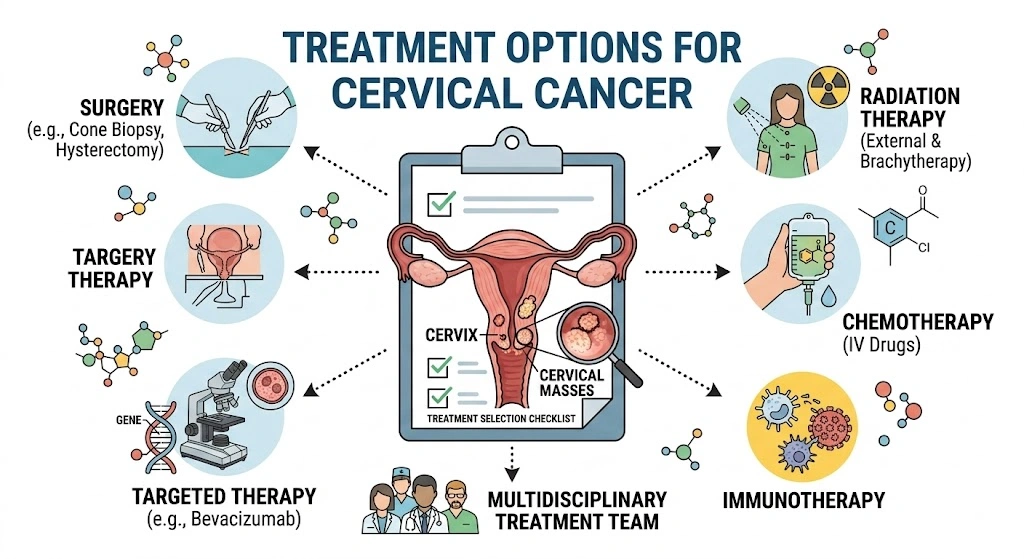
Cervical cancer treatment is individualized according to the stage of disease, tumour characteristics, extent of spread, and the patient’s overall health.
Depending on the clinical situation, treatment may involve surgery, radiation therapy, chemotherapy, targeted therapy, immunotherapy, supportive care, or a combination of these approaches.
Surgery is an important treatment option for selected patients, particularly those with disease that can be effectively removed surgically. The objective is to remove the cancer along with an appropriate margin of surrounding tissue while preserving healthy structures whenever safely possible.
Radiation therapy uses high-energy radiation to destroy cancer cells and control tumour growth. It may be used as the primary treatment for certain cervical cancers or following surgery when there is a need to reduce the risk of recurrence. For locally advanced cervical cancer, radiation therapy is often combined with chemotherapy as part of a coordinated treatment approach.
Chemotherapy uses anti-cancer medicines to destroy cancer cells or limit their growth. Depending on the clinical situation, chemotherapy may be given together with radiation therapy, before or after surgery in selected cases, or as part of treatment for recurrent or advanced cervical cancer.
Targeted medicines are designed to act on specific biological pathways or characteristics involved in cancer growth. In selected patients with advanced or recurrent cervical cancer, targeted treatment may be considered based on tumour characteristics and other clinical factors.
Immunotherapy works by helping the body’s immune system recognize and respond to cancer cells. It may be considered for selected patients with advanced or recurrent cervical cancer depending on tumour characteristics, biomarker findings, previous treatments, and overall treatment goals.
Supportive Care

Supportive care is an important part of cervical cancer treatment and focuses on managing treatment-related effects while helping patients maintain their physical and emotional well-being. Depending on individual needs, supportive care may include:
Nutritional Support
Adequate nutrition can help patients maintain strength and support recovery during surgery, chemotherapy, radiation therapy, or other cancer treatments. Personalized nutritional guidance may be provided based on the patient’s condition and treatment requirements.
Physiotherapy
Physiotherapy can support recovery after surgery by helping patients regain mobility, strength, and physical function. It may also help patients gradually return to their routine activities.
Surgical Approaches for Cervical Cancer
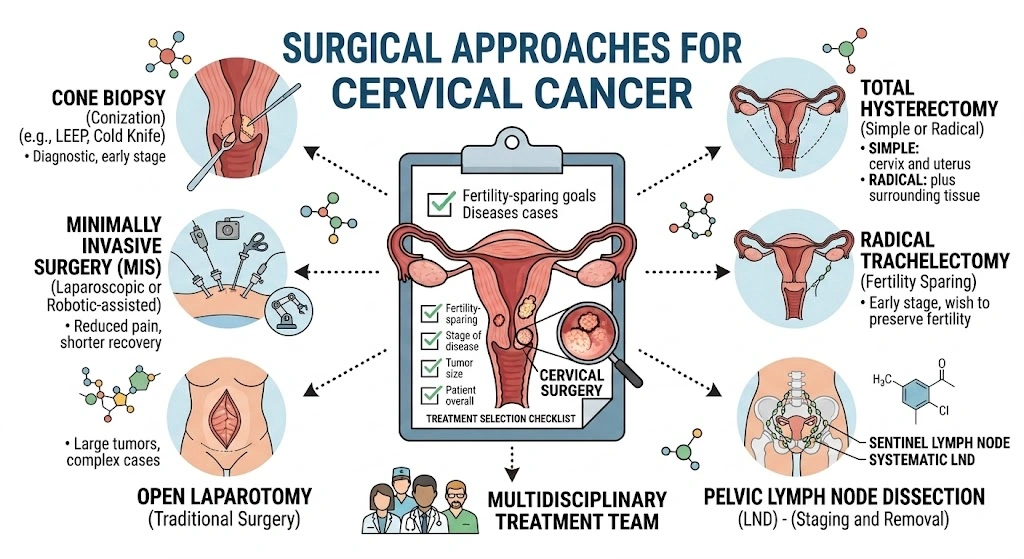
The surgical technique is selected based on the stage and characteristics of the cancer, the extent of surgery required, and the patient’s overall condition.
Open Surgery
Open surgery involves accessing the pelvic and abdominal structures through an abdominal incision. It may be considered when wider access is required for complex procedures or when the extent of disease makes an open approach more appropriate.
Minimally Invasive Cervical Cancer Surgery
In selected patients, laparoscopic or robotic-assisted techniques may be considered for appropriate surgical procedures.
These approaches use smaller incisions and may help reduce surgical trauma and support postoperative recovery in suitable cases.
Dr. Ajay Simha is experienced in cervical cancer surgery, including appropriate open and minimally invasive approaches. His treatment approach focuses on careful evaluation, precise surgical planning, effective cancer management, and supporting patients throughout their treatment and recovery.
Frequently Asked Questions
Early cervical cancer may not always cause noticeable symptoms. Common signs include abnormal vaginal bleeding, bleeding after intercourse, unusual discharge, pelvic pain, and changes in menstrual patterns.
Cervical cancer diagnosis may involve Pap smear testing, HPV testing, colposcopy, cervical biopsy, and imaging tests such as MRI or CT scans when required.
Surgery is not required for every cervical cancer patient. The treatment approach depends on cancer stage, tumour characteristics, overall health, and individual treatment goals.
A radical hysterectomy is a surgical procedure that involves removal of the uterus, cervix, surrounding tissues, and sometimes nearby lymph nodes to treat selected cervical cancer cases.
In selected patients, laparoscopic or robotic-assisted surgery may be considered depending on cancer stage, tumour characteristics, and surgical requirements.